
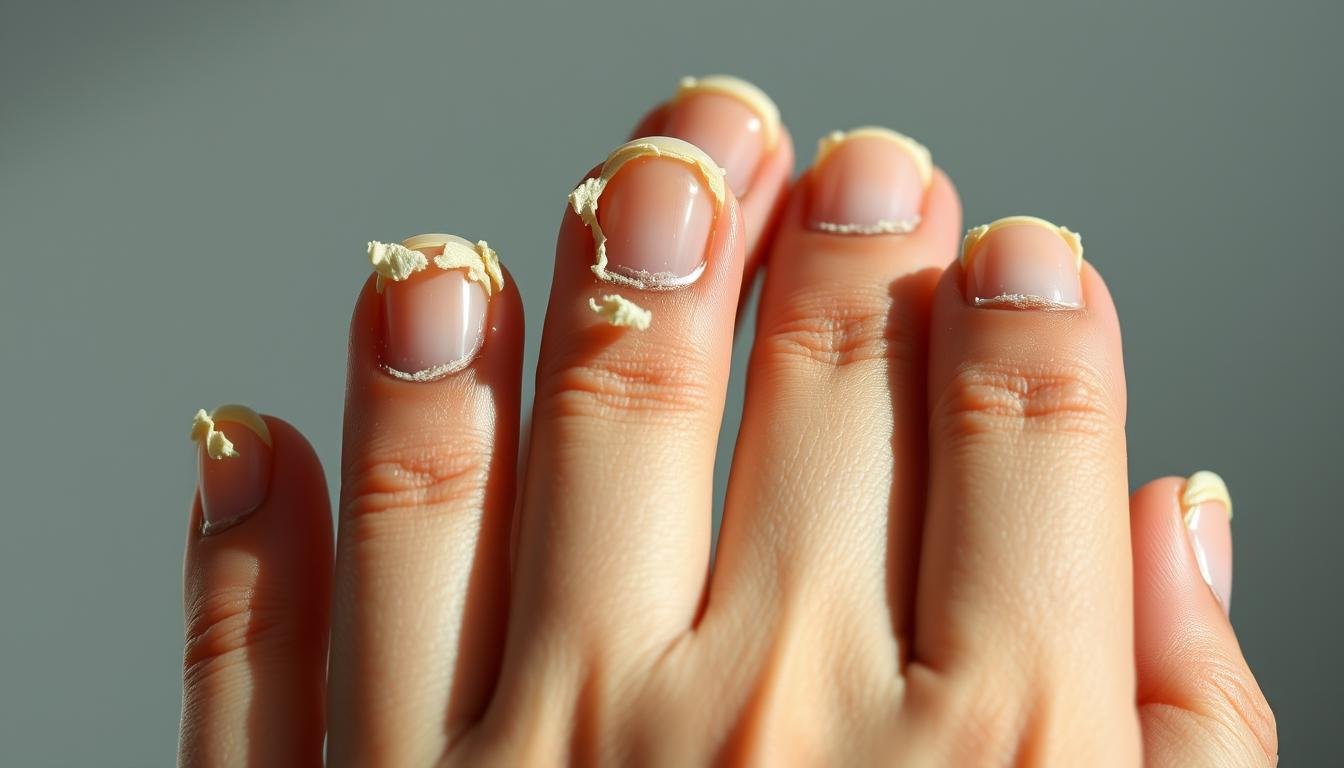
Did you know nearly 20% of women deal with brittle nails at some point? The American Osteopathic College of Dermatology tells us that brittle nails, or onychoschizia, point to more than just looks. They could show health problems. So, seeing peeling nails tells us a lot about our nail health.
Brittle nails often come from different causes, like not getting enough nutrients, being in certain environments, or thyroid issues. It’s critical to watch for changes in our nails because they mirror our inside health. Just like we watch for sickness signs in our body, spotting brittle nails is key. For tips on matching nail care with health habits, check out this guide on peeling nails.
Key Takeaways
- About 20% of women might have problems with brittle nails.
- Nail changes could hint at deeper health issues.
- Not getting enough nutrients often leads to peeling nails.
- Our environment can also affect the strength of our brittle nails.
- Good nail care practices can make nails stronger.
Understanding Brittle Nails
Brittle nails are often seen as splitting and peeling at the tips. They are made up of keratin, which keeps them strong. Sadly, nearly 20 percent of people have weak, brittle nails. This is more common in women than in men.
Many things can make nails brittle. Aging, hormones, and the environment play roles. Being in water too much or using harsh chemicals like acetone can weaken nails. Health issues such as anemia and thyroid problems also affect nail health. Over 12% of Americans face thyroid disease, hitting women harder.
Looking after your nails is crucial. Keeping them moisturized, avoiding acetone in removers, and wearing gloves for chores can help. Eating well, with plenty of protein and iron, boosts nail health. Biotin supplements are helpful for some, aiding around one-third of those who try them.
Common Causes of Peeling or Flaking
Nail peeling can make you feel frustrated and worried. It leads many to seek the reasons behind peeling nails. A range of factors affects nail health, each presenting its own challenges.
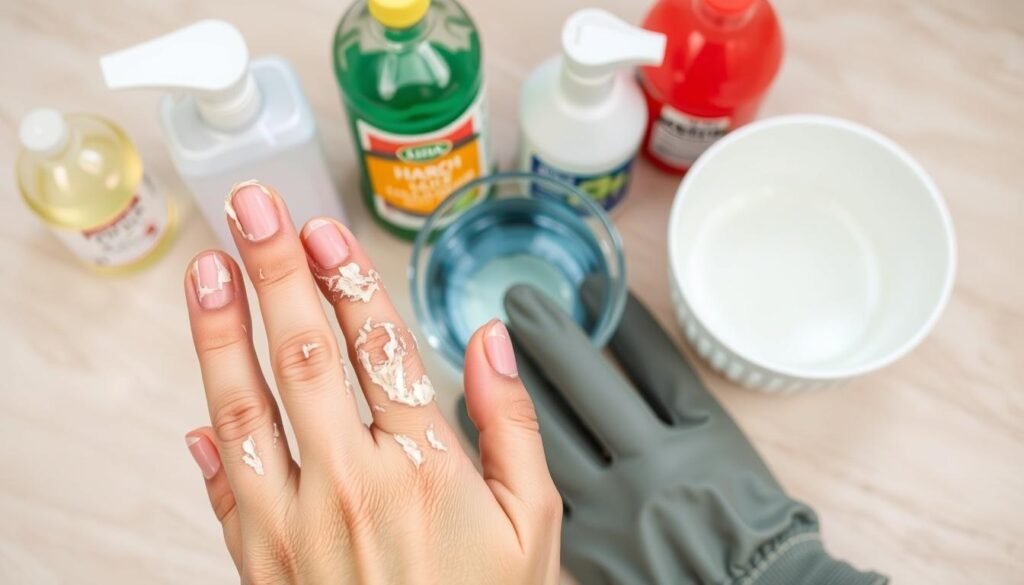
Water exposure is a main cause of peeling nails. Jobs like hairdressing or cleaning expose nails to water often. This makes nails more likely to get damaged. Also, strong chemicals in soaps, nail adhesives, and sanitizers can make peeling worse.
Activities like biting nails or picking at nail polish hurt nail health. Not getting enough nutrients like calcium, iron, and vitamins also makes nails brittle. Lack of vitamin D or B vitamins can slow down nail growth.
Health issues, such as thyroid disease, might slow skin and nail growth. Symptoms like weight shifts and tiredness can happen, along with brittle nails. Nail issues like peeling, thickening, and discoloring can come from fungal infections too.
Hand eczema causes inflammation, affecting nail growth. It shows why taking good care of nails is key. This includes keeping nails moist and using products to get rid of dead nail layers.
| Cause | Description |
|---|---|
| Repetitive Wetting/Drying | Frequent exposure to moisture and dryness, common in certain professions. |
| Harsh Chemicals | Ingredients in various products can contribute to weakened nail structure. |
| Nail Trauma | Activities disturbing cell-to-cell adhesion lead to peeling. |
| Nutrient Deficiency | Low calcium, iron, and vitamin levels affect keratin growth. |
| Thyroid Issues | Slower turnover rates can lead to brittle nails and other systemic symptoms. |
| Fungal Infections | Onychomycosis can cause peeling, thickening, and discoloration. |
| Hand Eczema | Inflammation affects normal growth, contributing to nail health issues. |
Knowing why nails peel can help us take steps to prevent it. Figuring out if the cause is inside or outside the body will help choose the right care for healthier nails.
Peeling or Flaking: Early Warning Signs of Brittle Nails
Peeling or flaking nails can signal health issues you might not notice right away. If you see splits or your nails feel weird, it could mean there are bigger problems. This could be things like not getting enough nutrients or not drinking enough water. Also, women are five to eight times more likely to have thyroid issues, which can cause peeling nails, dry skin, and thin hair.
Flaking nails can happen for many reasons. One common cause is putting your hands in water too much, which weakens the nails. People who work with their hands a lot, like hairdressers or cleaners, might see this problem more. Doctors who specialize in skin say it’s important to watch out for changes in your nails. If you see something strange, get it checked by a doctor to avoid bigger nail problems.
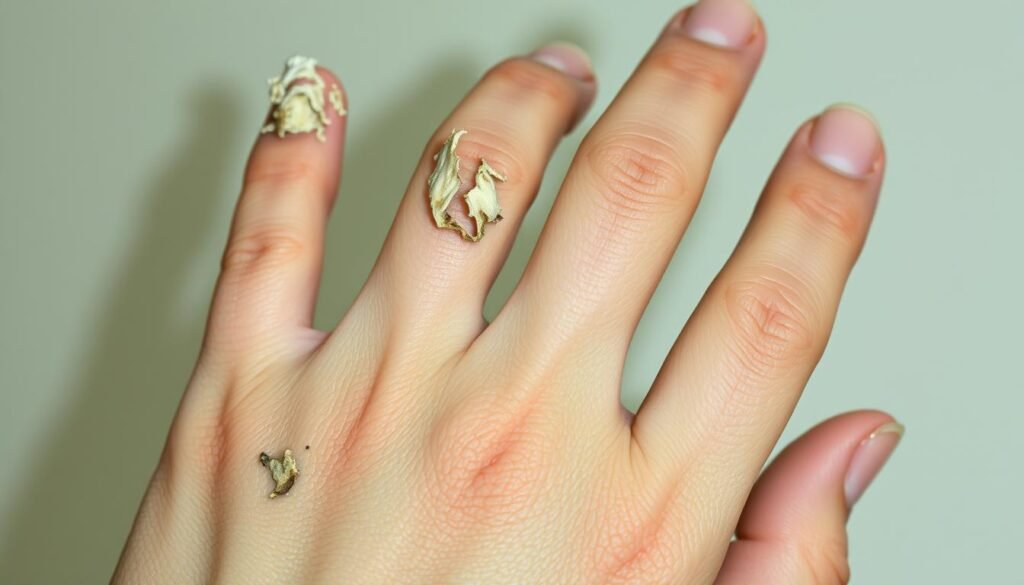
Having nails that change color can be a hint of a fungal infection. An infection like this can make your nails start to peel if it’s not treated. Using harsh nail products or buffing your nails too much can make it worse. It’s key to know how your nail health affects your overall health to catch things early.
If you want to keep your nails from getting brittle, look for good advice on how to take care of them. Getting info on managing nail health can help you avoid peeling and other issues.
Understanding these warning signs is a big step in looking after your nail health. By paying attention and taking action early, you can get healthier nails and improve your overall health.
Identifying Other Symptoms Related to Nail Health
Looking at symptoms of nail health is not just about seeing peeling or flaking. There are different signs in your nails that can show bigger health problems. For example, Beau’s lines are depressions that run across the nail and can point to malnutrition or diseases with high fevers. Also, clubbing makes the nails thick and curved, usually hinting at heart or lung diseases.
Then, there’s koilonychia, where nails curve out like spoons, suggesting possible iron deficiency anemia or autoimmune diseases. Leukonychia means white spots on the nails, often from minor injuries or not getting enough nutrients. This could indicate that your overall health isn’t great.
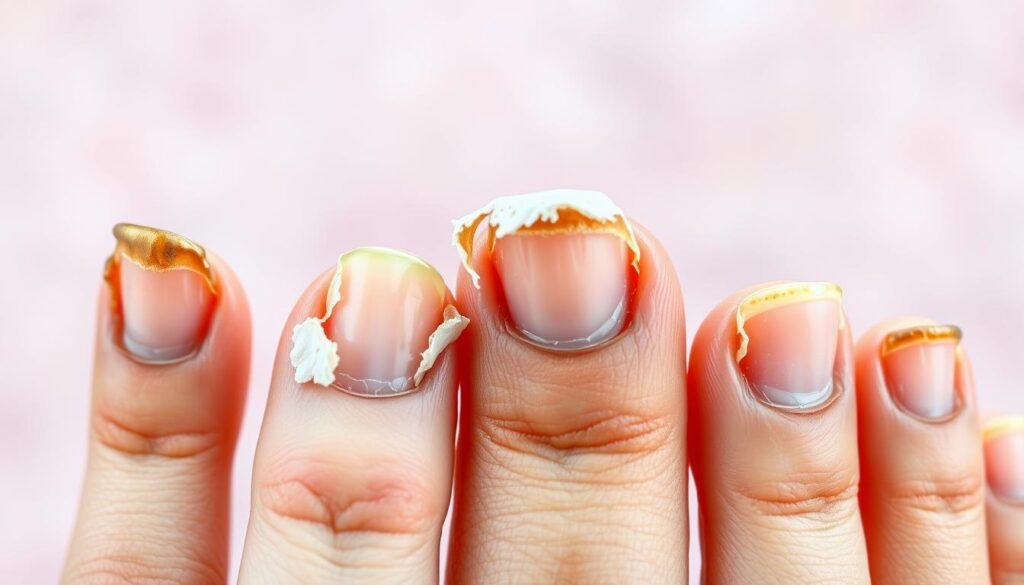
Mees’ lines are white lines going across the nail and could mean arsenic poisoning. Onycholysis is when the nail plate separates from the bed, often due to infections, injury, or using nail products too much. Nail pitting might show you have psoriasis. Terry’s nails, which have a dark band at the tip, often occur with aging or severe health issues like heart failure.
Yellow nail syndrome makes nails grow thicker and slower and could point to big health concerns, like lung issues. Watching for these varied symptoms is key in catching nail conditions that need a closer look.
Importance of Proper Nutrition for Nail Strength
Maintaining strong nails is closely tied to eating right. A balanced diet gives your nails the nutrients they need. Vitamins and minerals help your nails grow and stay tough.
Nutrients Essential for Healthy Nails
To have strong nails, it’s vital to eat the right things. Consider adding these nutrients to your meals:
- Biotin: Boosts keratin and fights brittleness.
- Iron: Essential for blood flow, its lack can cause weak nails.
- Calcium: Keeps nails strong; too little can weaken them.
- Zinc: Important for nail growth and repair. Without it, nails might have white spots.
- Protein: The building block of nails.
Eat more fruits, veggies, and lean proteins for better nail health. For more tips on stronger nails through diet, see this resource.
Impact of Vitamin Deficiency on Nail Health
Not getting enough vitamins can hurt your nails. Lacking B vitamins and vitamin D can cause problems like:
- Pale nails: Could mean you’re low on iron or protein.
- White spots: These could be signs of not enough zinc or vitamin B6.
- Flaking: This might be due to not enough essential fatty acids or vitamin B12.
- Ridged nails: Points to possible digestive issues affecting how you absorb nutrients.
It’s key to watch what you eat to avoid missing out on vital nutrients. Getting advice on supplements from experts can also help. This way, you can keep your nails looking and feeling strong.
Practices for Effective Nail Care
Maintaining healthy nails means adopting good nail care habits daily. It’s important to moisturize well and use nail products safely. These steps strengthen nails and help avoid problems like peeling or breaking.
Moisturizing Techniques for Nail Health
Keeping your nails moisturized is key to avoiding brittle nails. You can restore moisture by:
- Applying vitamin E-rich hand creams regularly.
- Using nail oils to nourish the cuticles and surrounding skin.
- Drying nails thoroughly after washing hands to prevent moisture loss.
- Considering a moisturizing treatment before bed for enhanced hydration.
- Incorporating hand creams that contain natural oils to keep nails supple.
Consistently moisturizing your hands and nails helps prevent further damage. It improves nail health. Be mindful of things like cold weather and too much handwashing that dry out nails.
Safe Use of Nail Products and Tools
Knowing how to safely use nail care products is essential for healthy nails. Here are some tips:
- Opting for hypoallergenic and acetone-free nail polish removers is recommended to limit damage.
- Avoiding harsh chemicals like formaldehyde and DBP found in some nail polishes helps protect weakened nails.
- Using gentle nail tools, such as a soft nail file, ensures minimal damage to nails.
- Avoiding back-and-forth filing motions can prevent splintering.
- Cutting nails shorter can reduce the risk of breakage.
Using safe products and gentle care helps nails grow healthy. Protect your nails from damage to improve their strength and look.
When to Seek Professional Help
If your nails keep peeling or flaking, watch for symptoms like redness, swelling, or pain around the nails. These could be signs of a serious condition needing quick doctor’s attention. It’s smart to get help if your nail health suddenly gets worse or if you feel discomfort.
Brittle nails can be caused by many health problems. These include fungal infections, not getting enough nutrients, psoriasis, thyroid issues, and Raynaud’s syndrome. As people get older, they might see their nails split, crack, or break more often. Nails also grow slower. To keep nails healthy, eat at least 45 grams of protein each day and consider taking a biotin supplement of about 5,000 micrograms.
If symptoms don’t go away or get worse, see a doctor. For example, brown spots on the tops of nails could mean kidney problems. Changes in nails as you age might be from poor blood flow or too much sun. Eating foods high in iron like spinach and shellfish is good for your nails. Adults should get 18 milligrams of iron every day.
Even though you can take care of peeling nails at home, it’s still a good idea to talk to a doctor for serious symptoms. Getting a professional opinion is key to treating nail issues correctly. This can also help spot bigger health problems. To learn more about how missing vitamins affect nail health, read this article.
| Symptoms | Possible Conditions | Recommended Actions |
|---|---|---|
| Persistent peeling or flaking | Fungal infections, nutritional deficiencies | Seek professional help, nail treatments |
| Redness and swelling around nails | Psoriasis, thyroid disorders | Consult a dermatologist or healthcare provider |
| Brown discoloration on nails | Kidney disease | Immediate medical advice recommended |
| Age-related changes in nails | Circulation problems, UV exposure | Regular check-ups with a professional |
Conclusion
Keeping nails healthy is a constant effort. It includes looking at your diet, how you care for them, and your daily habits. Spotting signs of weak nails early means you can start taking better care of them sooner. For example, not buffing too much and avoiding harsh chemicals helps a lot.
Good nail care involves using moisturizers with alpha-hydroxy acids and eating right. Getting enough calcium and biotin is key for strong nails and good health overall. Checking your nails regularly helps catch problems early on.
If nail problems don’t go away, it’s important to see a doctor. They can offer special treatments and check for other health issues affecting your nails. Taking steps to improve nail health now makes for stronger nails in the future. This way, your nails can be something you’re proud of, not worried about.
Learn more about nail health and effective ways to keep them looking their best.

