
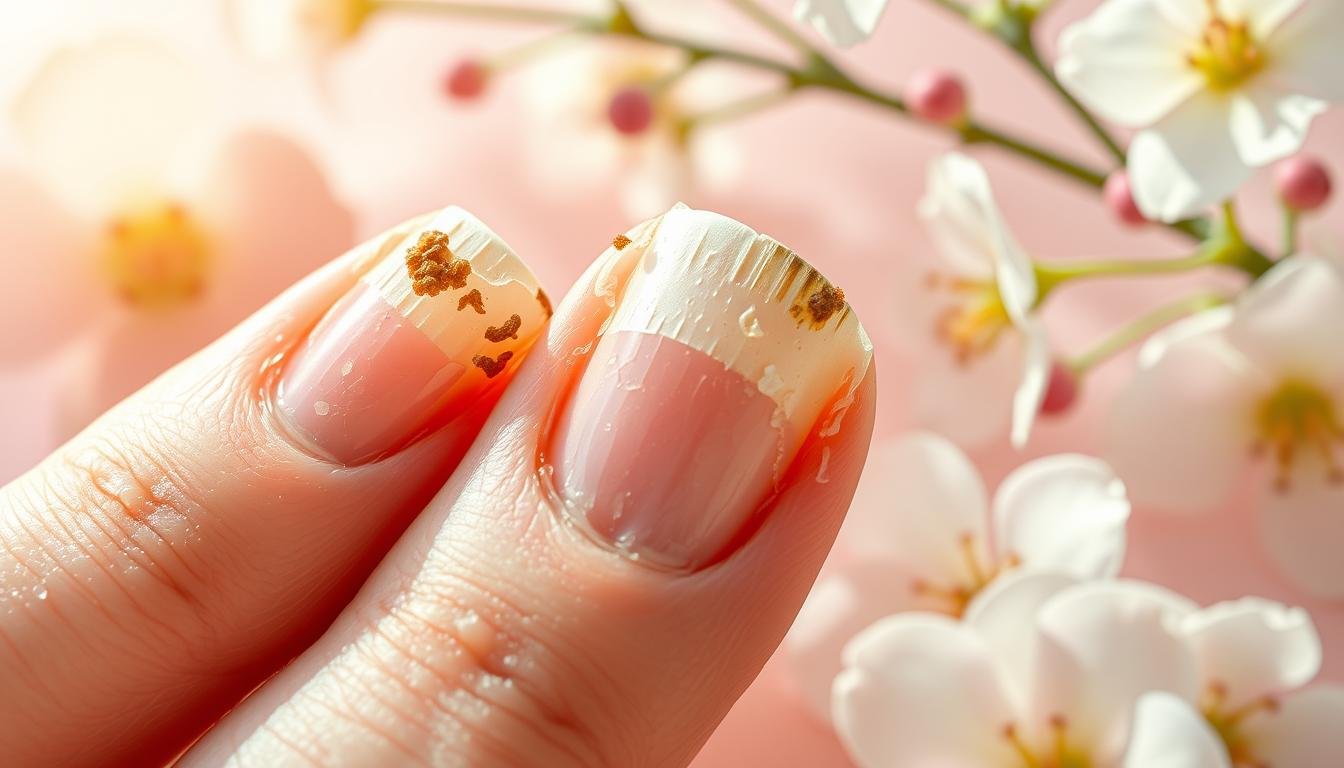
Did you know that nearly 20% of people have brittle nails? This is a sign that can tell us a lot about our health. Brittle nails, known medically as onychoschizia, are found more often in women than in men. They could point to not getting enough nutrients or having long-term health issues. Anemia, issues with the thyroid, and even aging can make nails weak. Dr. Sara Norris says that brittle nails usually show we’re not eating right, rather than pointing to serious health problems.
This article will explore how brittle tips and edges impact nail health. You’ll learn about the causes of this condition and how to make your nails strong and hydrated again. We’ll talk about the importance of a good diet and give you tips for taking care of your nails. For more details, check out this guide on brittle nails.
Key Takeaways
- Brittle nails often indicate underlying health issues or nutritional deficiencies.
- Women are more prone to brittle nails than men.
- Repeated wetting and drying can contribute to nail brittleness.
- A balanced diet, including protein and iron-rich foods, is crucial for strong nails.
- Consult a doctor if home remedies do not improve nail health.
- Proper nail care practices can help maintain healthy nails.
Understanding Nail Health and Its Indicators
Nail health is key to understanding our overall well-being. Healthy nails are smooth, grow consistently, and don’t change color. These traits tell us a lot about our diet and health. But, if nails become brittle, rough, or start to change color, these could be signs of health issues or not getting enough nutrients.
Here are some signs of healthy nails to look for:
- Texture: Smooth nails mean you’re likely in good health.
- Color: Nails should be pink. Other colors could mean health problems.
- Growth Rate: Growing nails suggest you’re eating well and are healthy.
If you notice your nails pitting, separating from the skin, or getting thicker, check your diet. Not getting enough certain vitamins and minerals can harm your nails. For example, lacking vitamin D, iron, or biotin can cause nail problems. You can learn more about this here.
Knowing what your nails can tell you about your health is important. It helps you make better choices and get help if you need it. Paying attention to nail health can boost your grooming habits and your awareness of your overall health.
Common Causes of Brittle Nails
Brittle nails are a common problem that stem from several sources. Knowing what causes brittle nails is key to stop and fix the issue. Main factors include too much wetting and drying and poor diet related to missing nutrients.
Impact of Frequent Wetting and Drying
Constant wetting and drying can cause brittle nails, or onychoschizia. This happens as nails lose moisture after repeated contact with water and harsh chemicals. Plus, as we age, our nails grow slower. This increases their time spent in bad conditions. Washing hands often can make moisture loss worse, raising the chance of damage.
Diet and Nutritional Deficiencies
Eating well is vital for strong nails. Missing key nutrients can really affect your nails. Low levels of biotin (vitamin B7), zinc, and iron can weaken nails. Iron deficiency is a frequent culprit behind brittle nails. If you have this issue, check your diet for missing nutrients. Adding foods rich in these nutrients can help. A biotin supplement may also improve nail health, as advised by healthcare experts.
| Cause | Description | Impacts |
|---|---|---|
| Frequent Wetting and Drying | Loss of moisture due to repeated exposure to water and chemicals. | Cracking, splitting, and increased brittleness. |
| Nutritional Deficiencies | Lack of essential nutrients such as biotin, zinc, and iron. | Weakened nail structure and increased susceptibility to damage. |
| Aging | Natural aging process leads to slower nail growth and thinner nails. | Longer exposure to harmful elements and greater risk of brittleness. |
How Brittle Tips and Edges Affect Your Nails’ Health
Brittle tips and edges can be more than just a beauty issue. They are often physical signs of deeper health problems. Spotting these signs early can help catch serious issues before they get worse.
Physical Signs of Brittle Nails
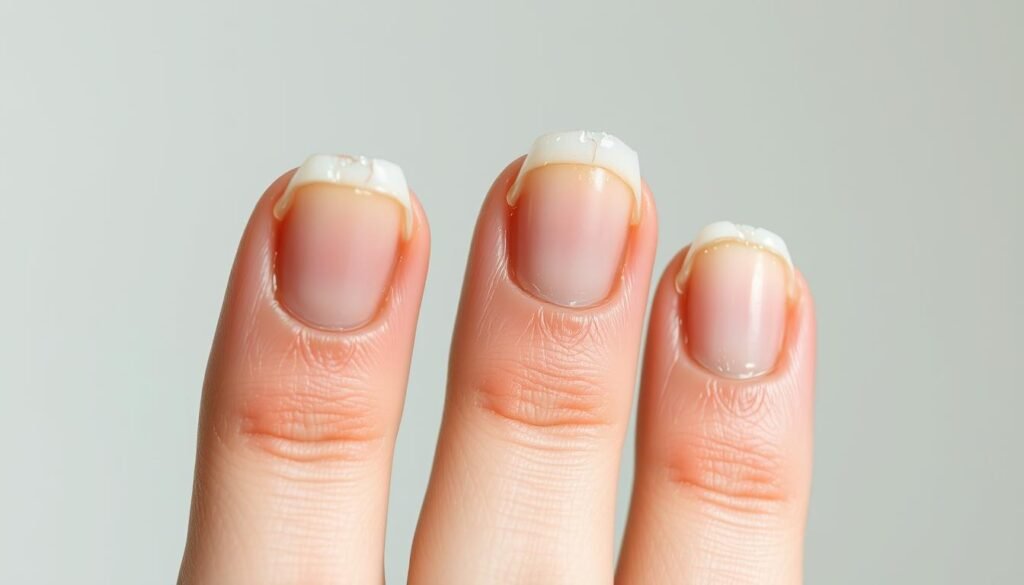
Brittle nails can split, crack, and feel rough. These physical signs show that your nails aren’t healthy. If your nails start to break easily, it could point to possible health problems.
Long-term Consequences of Neglect
Ignoring brittle nails can have serious outcomes. If not taken care of, infections could set in. This can lead to permanent nail damage.
Your nails might struggle to grow as they should. This makes it harder to keep your nails strong and healthy.
| Physical Signs | Long-term Consequences |
|---|---|
| Splitting | Permanent nail damage |
| Cracking | Increased risk of infection |
| Rough textures | Negative impact on nail growth |
Identifying Symptoms of Weak and Peeling Nails
It’s important to know the signs of weak nails for good nail health. If your nails break or bend easily, it could mean there’s a problem. Spotting these signs early helps stop more damage.
Recognizing Weak Nails
Weak nails show up in several ways, like:
- Frequent breaking or bending
- Soft texture and lack of strength
- Visible splits or chips on the nail surface
Many things make nails weak. Being around water a lot or harsh stuff can hurt your nails. Knowing what you do to your nails is vital. For example, too much nail buffing might not be good.
Factors Leading to Peeling Nails
Many things cause peeling nails. Some are:
- Frequent soaking in water
- Using harsh nail products
- Not getting enough iron and calcium
- Health issues like psoriasis or thyroid problems
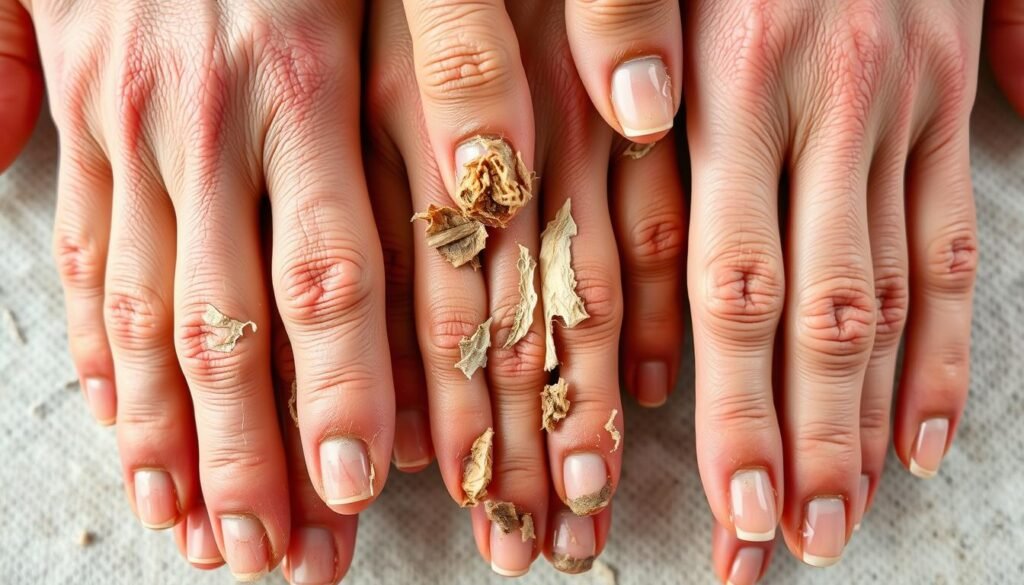
Finding out why can help you change and fix it. Wearing gloves for chores can protect them. It helps to know what affects your nails to avoid peeling and keep them strong.
| Symptom | Cause | Preventive Measure |
|---|---|---|
| Frequent breaking | Excessive moisture | Limit water exposure |
| Soft texture | Nutritional deficiency | Balanced diet with vitamins |
| Visible splits | Harsh chemicals | Protective gloves |
| Peeling edges | Trauma or damage | Avoid using nails as tools |
The Role of Cuticle Care in Nail Health
Cuticles protect our nails like a shield against harmful bacteria. They cover the nail bed. Taking care of them helps avoid problems like hangnails and uneven nail growth. This care is key for beautiful and healthy nails.
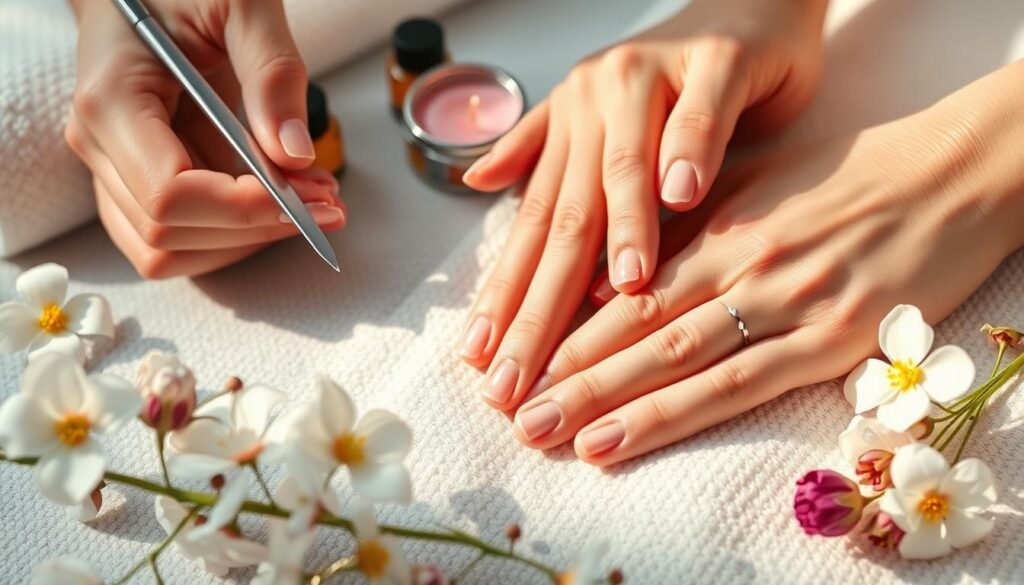
If your nails are soft and bend easily, they need extra care. Using body or cuticle oil every day can make them stronger. Healthy cuticle practices result in nails that are healthier and grow better.
Around 85% to 90% of women use nail care products globally. In the US, the nail cosmetics industry was worth $8.36 billion in 2018. This shows people are becoming more aware of nail health. Choosing clean and organic oils for your cuticles is best.
Putting your cuticles first can greatly improve your nails’ health. A regular care routine means stronger nails. Since most people will face a nail issue at some point, cuticle care is crucial.
Click here to learn more about cuticle care
Nail Ridge Prevention Strategies
Nail ridges can be a beauty worry and a hint at health problems. Knowing the causes of nail ridges is key for prevention and care. Vertical ridges often happen with aging. Horizontal ridges, called Beau’s lines, might show serious health issues. Using ridge prevention strategies helps nails stay healthy and look better.
Understanding Nail Ridges and Their Causes
Nail ridges appear in two types: vertical and horizontal. Age mainly causes vertical ridges. Horizontal ridges come from different sources, such as:
- Severe viral infections
- Kidney disease
- Nutritional deficiencies (iron, zinc, vitamin A)
- Stress and thyroid disease
- Trauma to the nail matrix
Knowing these causes of nail ridges helps spot health issues early. So, we can deal with them quickly.
Home Remedies for Ridge Prevention
To stop nail ridges, try simple home solutions. Keep your nails smooth with these home remedies:
- Gentle buffing to make the nail surface smooth
- Moisturizing nails and cuticles with creams or oils
- Less water contact
- Eating foods full of vitamins and minerals
- Using nail strengtheners with ceramides or acids
Adding these steps to your daily life can make nails healthier and nicer looking. The right care keeps nails strong and prevents problems.
| Type of Ridges | Common Causes | Prevention Methods |
|---|---|---|
| Vertical Ridges | Aging, nutrient deficiency | Moisturizing, balanced diet |
| Horizontal Ridges (Beau’s lines) | Infections, trauma, thyroid disease | Avoiding nail trauma, stress management |
By using ridge prevention strategies, you can keep your nails healthy. Notice and fix nail problems early for better nail health.
Nail Repair Techniques That Work
Fixing brittle nails needs a smart plan with different techniques. Putting lanolin-based products on regularly can bring back moisture to hurt nails. Heavy moisturizers are key to keep nails hydrated, making them flexible and less likely to break. Stay away from harsh chemicals in beauty products as they can weaken nails more.
Using biotin helps make brittle nails stronger. Adding biotin to your diet or as a pill can boost nail strength and growth. Topical treatments like Nuvail and Genadur also show good results in fixing weak nails.
It’s crucial to keep up with nail care to improve their strength and look. Having shorter nails can reduce breaking chances. Drinking enough water helps fight off nail brittleness from within. Also, using products like OPI’s Repair Mode or IBX Nail Strengthening Repair boosts nail keratin bond repair.
Being constant in using products like OPI Nail Envy as a base coat is beneficial. It strengthens and protects nails. Applying cuticle oil or hand cream regularly helps keep moisture in, reducing drying and peeling risks. Taking care of your nails regularly brings real improvements in their health and look.
Importance of Nail Hydration for Overall Strength
Nail hydration is key for strong and resilient nails. Using the right hydrating products is crucial. By moisturizing regularly, we can avoid brittle nails and keep them healthy.
Best Practices for Keeping Nails Moisturized
Applying hand creams and lotions regularly is essential. This is crucial after washing hands or using chemicals. Here are some tips:
- Use a daily moisturizing cream rich in oils or lanolin.
- Avoid excessive water exposure to keep moisture in.
- Wear gloves when cleaning or doing dishes to protect nails.
- Eat foods high in omega-3 fatty acids, like salmon, for better hydration.
- Ensure a diet rich in vitamins and iron for strong nails.
Hydrating Products to Consider
Choose hydrating products wisely for your nails. Look for those without harmful chemicals. Good products use natural ingredients to keep nails moist and looking great. Here are some top picks:
| Product Type | Key Ingredients | Benefits |
|---|---|---|
| Hand Creams | Lanolin, Jojoba Oil | Deep moisture and protection from drying |
| Cuticle Oils | Vitamin E, Olive Oil | Enhances hydration, reduces brittleness |
| Nail Soaks | Lemon Juice, Essential Oils | Strengthens nails and promotes shine |
Always care for your nails regularly. Seek professional advice if they keep getting damaged. For more tips on nail strength, visit nail strength resources.
Essential Vitamins and Supplements for Nail Strength
Nail health goes beyond just what you apply directly to your nails. It’s also about what you feed your body. Including key vitamins and supplements is vital for strong, resilient nails. With the right nutrients, you can fight off brittleness and improve your nail condition.
The Benefits of Biotin Supplements
Biotin is known for making nails tough. It’s often suggested for boosting nail health. This vitamin helps make nails thicker and less brittle. Taking about 5,000 micrograms daily can show better nails in six to eight weeks. It’s a great choice for anyone looking to improve their nails.
How Keratin Treatments Help
Keratin treatments are essential for nail strength and steadiness. Keratin is a protein that makes up the nail plate. Applying treatments helps nails become stronger and look better. These treatments strengthen the nails and fix problems like brittleness, leading to better nail health over time.

