
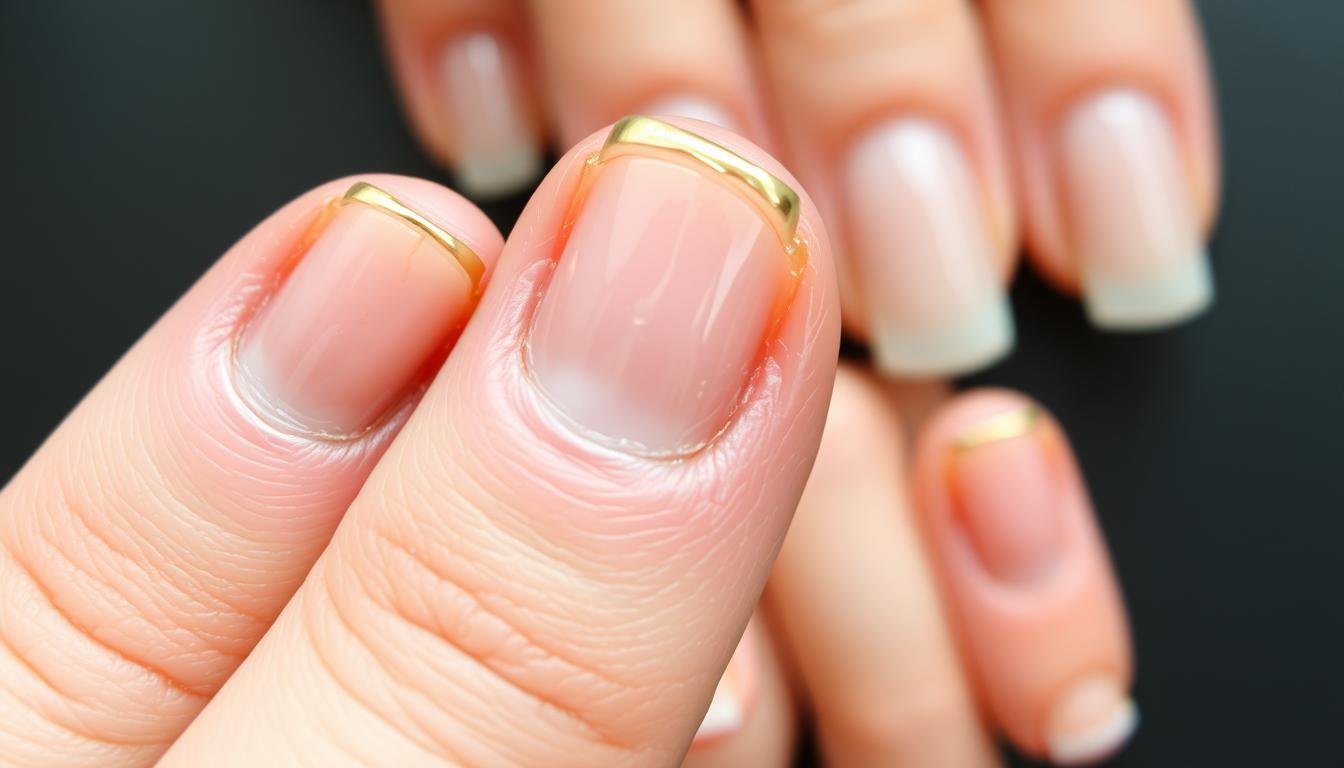
About 2 in 10 people face nail brittleness, with women more often affected. This condition, called onychorrhexis, includes vertical ridges and splitting nails. It might hint at health issues or lack of nutrients. Knowing about onychorrhexis is key for nail care because it shows more than weak nails.
Onychorrhexis may come from anemia, thyroid problems, or diseases affecting nutrient flow. Fortunately, there are treatments to strengthen nails and make them look better. These range from doctor-prescribed methods to home cures. Being smart about nail care and health issues prevents worse nail problems. For deep insights, see this resource on onychorrhexis.
Key Takeaways
- Onychorrhexis is characterized by vertical ridges and brittleness in the nails.
- Underlying health issues like anemia and thyroid disease can contribute to nail brittleness.
- Good nail care practices can help maintain nail health and prevent onychorrhexis.
- Nutritional deficiencies, particularly in iron and folic acid, can affect nail growth.
- Self-care measures, including moisturizing and avoiding harsh chemicals, are essential.
What is Onychorrhexis?
Onychorrhexis is a nail condition known for vertical ridges that go down the nail. These ridges might be shallow or deep, making nails likely to split and become brittle. While not often a serious issue, it can point to health problems if other symptoms show up.
Changes in nails might start to appear when someone hits 40. This is because nails get drier and break easier as we age. The reason? Our bodies make less of the proteins nails need. Also, your family history and changes in hormones can make this condition more likely.
It’s key to keep nails and skin moisturized to fight onychorrhexis effects. Staying hydrated lessens nail brittleness. Eating foods high in protein and vitamins can help nails stay healthy. If your nails change a lot, it’s smart to talk to a skin doctor. For more info on nail changes, check out this source.
Understanding Nail Anatomy
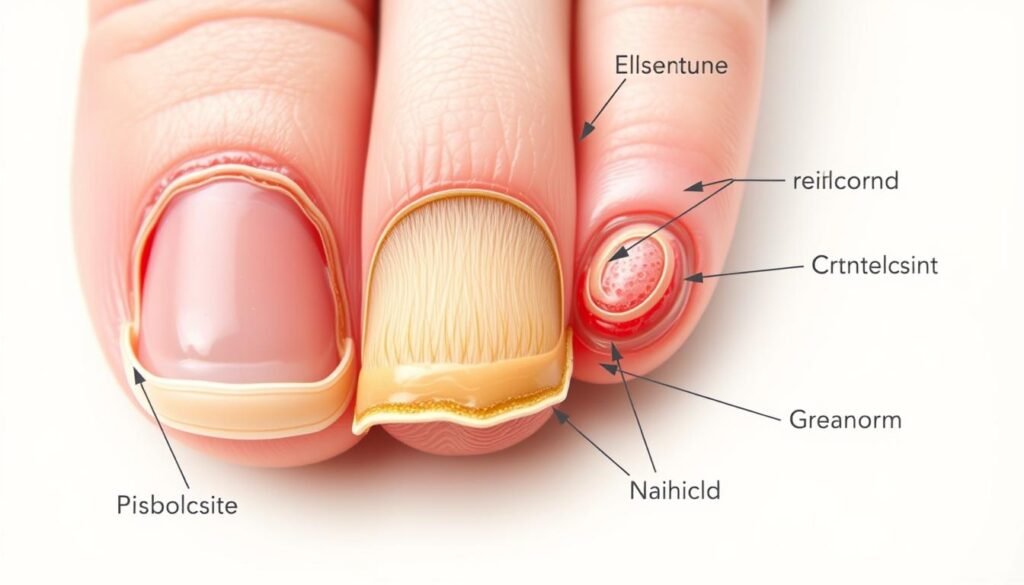
The parts of nail anatomy are key for nail health and looks. The nail plate sits on top and is mainly keratin. Under it, the nail matrix is vital for nail growth. Unhealthy nails can become weak or look bad, a sign of onychorrhexis.
Structure of the Nail Plate
The nail plate is thick and partly see-through. This lets us see the nail bed underneath. It acts as a shield, protecting the nail bed. Our nails completely renew every six months. This reflects our health. Changes in the nail could point to nutritional problems or diseases.
Nail Matrix Functionality
The nail matrix is essential for making new nail cells, ensuring nails grow well. It gets a lot of blood, promoting nail growth. If the nail matrix gets damaged, nails might grow oddly. Taking good care of it helps avoid these problems. Checking your nails often can help spot health issues early. Keeping an eye on them helps us stay aware of our health. For more details, you may refer to this source.
Causes of Onychorrhexis
Getting to know the various causes of onychorrhexis is key to preventing and dealing with it. This condition makes nails brittle and causes noticeable vertical ridges. Factors ranging from health issues to outside forces play a big role in causing onychorrhexis.
Systemic Health Conditions
Many health problems can lead to onychorrhexis. Anemia, issues with the thyroid, and diseases like rheumatoid arthritis are common causes. These health issues can mess up how nails grow and look, changing their structure.
Nutritional Deficiencies
Lacking key nutrients can also cause onychorrhexis. Not getting enough iron, protein, and folic acid can hurt how keratin is made. Since nails need these nutrients to be strong, not having them causes ridging and splitting.
Nail Trauma and Chemical Exposure
Nail trauma and harsh chemicals can lead to onychorrhexis too. Simple actions like picking at nails or often using nail products can harm the nail matrix. Being exposed to chemicals in nail polish remover makes things worse, harming nail health.
Symptoms of Onychorrhexis
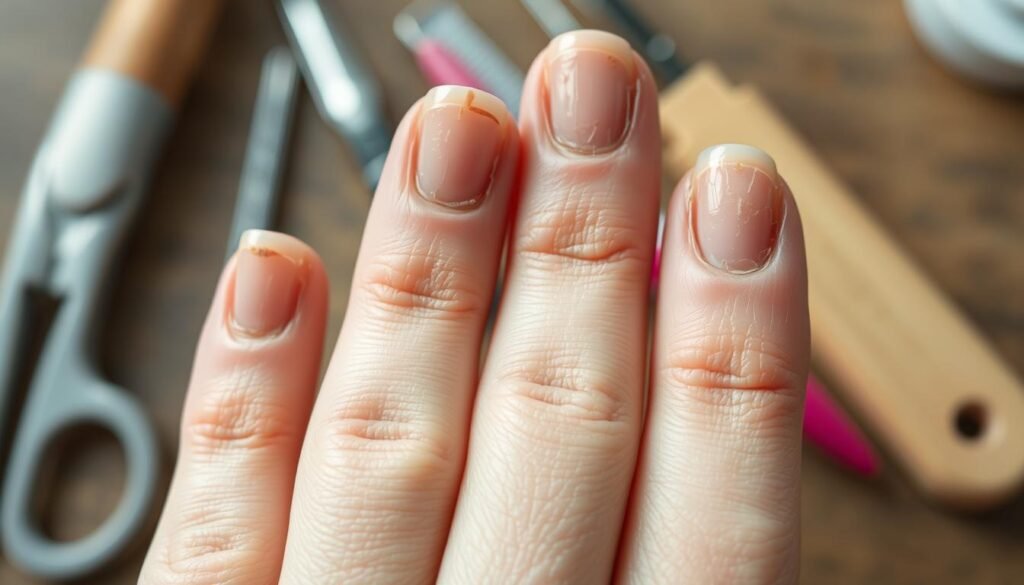
Knowing the symptoms of onychorrhexis helps to act fast. The main signs are long lines or grooves on your nails. These lines can make the nails feel rough and raise concerns about their health. People might also see their nails getting thinner and more breakable. This leads to brittle nails that split easily, known as onychoschizia.
Visual Indicators
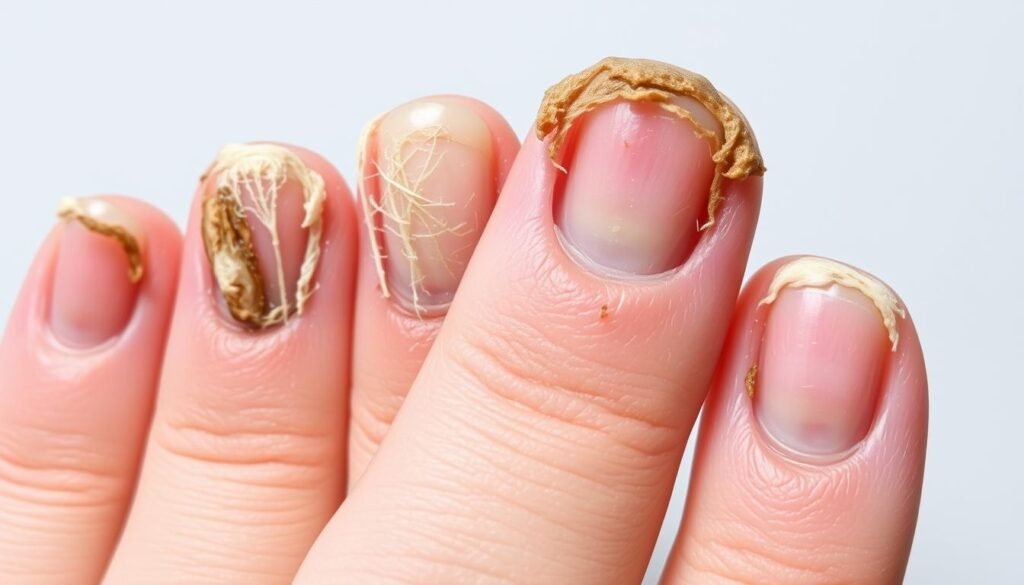
Vertical ridges aren’t the only warning. Nails might also change color, turning yellow or starting to crumble. These changes are signs to look deeper into your health or nutrition.
Associated Nail Brittle Symptoms
Nail brittleness is a big sign of onychorrhexis. Brittle nails can hurt or cause discomfort if they break or peel off easily. Spotting these signs early is key. By starting nail care habits that focus on keeping your nails moist, well-fed, and safe, you can have healthier nails.
The Impact of Onychorrhexis on Nail Strength and Growth
Onychorrhexis makes nails weak and more likely to break or split. This condition usually starts by the age of 40. It makes nails grow slower and they can become brittle and possibly separate from the nail bed.
A fingernail takes about six months to fully grow back. But onychorrhexis can slow down this process. It can be due to hormonal imbalances or lack of certain nutrients. These problems can make the nails grow slower and become more fragile.
To improve nail health, it’s important to understand onychorrhexis. You can adopt simple habits:
- Regular hydration of cuticles can prevent infections.
- Using glass nail files rather than cardboard emery boards reduces the risk of damage.
- Maintaining short nail lengths and applying clear top coats can protect delicate nails.
Products with biotin can help nails get stronger, but it takes time. As we age, our nails grow slower. Knowing about onychorrhexis is key for keeping nails healthy.
| Factor | Effect on Nails | Recommended Action |
|---|---|---|
| Age | Reduces nail strength and growth rate | Regular moisturizing and cutting nails properly |
| Nutritional Deficiencies | Affects nail strength and growth | Balanced diet rich in nutrients |
| Hydration | Maintains moisture, preventing brittleness | Use cuticle oils regularly |
| Environmental Factors | Increases risk of damage and splitting | Avoid excessive exposure to harsh chemicals |
Nail Brittleness and Splitting
Nail brittleness is a common issue. It shows as nails that break or split easily. This problem is especially found in people with a condition called onychorrhexis. To deal with brittle nails effectively, it’s crucial to understand their main types. This includes those caused by other health issues or injuries. With the right knowledge, we can improve nail health significantly.
Understanding Nail Fragility
Nail fragility means nails are not as tough as they should be. This leads to issues like nails breaking or splitting more than usual. Many things can cause this, like not getting enough of certain nutrients or being in harsh environments.
Different Types of Nail Fragility
- Primary Idiopathic Fragility: This type has no clear cause and is often related to genes.
- Secondary Fragility: This happens because of health problems, such as not having enough zinc. A lot of people don’t get enough zinc, which hurts their nails.
- Aging-related Fragility: Getting older increases the risk of brittle nails, especially after 50. This is more common in fingernails than in toenails.
Studies show biotin can make nails up to 25% thicker and help with splitting. Taking 5 mg to 10 mg of biotin daily for a few months is often advised for the best results. Horsetail grass might also make nails better, especially if they tend to split. Drinking enough water and eating a diet full of vitamins and minerals is key for healthy nails.
| Type of Fragility | Causes | Recommended Solutions |
|---|---|---|
| Primary Idiopathic | Genetic Factors | Consult with a dermatologist |
| Secondary | Zinc Deficiency | 20-30 mg zinc supplementation daily |
| Aging-related | Natural Degradation | Biotin and collagen supplements |
Nail Deformities Associated with Onychorrhexis
Onychorrhexis is often called brittle nails. It leads to many nail deformities. These affect nail looks and use. Knowing these deformities helps manage them better.
Types of Deformities
Onychorrhexis can cause these nail problems:
- Ridges: Visible lines make the nail surface uneven.
- Splits: Cracks can appear along the nail’s length.
- Changes in Shape: This causes curved or odd-shaped nails.
- Chipping: Small parts break off from the nail edge.
These problems show onychorrhexis’s impact. They suggest health issues or bad nail care.
Long-Term Effects on Nail Appearance
Onychorrhexis can make nails brittle for a long time. This causes lasting beauty concerns. Here are common effects:
| Deformity | Description | Impact on Nail Appearance |
|---|---|---|
| Ridges | Grooves that run either vertically or horizontally across the nail. | Nails look uneven and old. |
| Splits | Cracks that can develop through trauma or fragility. | Can cause nail loss and painful healing. |
| Koilonychia | Concave nails, often from lack of iron. | Gives nails a spoon-look, affecting beauty. |
| Pitting | Small dents on the nail surface. | Leads to a messy look, linked to skin problems. |
Knowing these issues helps in taking early action. Talk to a healthcare provider for help. This can make nails healthier and look better. For more on brittle nails, visit this resource.
Diagnosing Onychorrhexis
Diagnosing onychorrhexis starts with a check-up by a dermatologist. They look at your nails closely. They check for things like vertical ridges. These signs can show if there are bigger health issues. This careful check helps find out how bad the nail problem is and why it’s happening.
Professional Examination
The check-up isn’t just looking at your nails.
It also looks at your lifestyle and what you do that might affect your nails. The dermatologist might ask about the chemicals you touch, your diet, and any past nail injuries. This full exam makes sure nothing is missed. It helps find the right way to fix or treat the nail issues.
Medical History Review
A deep dive into your health history is also key. It can show past issues or lack of nutrients that made your nails weak. Sometimes, other health problems like psoriasis or thyroid issues show up as nail problems. Knowing your health history helps find the best way to keep your nails healthy.

