
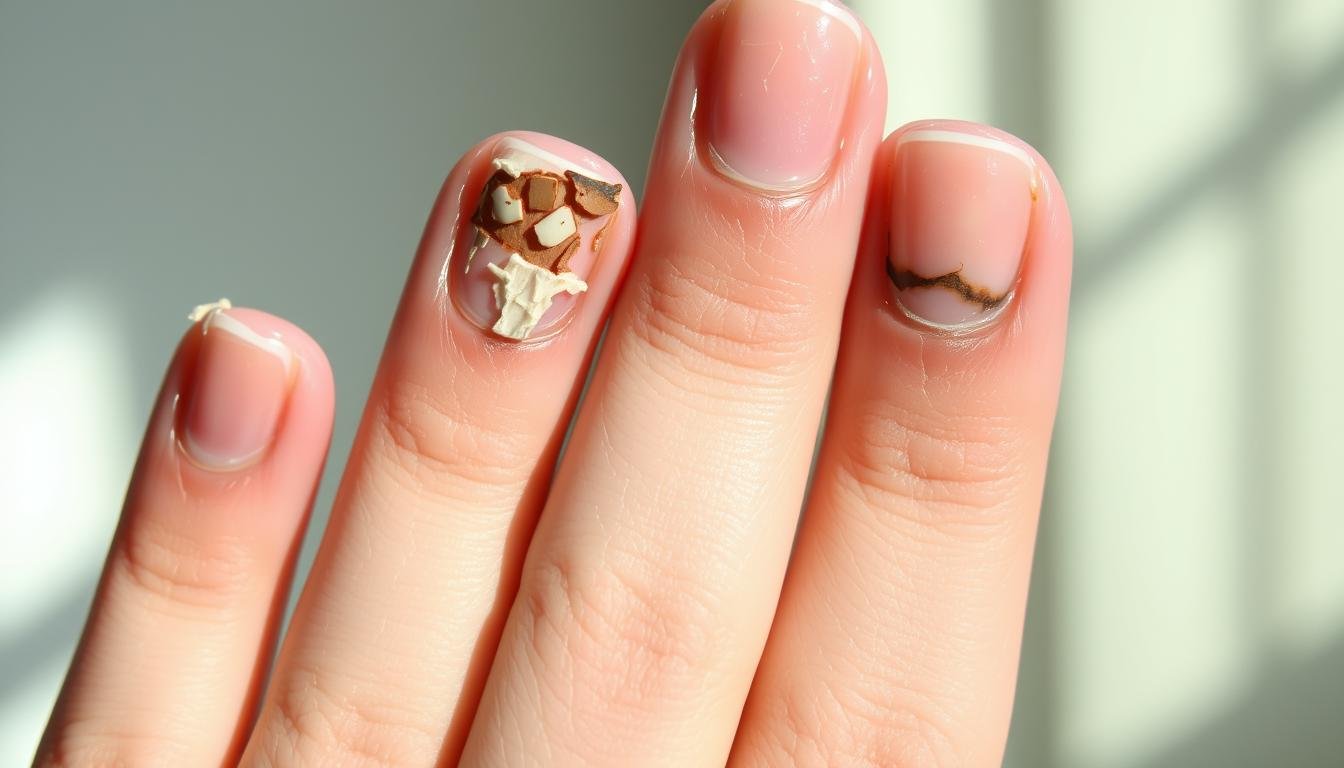
Did you know that up to 20% of the population has brittle nails? This problem is especially common in women over 50. Cracking and splitting nails are not just cosmetic issues. They can point to deeper health problems or lack of nutrients. Nail health is a big clue to our overall health, more than just how we care for them. When we see problems like these, it’s important to understand what our nails are telling us about our health.
Nail problems can come from being fragile to environmental damage. Recognizing these signs is the first step to taking better care of our health. To learn more about keeping nails strong with a good diet and the right supplements, click here.
Key Takeaways
- Nail brittleness affects up to 20% of the population, especially women over 50.
- Fingernail fragility is more common than toenail fragility.
- Inflammatory nail disorders can lead to abnormalities in up to 50% of affected patients.
- External factors such as excessive hand washing can contribute to peeling nails.
- A balanced diet rich in iron can help in maintaining nail health.
Understanding Nail Health
Nail health shows how well we are on the inside. Changes in our nails can reveal if we have health issues. For example, getting more vertical ridges on nails is common as we age. These signs can point out if we’re missing important nutrients or having other health issues.
Most of the time, if nails are brittle, weak, or peeling, it’s because of our lifestyle and what we eat. As people get older, they might have brittle nails due to changes in keratin. Also, too much water, chemicals, or using alcohol-based sanitizers can harm our nails a lot.
The American Academy of Dermatology says there are 12 nail changes that should make us see a dermatologist. How we live can either help or hurt our nails. Things like filing too much or too much nail polish can damage them. To keep nails healthy, moisturize them, wear gloves for housework, and eat well. You might even need a biotin supplement to make nails stronger.
| Nail Condition | Possible Causes |
|---|---|
| Brittle Nails | Age, nutritional deficiencies, chemical exposure, thyroid issues |
| Vertical Ridges | Age-related changes |
| Curved Nails | Inherited traits, underlying health issues |
| Pale Nails | Anemia, liver disease |
| Random White Spots | Injuries, zinc deficiencies |
| Blue Tinge | Lack of oxygen, potential heart disease |
| Yellow Nails | Infections, nail polish stains |
To keep our nails in good shape, we need to think about our diet, how we live, and look for signs of damage. Knowing these changes and what they mean helps us protect our nails and our health.
Common Signs of Nail Damage
Nail health is key to knowing your overall well-being. Looking for signs of nail damage can lead to discoveries about your health. Brittle nails or nails with cracks and lifting edges often point to deeper issues. Watching these signs closely is vital for quick action.
Key Symptoms
Noticing different nail deformities helps with good nail care. Here are important symptoms to watch out for:
- Brittle nails that break easily might mean you need more nutrients like biotin, iron, or zinc.
- Horizontal ridges, known as Beau’s lines, raise alarms about health interruptions due to things like trauma or stress.
- Vertical lines could show issues with nutrient absorption or signal health problems, often seen as we age.
- Nails turning yellow and getting thick could point to lung issues.
- If your nails grow slowly, it might be a sign of other health troubles, needing a doctor’s check.
If you have cracked nails or other symptoms, getting advice on nail care is wise. Learning about these signs of nail damage helps you take action early. Always talk to a health expert when these signs appear for the right care and treatment.
Brittle Nails: What You Need to Know
About 20% of people have brittle nails, known as onychoschizia. This condition is more common in women and those over 50. The nails often split and crack, looking bad and feeling worse. Nails are made of keratin, like our hair and skin’s top layer. It’s crucial to keep them healthy to avoid these issues.
Many things can cause brittle nails. Getting your hands wet a lot, using strong cleaners, and certain health issues can affect your nails. Not getting enough iron, zinc, or biotin in your diet also plays a part. Even some beauty products and nail infections can make things worse.
To keep your nails strong, here are some tips:
- Regularly shape and file nails to prevent snagging.
- Buff nails in the natural growth direction to reduce trauma.
- Avoid using metal instruments that can cause splits.
- Wear protective gloves while doing household chores.
- Hydrate nails with lotions that contain lanolin or alpha-hydroxy acids.
- Consume a diet rich in protein, iron, and zinc.
- Consider taking biotin supplements for support.
Brittle nails usually aren’t a sign of a major health problem. But, if you’re also feeling tired or dizzy, you might need to check for other issues. Seeing a dermatologist can help find the best ways to care for your nails.
Nail Ridges: Causes and Implications
Nail ridges show a lot about our nail health. They mainly come in two types: vertical and horizontal. Vertical ridges are common as people get older.
This happens because our cell turnover slows down. These changes are mostly harmless. Yet, they can hint at more serious health problems if combined with other symptoms.
Horizontal ridges, or Beau’s lines, are especially important. They can result from using certain medicines, like chemotherapy drugs. Acute kidney disease might also show itself through Beau’s lines.
It’s crucial to know these causes of nail ridges. Understanding them helps spot possible health issues.
Lacking vitamins like A, B, C, D, E, iron, folic acid, and zinc can cause nail ridges too. Spotting nail ridges early and knowing what they mean is important. It can lead one to seek the right medical help.
Nail ridges tell us about aging, health issues, and our diet. Keeping an eye on these changes is wise. It helps us make better choices about our health.
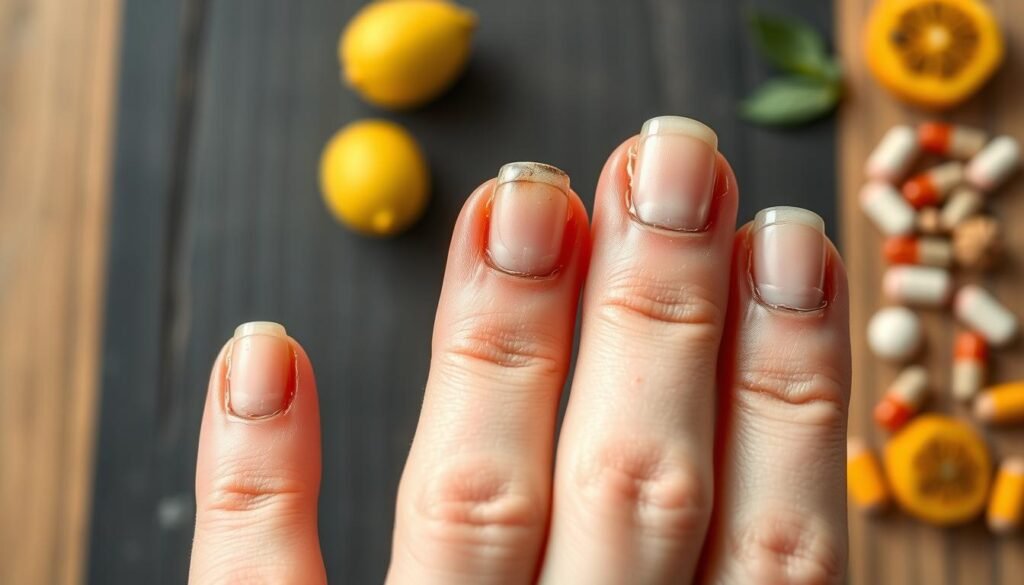
Onychorrhexis and Its Connection to Nail Damage
Onychorrhexis means the nails split or ridge lengthwise. This condition often shows up with nail damage. It differs from person to person. Some might see it on just one nail, while others have it on many.
Many factors lead to onychorrhexis. Age, various medical conditions, not getting enough nutrients, and injuries play roles. As people get older, their nails can get thinner and more brittle. This can make ridges more obvious. Issues like thyroid problems, anemia, and diseases such as rheumatoid arthritis or psoriasis can also cause it. Not having enough folic acid, iron, and protein in your diet can make it worse.
Treating onychorrhexis means dealing with its causes. This might need medical actions to fix health problems. For home care, keeping nails moisturized helps. So does avoiding too much water and harsh cleaning agents. Eating right and wearing gloves for cleaning are good ideas too.
To keep nails healthy, people often take biotin. Good nail habits help avoid onychorrhexis and future damage. If you see symptoms, take care of your nails. Talk to a doctor for advice tailored to you.
Split Nails: Causes and Treatments
Split nails are a sign your nails are damaged. Several things can cause them. For example, too much moisture, harsh chemicals, or hitting your nail can lead to splits. People like hairdressers often wet and dry their hands a lot. This makes their nails dry and breakable.
Being in hot and wet places too can harm your nails. Dr. Shirin Peters suggests nail treatment should focus on adding moisture back. Also, wearing gloves while doing housework can really help protect your nails.
Using certain chemicals, like gels and glues, can also make the problem worse. These products take moisture away from your nails. To help, put on moisturizer regularly and stay away from strong cleaners.
If your nails keep splitting, it’s a good idea to see a doctor. They can check for any health problems that might be causing it. You might need special nail treatment. There could be a lack of nutrients or a skin problem at fault. More about one such issue, onycholysis, can be found here.
Visible Indicators of Nail Damage: Key Symptoms
Understanding visible signs of nail damage is crucial for spotting health issues. Look out for brittleness, discoloration, ridges, and splitting. Yellow nails could mean a fungal infection or an allergy, while white spots might show mineral deficiencies or past injuries.
It’s important to watch for changes in your nails’ texture. As you age, nails may get ridges or thicken. Keeping an eye on these symptoms helps catch issues early, stopping small problems from getting worse.
- Brittle or easily breakable nails
- Discoloration ranging from yellow to green
- Vertical or horizontal ridges
- White spots on the nail surface
- Pitting, which could point to serious conditions
Watch for dark streaks or changes in nail thickness. These could be signs of melanoma or fungal infections. If these symptoms don’t go away, see a professional. They can give the right treatment.
| Indicator | Possible Causes |
|---|---|
| Brittle Nails | Aging, genetics, and moisture exposure |
| Yellow Nails | Fungal infections or serious conditions like psoriasis |
| White Spots | Past injuries, fungal infections, or not enough minerals |
| Pitting | Conditions like psoriatic arthritis |
| Discoloration | Lack of water, chemical exposure, or infections |
Monitoring nail damage signs helps identify health issues early. Taking quick action lets us fix problems efficiently. This ensures nails stay healthy for the future.
Peeling Nails: Why It Happens
Peeling nails have different causes, and knowing these causes of peeling nails is key. External factors like often washing hands, harsh chemicals, or lots of water contact are common. These situations remove natural moisture, making nails peel.
Not getting enough nutrients, especially iron, affects nail health. A slight lack of iron can make nails weak and peel. In the U.S., 37 million adults suffer from kidney disease. Many also have thyroid issues. This shows how nail health links to other health problems.
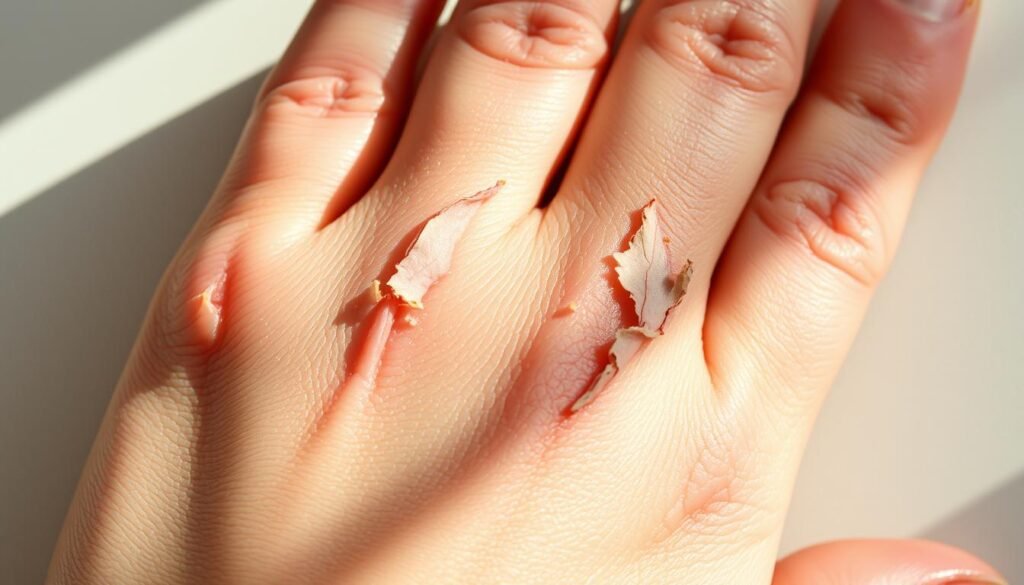
To improve your nails, try moisturizing them with coconut oil. This can help with dryness and make them stronger. If nail changes continue or you notice other symptoms like feeling tired or losing weight without trying, see a doctor. You might need to eat more iron-rich foods like spinach, beans, and red meat.
Preventing peeling nails is also important. Stay away from gel or acrylic nails and use gloves with chemicals. Use nail polish remover carefully to keep your nails healthy.
| Cause of Peeling Nails | Description |
|---|---|
| Excessive Moisture | Frequent exposure to water leading to weakened nails. |
| Chemical Exposure | Using detergents and cleaning products that damage nail integrity. |
| Iron Deficiency | Low iron levels resulting in weak nail structure. |
| Health Conditions | Underlying issues like kidney disease or thyroid problems affecting overall nail health. |
| Inadequate Nutrition | Lack of essential nutrients contributing to poor nail condition. |
Factors Contributing to Toenail Damage
Toenail damage comes from many sources affecting nail health. Knowing these can help in taking good care of your nails. A big cause is fungal infections like onychomycosis, which is behind half of toenail issues. This can make toenails change color and can be very painful.
Ingrown toenails are also a big problem, mostly for teenage boys. They happen if nails aren’t cut right or from wearing tight shoes. Also, wearing the wrong shoes can hurt your toenails. Shoes need to let your feet breathe to avoid nail damage.
Health issues impact nails too. For example, some people on chemotherapy have nail problems. Lack of iron or thyroid problems can make nails split, a problem seen more in women. Pterygium toenail creates scars and comes from systemic diseases or bad circulation. This shows how vital it is to look into health problems.
Keeping your nails clean is key to stopping damage. Pick shoes that let your feet breathe. This helps avoid harm from injuries or fungus. People dealing with toenail issues should look at their overall health. A full care plan can address both symptoms and the root problems.
Diet’s Role in Nail Health
Your nails often show how healthy you are, which highlights why a good diet for nail health matters. Vitamins and minerals like calcium, iron, and B vitamins are key for strong, tough nails. Not all slow growth means you lack calcium, but good nutrition is key for better nails.
Eating a variety of whole foods delivers the essential nutrients your nails need. Here are main points to consider for better nails:
- Calcium: It’s important for bones and might help nails too. Eat lots of dairy, leafy greens, and fortified foods.
- Biotin: Great for nail health. You’ll find it in eggs, nuts, and seeds.
- Protein: Since nails are mostly keratin, a protein, adding fish, meat, and legumes to your diet helps.
- Omega-3 Fatty Acids: These fats, in salmon and flaxseed, help make nails flexible and healthy.
- Zinc and Iron: Essential for nail growth. Found in meats, beans, and whole grains.
If you’re missing key nutrients, consider supplements like biotin and collagen. They can strengthen nails. Always talk with a doctor before starting supplements, though.
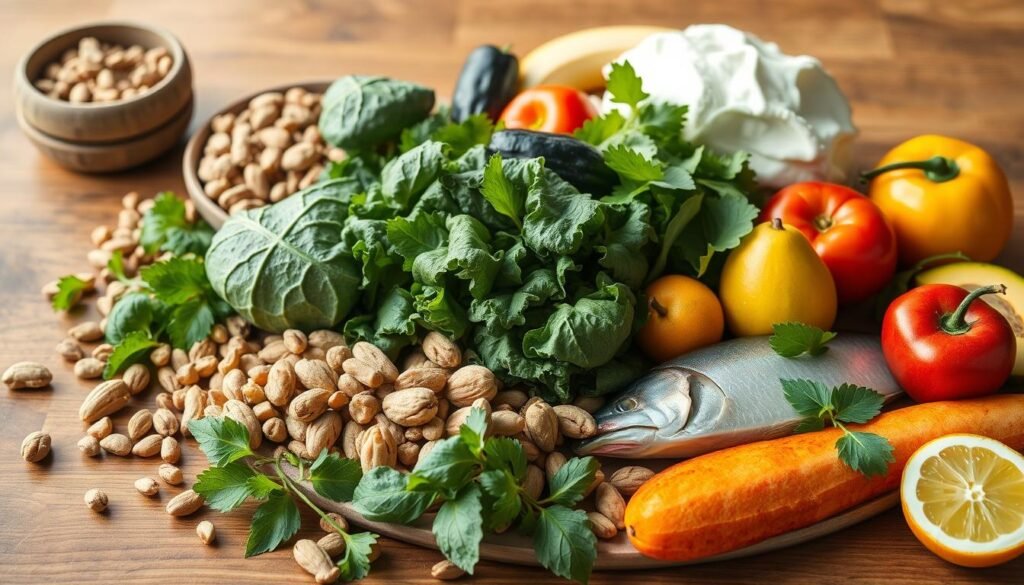
A healthy diet is key to great nails. Choose nutrient-rich foods for strong, healthy nails over time.
| Nutrient | Source | Benefits for Nails |
|---|---|---|
| Calcium | Dairy, Leafy Greens, Fortified Products | Supports bone and nail strength |
| Biotin | Eggs, Nuts, Seeds | Improves nail thickness and growth |
| Omega-3 Fatty Acids | Salmon, Flaxseed | Enhances nail flexibility |
| Zinc | Meats, Beans, Whole Grains | Aids in nail growth and recovery |
| Protein (Keratin) | Fish, Meat, Legumes | Critical for maintaining strong nails |
Practices to Maintain Healthy Nails
Keeping your nails healthy takes some effort. It’s about good nail care habits. Staying hydrated and eating right are key.
Here are some good habits to start:
- Proper Filing Technique: File gently in one direction. This avoids nail damage.
- Cuticle Care: Push back cuticles smoothly after showering. This helps prevent infections without cutting them.
- Hydration Tips: Use hand cream or cuticle oil often. This keeps nails hydrated, reducing dryness and breakage.
- Nail Strengthening: Eat a balanced diet and try nail strengtheners. They help nails become flexible and strong.
- Polish Application: Apply thin layers of base, color, and topcoat. Make sure each layer dries for durable manicures.
- Healthy Diet Choices: Eat lots of vitamins and proteins. They’re great for nail growth.
- Weekly Maintenance: Trim, file, and moisturize nails regularly. This prevents hangnails.
- Professional Manicures: Specialists use tools and techniques that are good for your nails.
- Natural Remedies: Try using coconut oil or tea tree oil. They’re gentle and nourishing for your nails.
- Seasonal Adjustments: Change your nail care with the weather. This keeps them healthy all year.
Taking biotin supplements might also help. You might see stronger, thicker nails after 3 to 6 months. It all starts with adopting better nail care.
| Practice | Benefit |
|---|---|
| Hydration | Prevents dryness and breakage. |
| Regular Trimming | Avoids hangnails and split nails. |
| Proper Filing | Minimizes damage during maintenance. |
| Nail Strengtheners | Improves flexibility and resilience. |
| Healthy Diet | Supports nail growth and overall nail health. |
Stick with these tips and you’ll see better, stronger nails. Your nail health will improve, too.
Seeking Professional Help for Nail Issues
Getting help early for nail problems can make treatment easier. If home remedies don’t work, it’s time to seek expert advice. Signs like nails that keep splitting, look different in color, or feel different might mean there’s a bigger health issue.
Experts say if your nails are brittle, have ridges, or hurt a lot, see a doctor. Issues like onychoschizia, which causes nails to split across, can make everyday tasks hard. A dermatologist can offer the right treatment, whether it’s fungal infections or nail psoriasis.
Seeing a doctor early can help with both looks and health. Looking out for changes like thicker nails, different colors, or big pain is key. Being ahead of these issues helps keep your nails looking and feeling good.
Conclusion
Nail health is a mirror reflecting our overall health condition. They can show signs of health issues. For instance, pale nails might mean you have anemia or a liver problem. Yellow nails often warn us about fungal infections or diabetes. So, looking after our nails is key to our well-being.
Knowing about nail health leads to better care. It’s easy to keep nails strong if we know how. Staying hydrated, eating well, and taking good care of ourselves can make our nails healthier. It’s important to act on problems like peeling, brittleness, or discoloration early. This helps to stop more issues and keeps our nails healthy.
If nail problems don’t go away or get worse, it’s smart to get expert advice. Using specific treatments and supplements can help a lot. For tips on treating brittle nails and more, check out this guide on nail health. To sum up, caring for our nails is a big part of staying healthy overall.

