
Did you know that a stunning 88% of people seeing skin doctors have brittle nails? This condition, called onychorrhexis, doesn’t just change how nails look. It can also make everyday tasks hard because nails split and get brittle. Keeping nails healthy and avoiding more issues is key.
We’re here to talk about onychorrhexis, why it happens, and the signs to watch for. We’ll share tips on caring for your nails, what to eat, and how to treat this problem. To learn more about fixing brittle nails, check out this resource.
Key Takeaways
- Onychorrhexis commonly affects many individuals, particularly those over 50.
- Maintaining proper nail care can significantly reduce complications associated with brittle nails.
- Identifying and treating underlying health issues is critical for effective nail health management.
- Nutritional factors such as biotin and essential vitamins play a crucial role in strengthening nails.
- Consulting with a podiatrist can provide specialized care for persistent nail issues.
Understanding Onychorrhexis
Onychorrhexis is known for longitudinal ridges on nail surfaces. Often seen on fingers, it leads to brittle nails. Though some see it as just a cosmetic issue, it could point to nutritional deficits or serious health concerns like thyroid problems and anemia.
The nail matrix plays a vital role in nail growth. Factors such as aging affect it, leading to thinner and weaker nails. Visible vertical ridges, which result from nail plate splitting, raise concerns among many.
Nutritional deficiencies play a role in onychorrhexis too. Missing nutrients like iron and biotin result in noticeable ridges. Skin conditions, such as psoriasis, can worsen it. Also, trauma and harsh chemicals, especially at work, harm nail health.
To manage onychorrhexis well, one must understand its causes. It’s wise to eat a balanced diet, follow good nail care practices, and seek medical advice if needed. Knowing more about onychorrhexis promotes better nail growth and helps avoid further issues.
Causes of Onychorrhexis
Nail health is vital and can be harmed by many factors. One major cause of onychorrhexis is not getting enough vitamins and minerals. These include iron, folic acid, and proteins. They are key for keeping nails strong.
Bad eating habits are not the only issue. Nail trauma also plays a big role in onychorrhexis. Injuries or using harsh chemicals can hurt your nails. Habits like biting your nails make things worse. So does staying in water for too long.
Some diseases, like anemia and arthritis, make nails weak. As people get older, their nails change too. They might see more ridges. Knowing these causes helps us prevent and treat weak nails.
Symptoms of Onychorrhexis
Onychorrhexis has clear symptoms that can help catch it early. The main sign is vertical ridges or grooves on the nails. This gives the nails a bumpy texture. Nails may also become brittle, split, peel, or crumble easily.
Discoloration is another important symptom. It could point to infections or serious conditions like psoriasis. Bleeding or severe pain should not be ignored. They could mean there’s a serious problem that needs quick medical help.
Knowing the symptoms of onychorrhexis is key to tackling it early. Brittle nail syndrome is more common in women. They’re twice more likely to have it than men. The risk of getting brittle nails goes up after age 60.
- Brittle nails can come from psoriasis, eczema, or nail fungus.
- Nail ridges often go hand-in-hand with fragile nails.
- Harsh chemicals can also harm your nails.
Not getting enough iron can also lead to nail problems, like a spoon shape. In bad cases, talking to a doctor can help figure out if onychorrhexis is a big health worry or just a minor nuisance. For deeper information on onychorrhexis symptoms and risks, check out this useful article.
Preventing Further Complications from Onychorrhexis
Addressing onychorrhexis early is key to avoiding more severe problems. Brittle nails can lead to deep splits or infections if ignored. It’s vital to keep an eye on your nails’ health to spot any concerning changes early on.
Getting medical advice will help find the right early treatment. This can promote healthier nail growth, keeping nails strong.
Importance of Early Treatment
Beginning treatment early can greatly improve nails affected by onychorrhexis. Quick action not only betters nail health but also reduces the chance of other issues. If you notice brittle nails, seeing a dermatologist for an assessment is a smart move.
They might suggest treatment like topical antifungals for fungal issues, or other specific therapies. These can tackle the root cause of nail problems.
Recognizing Underlying Health Issues
It’s crucial to recognize that onychorrhexis might point to more serious health issues. Persistent brittleness or nail color changes could hint at nutrient deficiencies or autoimmune diseases. Regular doctor visits are important for catching these problems early. This allows for early management, improving nail and overall health.
Being proactive can lead to better health outcomes. It helps prevent nail complications from worsening.
| Health Issue | Potential Nail Symptoms | Recommended Action |
|---|---|---|
| Fungal Infections | Crumbly, discolored nails | Consult a dermatologist for testing |
| Psoriasis | Pitting, crumbling, or discoloration | Seek specialized treatments |
| Autoimmune Conditions | Brittle or thinning nails | Regular check-ups and monitoring |
Nail Care Tips for Healthier Nails
Taking care of your nails is crucial for keeping them healthy and avoiding issues like onychorrhexis. Effective nail care tips help make your nails stronger and less likely to break or split. It’s important to stay hydrated, eat well, and steer clear of harmful substances for the best nail health.
Moisturizing Your Nails
Moisturizing is key to stop your nails from peeling and to keep them healthy. Use oils or creams packed with vitamin E and A for better hydration. Olive oil or special nail oils are great for nourishing and moisturizing, making nails stronger. By doing this daily, you’ll have softer, healthier nails.
Avoiding Harsh Chemicals
Keeping away from harsh chemicals is vital for nail care. Some cleaners and nail polish removers can make nails brittle. Wear gloves when cleaning and pick nail products with nourishing ingredients to avoid nail problems. Choosing safe products keeps your nails protected and in good condition.
Check out this helpful resource for more tips on nail health. Paying attention to these tips will improve your nails’ health and strength. Focus on moisturizing and avoiding harmful chemicals for the best care.
Nail Strengthening Techniques
Want to make your nails stronger? There are many ways to do that. These methods help nails be more resilient, especially if you have onychorrhexis. Use nail strengtheners and protective coatings regularly for stronger nails.
Keeping nails trimmed helps avoid damage. Don’t file or buff too much; it weakens nails. Eating foods with vitamins A, C, and E, plus biotin, boosts nail health.
Moisturizing is key to avoid brittle nails. Use natural oils like coconut or olive oil to keep them hydrated. Choose acetone-free removers and gentle tools, like glass files, to minimize peeling.
Everyday actions affect nail health. Washing hands in hot water or using harsh chemicals can harm your nails. To protect them, change how you handle items and moisturize after washing.
To learn more about strengthening your nails, check out this detailed guide.
Nutrition and Its Role in Nail Health
Nutrition is key for healthy nails. Eating right supports strong nails and helps avoid nail problems. By getting enough essential nutrients, your nails can become stronger and grow well.
Essential Nutrients for Strong Nails
Here are some important nutrients for nail health:
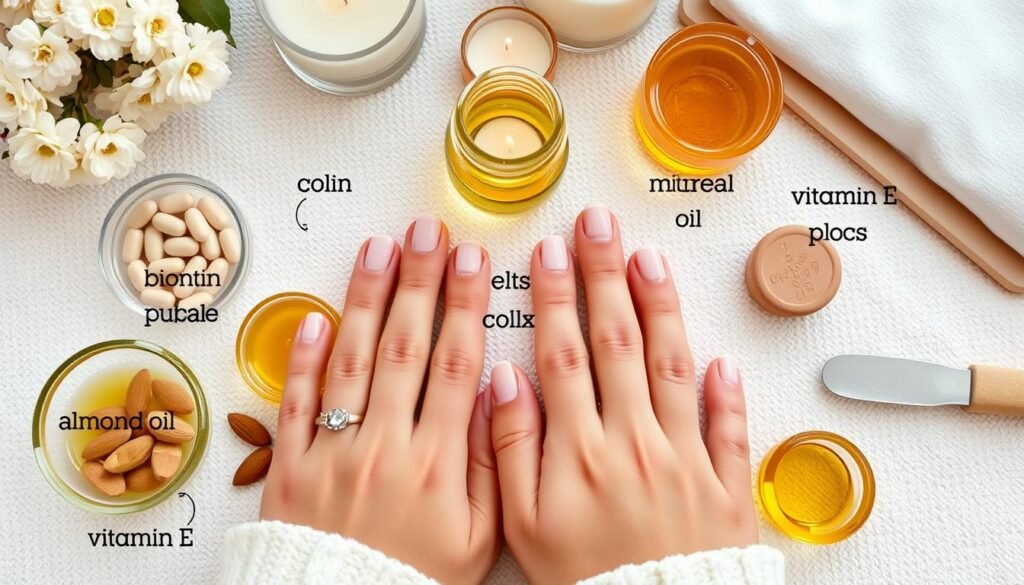
- Biotin: This B-vitamin makes nails thicker and stronger by improving keratin.
- Iron: It carries oxygen and is crucial. Lack of iron can affect your nails.
- Folic Acid: It boosts nail growth and keeps them in good shape.
- Protein: Since nails are mostly protein, you need enough for strong nails.
- Zinc: It’s needed for growth and cell division. Without it, nails can become brittle.
- Calcium: Keeps nail structure solid and fights brittleness.
- Magnesium: Strengthens nails and helps avoid splits or breaks.
Eating a mix of fruits, veggies, lean proteins, and whole grains prevents nutrient deficiencies. This not only keeps your nails healthy but also boosts your overall health.
Onychorrhexis Treatment Options
Treatment for onychorrhexis focuses on tackling root causes and boosting nail health. It involves using topical treatments and dietary supplements. These methods strengthen nails.
Topical Treatments
Topical treatments are key in managing onychorrhexis. Hydrosoluble nail lacquers and medicated varnishes offer protection. They also help make nails stronger. For inflammation, corticosteroids might be used to ease symptoms. Talking to a healthcare provider is crucial to find the right treatment.
Supplements for Nail Strength
Adding supplements can greatly improve nail health. Biotin is well-known for making nails stronger and less brittle. Having a diet rich in vitamins and minerals is also vital. A doctor can advise on the best dosages for maximum effect. These actions not only improve how nails look but also benefit overall health.
Home Remedies for Nail Care
For those dealing with onychorrhexis, home remedies can greatly improve nail health. Using natural solutions can lead to stronger, more resilient nails. This boosts self-confidence too.
Natural Oils and Moisturizers
Coconut and almond oils are great for nails. Massaging them regularly into nails nourishes deeply and boosts circulation. This results in healthier nails and helps prevent brittleness from onychorrhexis. Use oils high in essential fatty acids to fight dryness.
Effective Home Practices for Stronger Nails
Simple home practices can make nails stronger. These include:
- Regularly trimming nails to keep them healthy.
- Avoiding nail biting or picking, as it causes damage.
- Keeping good hygiene to avoid infections.
- Drinking lots of water to support nail health.
- Eating a diet rich in iron, folic acid, and protein.
Alongside home remedies, these practices lead to strong and healthy nails.
Improving nail health means looking at internal and external aspects. For more tips on dealing with onychorrhexis, check out this informative resource.
Conclusion
Understanding onychorrhexis is key for healthy nails. To avoid problems, know the signs and causes. Use good nail care methods like eating right, applying treatments, and trying home solutions. These steps help improve nail health.
If your nails change, like getting brittle, see a doctor often. Realize that health issues could make your nails weak. By doing this, you can avoid more nail problems and get stronger nails.
By caring for your nails, you’ll see them get better. This effort boosts not just how your nails look, but your overall health too. Taking care of your nails means taking care of your body.

