
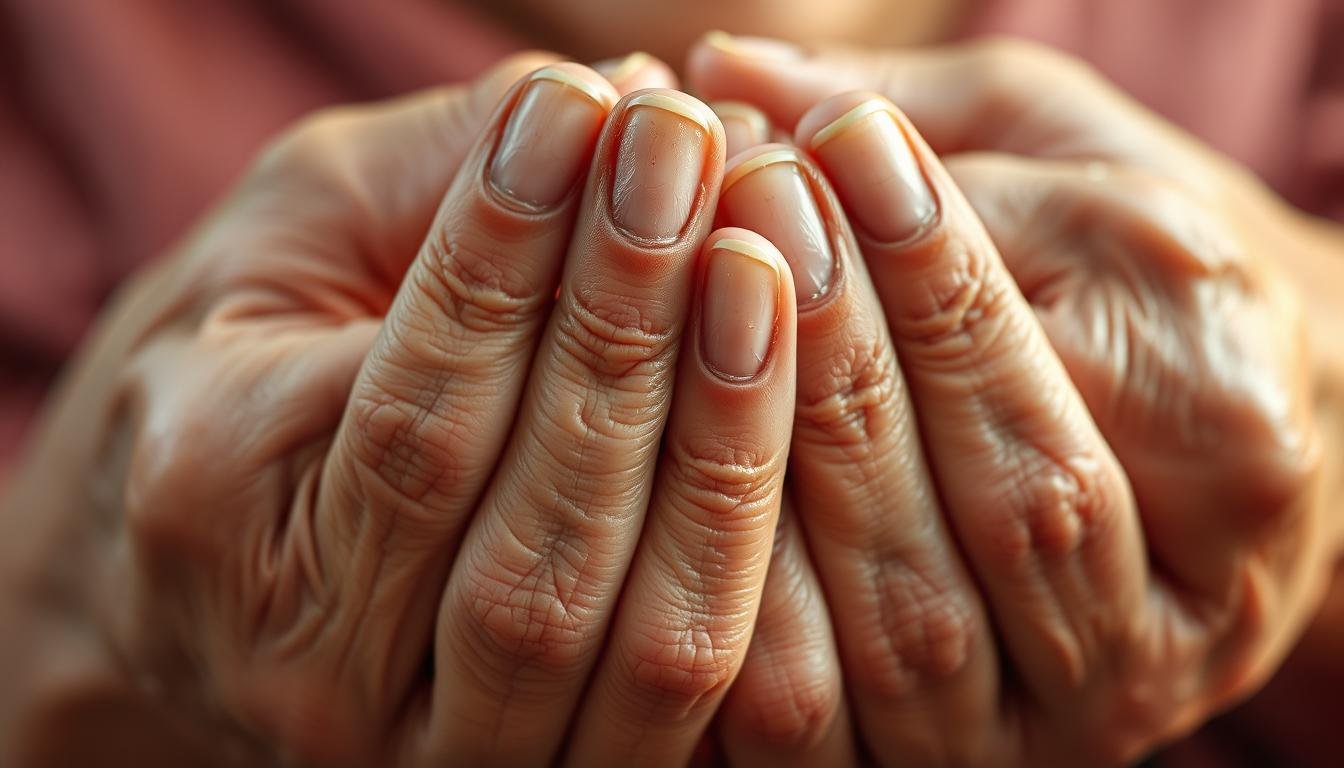
As people enter their later years, their nails often show signs of aging. Nearly 98% of older adults have at least one change in their nails because of aging. This shows how aging greatly affects nail health. It leads to conditions like onychorrhexis and brittle nails.
The growth rate of our nails slows down after we turn 25. On average, it drops by about 0.5% every year. So, it’s common for older people to have nails that break easily and have noticeable changes in structure.
Onychorrhexis comes with visible lines and splits in the nails. It usually appears with brittle nails, which are more common as people age. Thinner, more fragile nails can be more than just a beauty issue. They might also signal health problems. Knowing how aging affects our nails helps us take care of them better as we grow older.
Key Takeaways
- A significant percentage of older adults experience noticeable nail changes as they age.
- Nail growth rates slow down, leading to an increase in nail fragility.
- Onychorrhexis manifests through longitudinal ridges and splits.
- Brittle nails are more prevalent among the elderly population.
- Understanding aging’s effects on nails is crucial for proper care.
- Management strategies can help mitigate the impacts on nail health.
Understanding Onychorrhexis
Onychorrhexis is known for vertical ridges in nails and grooves that may cause thinning or splitting. This condition can come from aging, injury, or lack of nutrients. You might see these signs on all nails or just a few, with varying levels of severity.
Many onychorrhexis causes are linked to other health issues. Problems like anemia, thyroid disease, and arteriosclerosis can affect nail health. Moreover, diseases affecting the whole body, such as liver or kidney disease, can harm nails. Genetic conditions like Witkop syndrome also lead to vertical ridges in fingernails.
As people get older, their nails tend to get drier and more brittle. Onychorrhexis symptoms include discoloration and crumbling nails. Lacking important vitamins and minerals, like folic acid and iron, can also hurt nail growth.
Treating onychorrhexis usually means dealing with its root causes. This might mean taking iron supplements or biotin for healthier nails. Also, good nail care is key for prevention and improvement. It helps to keep nails short, moisturized, and safe from too much water.
What are Brittle Nails?
Brittle nails, also known as onychoschizia, are a common problem for many. These nails easily split, break, or peel. This not only looks bad but can also hurt. Reasons for brittle nails causes vary, including aging, exposure to harsh chemicals, and not getting enough nutrients. Interestingly, up to 20% of people have this issue, especially women over 50.
When nails are brittle, they might split or break easily. These symptoms of brittle nails could also show other health problems. It’s important to notice them early to get help. Conditions linked to this include onychorrhexis (nails with lengthwise splits) and lamellar onychoschizia (nails peeling into thin layers).
Nail polish can make things worse by damaging the nail’s surface. Also, women might see more brittleness because of weaker links in their nail cells. Nail problems like psoriasis and eczema are other causes, affecting up to half of people with psoriasis.
It’s good to know these causes to take better care of your nails. For more details on nail ridges, check out this informative resource.
| Condition | Characteristics |
|---|---|
| Onychoschizia | Nail splits into fine horizontal layers |
| Onychorrhexis | Longitudinal splitting and shallow furrows |
| Keratin Granulation | Exfoliation due to prolonged nail polish use |
How Aging Contributes to Onychorrhexis and Brittle Nails
As we get older, our nails change in many ways. These changes can hurt how healthy and good our nails look. By understanding how aging leads to onychorrhexis and brittle nails, we learn about the biological changes that happen over time.
Overview of Nail Aging
When people hit their 40s, changes in their nails become more visible. Nails grow slower, losing about 0.5% of their growth speed each year after turning 25. The color, thickness, and shape of nails often change with age. These changes show how aging impacts the whole nail.
Also, the chemical makeup of nails changes, making them more likely to break. This is why older nails often develop onychorrhexis.
Impact on Nail Growth and Structure
Aging affects how quickly our nails grow. Normally, fingernails grow about 3.47 mm every month. But this rate goes down as we age. This can make nails rough and more likely to detach from the nail bed.
Brittle nails become more common after 60. They can split easily among other problems. This shows the effect of aging on nails.
The Anatomy of Nail Health
Knowing about nail anatomy helps keep nails healthy, especially as we get older. The nail is complex, with many parts working together. These parts help nails grow and stay strong. As we age, keeping these parts working well, like the nail matrix, gets even more important.
Components of the Nail Unit
The nail has several vital parts:
- Nail Plate: This is the part of the nail we see, mostly made of hard keratin.
- Nail Bed: The skin under the nail plate that helps nails grow.
- Nail Matrix: Located under the nail’s base, it’s where new nail cells are made.
- Hyponychium: Skin under the nail’s edge, offering protection.
- Nail Folds: Skin folds by the nail that keep it in place.
The Role of the Nail Matrix
The nail matrix is key for healthy nails because it makes new nail cells. This gets harder as the nail matrix ages. The older we get, the slower our nail cells renew. This slow down can make nails brittle. Studies show almost half the people over 60 have brittle nails from these changes.
Nail health depends a lot on the nail’s structure. With the nail matrix changing because of age, it’s important to find ways to keep nails strong.
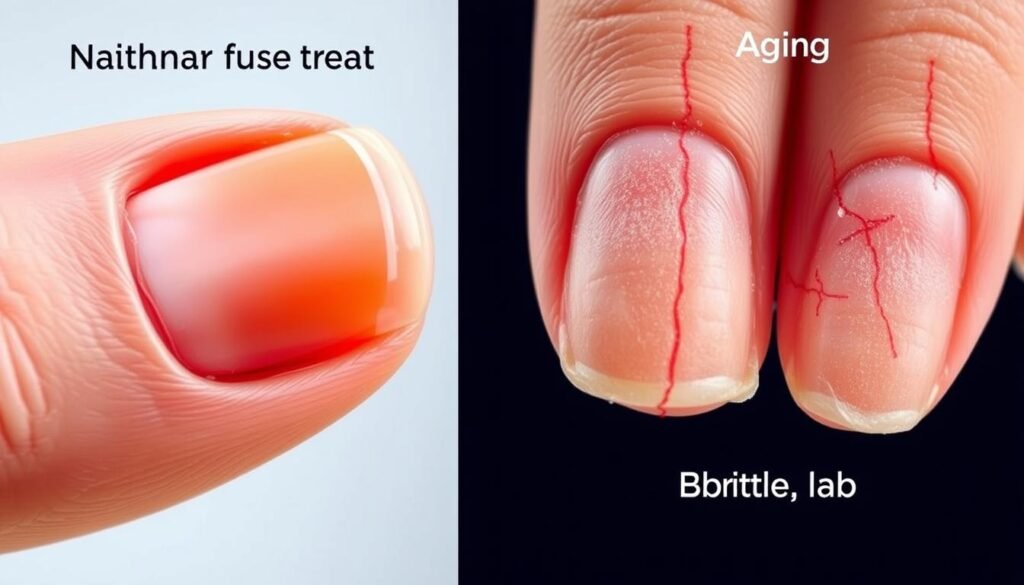
| Component | Function | Impact of Aging |
|---|---|---|
| Nail Plate | Protects the underlying tissue | Becomes thinner and more fragile |
| Nail Bed | Supports nail growth | May become more susceptible to trauma |
| Nail Matrix | Produces new nail cells | Reduced cell turnover leads to weaker nails |
| Hyponychium | Provides protection to nail bed | Increased vulnerability to infections |
| Nail Folds | Secures nails in place | May slacken, leading to nail irregularities |
Common Causes of Onychorrhexis
It’s important to know why onychorrhexis happens for finding how to treat and prevent it. Many things can make nail health worse. Getting older changes nail structure, and health problems can also cause nail issues.
Age-Related Changes
As people get older, their nails change in ways that make them more likely to get onychorrhexis. Blood flow slows down and nails get less nutrients, leading to brittleness and vertical ridges. These ridges make the nails look weaker. Aging affects blood circulation and oxygen getting to nails, causing them to become worse.
Health Conditions Inducing Nail Disorders
Some health problems can really affect your nails. Anemia, hypothyroidism, and skin issues like eczema and psoriasis are common problems leading to onychorrhexis. Autoimmune diseases, like rheumatoid arthritis, and thyroid problems also make nails brittle. When these conditions impact nails, it changes their structure and makes them more likely to break.
Exploring Brittle Nails Causes
Brittle nails come from various factors that affect their strength. Age plays a big role. As people age, their nails grow about 40% slower. This slowdown can make nails more prone to problems.
Lack of nutrients like proteins, iron, and vitamins can also cause brittle nails. This deficiency leads to symptoms like onychorrhexis and onychoschizia. About 20% of people suffer from brittle nail syndrome, with women being more affected.
Washing your hands too much can also harm your nails. The cycle of getting wet and drying can weaken nails. Fungal infections are another concern, often occurring with athlete’s foot.
Autoimmune diseases like lupus can make nails brittle. Injuries might cause nail deformities that need treatment.
| Cause | Description |
|---|---|
| Age | Natural reduction in nail growth rate and thinning. |
| Nutritional Deficiencies | Lack of proteins, iron, and essential vitamins that support nail structure. |
| Environmental Factors | Frequent hand washing leading to changes in nail texture and strength. |
| Fungal Infections | Commonly associated with skin infections, impacting nail health. |
| Autoimmune Conditions | Conditions like lupus that result in brittle or thinning nails. |
| Injuries | Trauma resulting in broken or deformed nails requiring treatment. |
Nutritional Deficiencies and Their Impact
Nutritional deficiencies are critical to nail health, influencing their strength and look. Not getting enough nutrients can lead to many issues like weaker nails. Protein scarcity affects nail health by reducing keratin. This is crucial for strong nails. This section talks about how missing protein impacts nails and the role of vitamins and minerals.
Protein Deficiency and Nail Health
When nails don’t get enough protein, they can become brittle and easily damaged. Keratin is a key protein that makes up the structure of nails. If you don’t eat enough protein, your nails can weaken and suffer from conditions like onychorrhexis. To keep nails strong, eat plenty of protein-rich foods like lean meats, fish, eggs, and legumes.
Importance of Vitamins and Minerals
Vitamins and minerals are very important for nail health. Biotin, zinc, and iron are key for keeping nails strong. A lack of zinc can lead to brittle nails and other nail problems. Around 15-20% of people globally don’t get enough zinc, showing the need for a diet full of different nutrients. Eating well helps avoid brittle nails and improves nail health overall.
The Role of Hydration in Nail Strength
Proper hydration is key for strong and flexible nails. Nails are about 18% water, so hydration impacts nails greatly. Dry nails can become brittle and damaged more easily.
Drinking enough water and moisturizing helps keep nails healthy. For people with brittle nails, staying hydrated is crucial. It prevents splitting and makes nails stronger. Hydration is essential for healthy nails.
Many over 50 see nails get brittle due to aging. Around 20% face this issue, with women more likely to than men. Focusing on hydration can help reduce brittleness.
Using hydrating products for nails and cuticles is important. It ensures they get enough moisture. For advice, check hydration impact nails. This improves nail health and reduces brittleness.
Nail Plate Thinning: A Sign of Aging
Nail plate thinning is a clear sign that our nails change as we get older. As people age, their nails often get thinner and weaker. This can make them more vulnerable to issues like onychorrhexis and having brittle nails.
How Thinning Affects Nail Health
Nail plate thinning affects the strength and look of your nails. Thinner nails are more likely to split and break, causing discomfort and making them look bad. These nails might also show other problems, such as transverse ridging or onychorrhexis, which means having ridges that go along the nail.
It’s important to notice these changes to keep nails healthy as you age. Below is a table showing what can happen to thinning nails and related problems:
| Condition | Description | Potential Symptoms |
|---|---|---|
| Onychorrhexis | Longitudinal ridges or splitting in the nail plate. | Fragility, splitting, and uneven growth. |
| Brittle Nails | Nails that tend to break easily. | Frequent breaking and chipping. |
| Transverse Ridging | Horizontal ridges that may indicate underlying health issues. | Surface irregularities and potential pain. |
If we understand how nail thinning shows aging, we can take steps to prevent it. To keep nails healthy, think about what you eat, stay well-hydrated, and follow a good nail care routine.
Preventive Nail Care for Aging Individuals
Preventive nail care is key for healthy nails as we get older. Adding good practices makes a big difference. Keeping nails moisturized fights off dryness, a usual problem for older adults. Applying a thick cream after washing hands helps keep them hydrated and stops cracks.
Eating right is also vital. Our nutritional needs change as we age. So, it’s key to include vitamins and minerals that help nails stay strong. Biotin, for example, is proven to help weak nails. It’s also important to eat enough protein, which supports nail health.
Protecting nails from too much water and harsh chemicals is a must. It avoids problems like onycholysis. Choosing nail polishes with cream textures over metallic or matte can be softer on nails. It’s also good to trim and file nails regularly to avoid issues like ingrown nails, especially when they’re cut too short or in a curve.
Older adults need to learn about care for aging nails. Knowing how nails change, like getting ridges or growing slower, helps in taking care of them. Using safe products is key. Avoid nail care items with harmful ingredients like formaldehyde. They can cause problems like onycholysis.
Focusing on preventive care helps aging individuals keep their nails healthy. Being aware and using these tactics helps manage nail health as we age. This improves overall quality of life.
Benefits of Biotin for Brittle Nails
Biotin is a key B-vitamin known for boosting nail health. It helps make brittle nails stronger, a problem many older people face. Taking biotin for brittle nails at 2.5 mg daily can make nails 25% thicker. This makes them look healthier.
Adults should get about 30 mcg of biotin daily. Breastfeeding women need around 35 mcg. Pregnant women might need more because up to 50% might not get enough biotin. Being low on biotin can cause brittle nails and thin hair. So, it’s important to get enough biotin from food or supplements.
Biotin helps our body perform important tasks like making glucose and fats. If we don’t have enough biotin, we might see signs like weak nails, skin problems, and other issues. Drinking alcohol can make it harder for our body to get biotin. This can make nail problems worse.
| Population Group | Recommended Biotin Intake |
|---|---|
| Adults | 30 mcg |
| Breastfeeding Women | 35 mcg |
| Pregnant Women | Up to 50 mcg |
| Children with Biotinidase Deficiency | Variable |
Adding biotin supplements can really help your nails become stronger and smoother. Always check with a healthcare provider before starting any new supplement. This ensures you take the right amount for your needs. By learning about biotin’s role in nail health, we can better avoid brittleness.
Management and Treatments for Onychorrhexis
Dealing with onychorrhexis starts by finding out what causes it. The reasons can be simple, like not getting enough vitamins, or more complex, like medical issues. Using medical treatments along with taking good care of your nails makes them stronger and look better.
Medical Treatments
Doctors might suggest different treatments based on what’s causing the problem. Here are some common ones:
- Corticosteroids: These are used to calm inflammation in conditions like eczema and psoriasis.
- Polyurethaine or Nuvail: They provide protection and strengthen the nail plate.
- Iron supplements: They are needed if nail problems come from anemia.
- Folic acid and Biotin: These help improve nail health.
- Silicon and multivitamins: They support the growth and health of nails.
It’s also key to handle any related diseases like hypothyroidism, chronic kidney issues, or rheumatological problems for the best treatment.
Home Remedies and Self-Care Tips
People can do several things on their own to help their nails. Here’s what helps:
- Moisturizing: Using vitamin E oil or hand creams often can stop nails from getting dry.
- Protecting nails: It’s important to wear gloves when cleaning or handling strong chemicals.
- Avoiding nail trauma: Stay away from picking or biting your nails to keep them healthy.
- Balanced diet: Eating foods full of vitamins and minerals is key for strong nails.
- Hydration: Drinking a lot of water helps keep nails moisturized.
Taking care of your nails by keeping them clean and trimmed helps avoid infections and boosts their health. By following these steps, your nails will have a better chance against onychorrhexis and will be healthier overall.
Conclusion
Aging greatly impacts nail health, leading to conditions like onychorrhexis and brittle nails. Knowing what causes these changes is key for those with nail problems. Studies indicate that older adults often face nail issues, with 100% experiencing conditions versus 27% in younger groups.
Brittleness, dullness, and infections are common in older nails. These issues can greatly lower quality of life.
To fight these problems, it’s important to follow good nail care practices. Staying hydrated, eating well, and taking care of your nails can help. Focus on these areas can lessen aging’s negative effects on nails and boost overall health. For more tips on elderly nail care, check out this study on nail changes.
Using these preventative steps helps with the physical aspects and improves mental well-being. As we age, keeping up with nail care is crucial for keeping our nails functional and beautiful. This ensures we stay confident as we grow older.

