
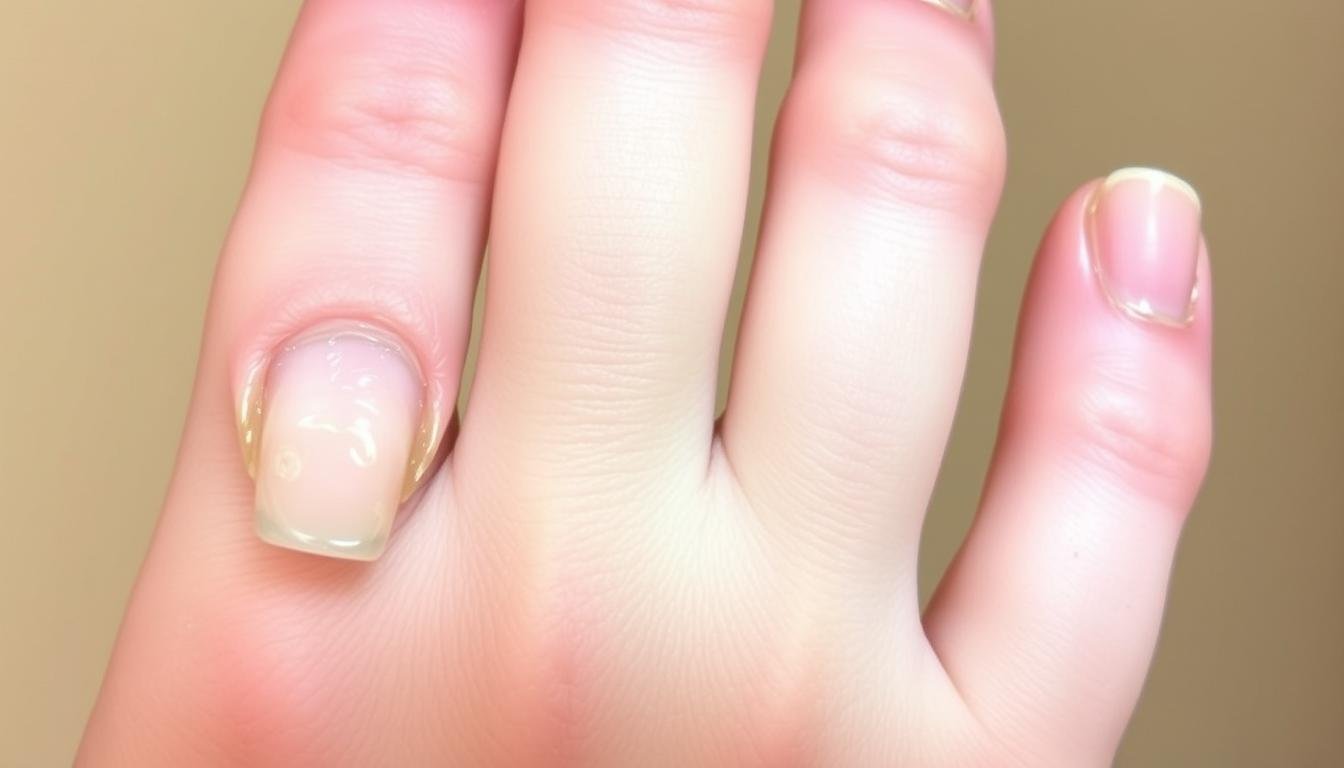
Did you know that nearly 20% of people have some nail problems in their life? One such problem is onychorrhexis. It’s when nails grow thin and uneven. Nails also get vertical lines and can become very brittle.
This makes them look bad and can hurt too. Knowing about onychorrhexis helps keep nails healthy. It prevents worse issues.
Key Takeaways
- Onychorrhexis displays thin nail growth and irregular patterns.
- Common visual indicators include vertical ridges and splitting.
- This condition can affect anyone but is more prevalent with age.
- Nutritional deficiencies are leading causes of onychorrhexis.
- Proper nail care and treatment can improve nail health.
- Monitoring nail changes can help detect underlying health issues.
Understanding Onychorrhexis
Onychorrhexis involves forming ridges on the nails. These ridges make the nails look uneven. It’s due to issues in the nail matrix, where keratin production happens.
Keratin is a key protein for nail health and growth. Nearly 20% of people face nail growth issues. This is more common in females, affecting about two in ten.
Lack of iron and folic acid can cause these problems. Diseases like thyroid issues and rheumatoid arthritis also affect nail health.
Bad habits and environment harm nail growth too. Constant use of harsh nail care products damages the nail matrix. This leads to onychorrhexis.
It’s crucial to know about onychorrhexis. It could mean bigger health problems, especially in women over 50. By understanding its causes, we can tackle possible health risks.
| Factor | Effects on Nails |
|---|---|
| Nutritional Deficiencies | Disrupts keratin production, leading to brittleness and ridges |
| Systemic Diseases | May result in significant nail growth issues and abnormalities |
| Environmental Factors | Harsh chemicals can damage the nail matrix, worsening onychorrhexis |
| Personal Habits | Nail-biting and infrequent trimming can cause nail irregularities |
Identifying the Signs of Onychorrhexis: Thin, Irregular Nail Growth
Identifying onychorrhexis means spotting signs that could point to deeper health issues. One key sign is thin irregular nail growth. This shows up as vertical ridges or grooves along the nail. When you touch the nail gently, you can feel this bumpy texture.
Brittle and splitting nails are other signs to watch for. They may hint at nail deformities. Some folks might also see nail pitting and horizontal ridges. These are seen in conditions like eczema and psoriasis. Long vertical ridges are special to onychorrhexis. They could signal several health issues, including fungal infections or even damage from an injury.
There are more conditions that could change how nails look. For example, melanonychia shows as a dark band on the nail and may come from harmless causes. Meanwhile, spoon-shaped nails, or koilonychia, might indicate a lack of iron or other deficiencies. Knowing these signs is crucial for catching nail health problems early.
| Sign | Condition |
|---|---|
| Brittle and splitting nails | Potential indicator of psoriasis or trauma |
| Vertical ridging | Common in onychorrhexis |
| Nail pitting | Linked to eczema and psoriasis |
| Transverse ridging | Often associated with paronychia |
| Koilonychia | Sign of possible iron deficiency anemia |
| Melanonychia | Usually benign but requires monitoring |
Causes of Onychorrhexis
It’s vital to know why onychorrhexis happens for its management and treatment. This condition makes nails thin and grow oddly. It can be due to not eating well, certain health issues, or injuring the nails.
Nutritional Deficiencies
Nails need the right nutrients to be healthy. Not getting enough iron, protein, or folic acid can make nails brittle. Eating foods full of these nutrients can help stop onychorrhexis. If you see symptoms, think about eating better or taking supplements.
Check out more on nutritional deficiencies if you notice signs.
Underlying Health Conditions
Some illnesses may lead to onychorrhexis. Issues like hypothyroidism, psoriasis, and problems with blood flow affect nail strength. If you have a long-term illness, it’s important to keep an eye on your nails. Treatment and regular check-ups help keep your nails healthy.
Nail Trauma and Environmental Factors
Nail damage is a big reason for onychorrhexis. Hurt nails or using strong chemicals, like soap or nail polish remover, can harm them. Knowing what’s bad for your nails can help you avoid these problems. Protect your nails and use gentle products for healthier nails.
Symptoms Associated with Onychorrhexis
Onychorrhexis, or longitudinal ridging, comes with different symptoms that hint at health problems. People with onychorrhexis might see changes in their nails. This helps gain insights about their overall health. Knowing these signs early allows for faster care and management.
Visual Indicators
The main signs of onychorrhexis are vertical ridges on the nails. These lines can be light or deep, covering up to 70% of the nail. Other signs to watch for include:
- Yellowing of nails
- Crumbling or peeling nails
- Excessive brittleness leading to breakage
Brittle nails often come with these signs. It’s important to watch for any changes in nail health. For more on these signs and what they mean, check this source.
Brittle and Splitting Nails
Brittle nails are common with onychorrhexis. People with this issue find their nails split or break easily. This causes discomfort and worries about how the nails look. Things that make nails brittle include:
- Nutritional deficiencies, like not having enough vitamins
- Being around harsh chemicals or too much water
- Health problems such as rheumatoid arthritis
Knowing these symptoms and their links to health helps in handling onychorrhexis. Spotting them early leads to better ways to treat nail and overall health.
The Role of Aging in Nail Health
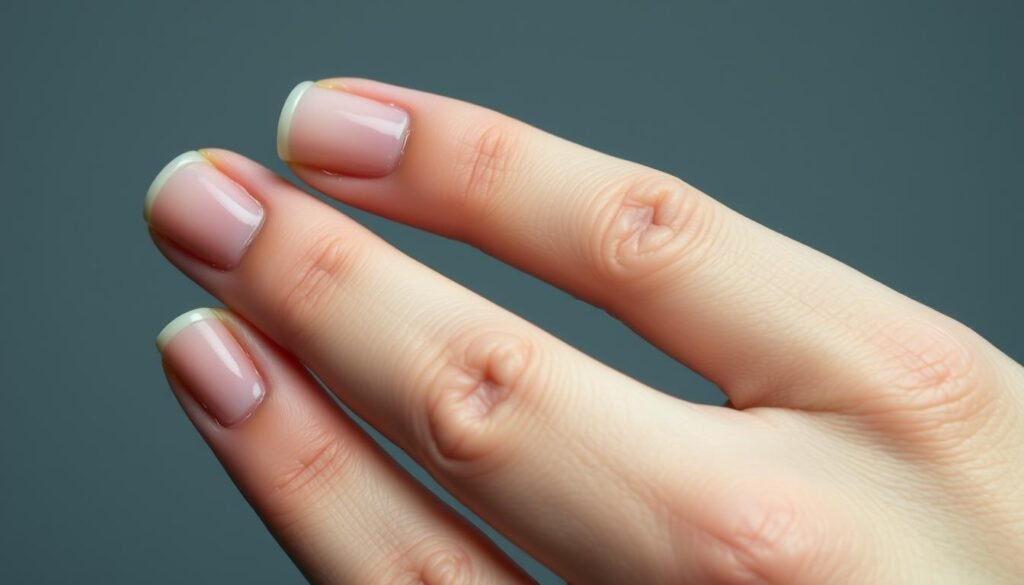
As we get older, our nails change. They become thinner and more brittle. This makes them prone to onychorrhexis, a condition where nails split. Plus, those vertical ridges that were barely there when we were young? They get more noticeable.
Nails don’t grow very fast. Fingernails grow a few millimeters each month. Toenails grow even slower. Because of this, it takes time to see how aging affects our nails. Using a nail buffer might seem like a good idea to smooth out ridges. But, if we do it too much, it can actually make our nails weaker.
Things like gel manicures and fake nails can also dry and weaken nails. The best way to keep nails healthy is to trim fingernails curved and cut toenails straight. This helps avoid problems and keeps our nails stronger, even as we age.
Older people might have more nail problems, like brittle nails. This can be due to not getting enough vitamins and minerals. It’s important to seek medical advice if you notice changes in your nails. Especially if these changes could be clues to other health issues.
| Nail Changes | Details |
|---|---|
| Growth Rate | Fingernails: 3.0 mm/month, Toenails: 1.0 mm/month |
| Thickness | Fingernails – Women: 0.5 mm, Men: 0.6 mm; Toenails – Women: 1.38 mm, Men: 1.65 mm |
| Common Conditions | Brittle nails, onychorrhexis, infections |
| Age-Related Changes | Vertical ridges, thinner nails |
Complications and Possible Health Risks
Onychorrhexis can lead to various complications that impact an individual’s health and well-being. People with chronic nail disorders face challenges in keeping their nails healthy. It’s crucial to address these complications to avoid health risks.
Chronic Nail Disorders
Chronic nail disorders, such as onycholysis, are common in men and women of every age and race. Adult women face this issue more often. Infections under the nail, caused by Candida albicans and Pseudomonas aeruginosa, can lead to nail color changes and more damage. If left untreated, the nail may be permanently damaged, preventing new growth from attaching well.
Psychological Impact of Nail Irregularities
The impact of nail irregularities on mental health is serious. People may feel bad about how their nails look, causing low self-esteem or anxiety. This can get worse over time, affecting their social life and happiness. It’s important to address these mental health issues, as they may point to other health problems like anemia or psoriasis. Regular visits to a doctor can manage symptoms, improving both nail health and mental strength.
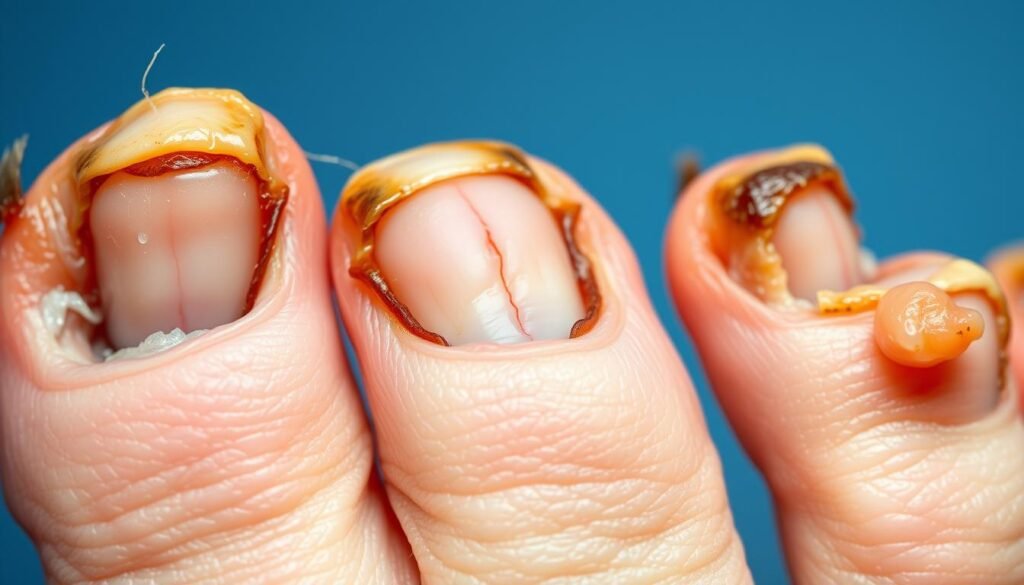
For more detailed information about nail abnormalities, visit MedlinePlus.
| Condition | Common Causes | Potential Complications |
|---|---|---|
| Onycholysis | Injury, fungal infections | Secondary infections |
| Psoriasis | Immune system issues | Permanent nail damage |
| Nail trauma | Improper nail care | Permanently thickened nails |
Treatment Options for Onychorrhexis
Tackling onychorrhexis involves looking at what causes nail brittleness. People can try medical and home remedies to get better nail health and avoid more damage. It’s key to use a mix of treatments for the best outcome.
Medical Treatments
Doctors usually try to fix the health issues causing nail problems. For example, if you don’t have enough zinc, your nails might suffer. Eating zinc-rich foods like chicken, beans, and whole grains can make nails stronger. Be sure to stick to the recommended amount of zinc to stay safe.
Topical treatments, like efinaconazole, work against nail fungus but need time to work. Pills to fight fungus, such as terbinafine, might be more effective but can be risky. It’s very important to see a skin doctor for the right treatment plan.
Home Remedies and Self-Care
Home remedies can really help nails get better. Keeping nails moisturized is key, so use creams and emollients often. Wear gloves when cleaning and stay away from strong chemicals to protect your nails. Drinking plenty of water also helps keep nails in good shape.
Good nail care is also helpful. Trim nails regularly, don’t bite them, and avoid fake nails to promote healthy growth. For tips on eating well for your nails, check this resource. If you have ongoing nail problems, it’s smart to get medical help early. Long-term issues might need more specific treatments.
| Treatment Type | Description | Examples |
|---|---|---|
| Medical Treatments | Address specific deficiencies and health conditions affecting nails. | Zinc supplements, antifungal medications. |
| Home Remedies | Promote general nail health and prevent brittleness. | Moisturizing, wearing gloves, avoiding harsh chemicals. |
Promoting Healthy Nail Growth
Getting beautiful nails requires a focus on your diet and cleanliness. Paying attention to what you eat and how you care for yourself can make your nails stronger and look better. By eating well and keeping clean, you can help your nails grow healthy. This avoids problems like onychorrhexis.
Diet and Nutrition Tips
What you eat is key to nail health. Adding foods full of nutrients can really help your nails grow. Here are some tips to follow:
- Prioritize protein: Eat lean meats, fish, eggs, and beans. They help make keratin, a protein that strengthens your nails.
- Include vitamins and minerals: B vitamins and biotin, as well as vitamins A and C, are good for your nails. Eat green veggies, nuts, and fruits like oranges.
- Stay hydrated: Drinking plenty of water helps keep your nails and cuticles from getting dry and brittle.
- Avoid excessive sugar and processed foods: These bad foods can lead to not getting enough nutrients over time.
Proper Nail Hygiene Practices
Keeping your nails clean is very important for their health. Remember these important tips:
- Regular trimming: Cut your nails often to prevent them from breaking or growing into the skin.
- Moisturize: Use cuticle oil or hand cream to keep your nails flexible and less likely to crack.
- Protect with gloves: Wear gloves when doing chores, especially with harsh cleaners or when washing dishes a lot, to avoid damage.
- Avoid harmful habits: Biting your nails can damage them and lead to infections. It’s better to find other ways to deal with stress.
When to Consult a Doctor
Knowing when to see a doctor for nail problems is key for healthy nails. If your nails suddenly change, like showing vertical lines, colors changing, or getting brittle, pay attention. These signs might mean you have a health issue that needs looking into.
If you feel pain, very tired, or notice big changes in how your nails look or feel, see a doctor right away. Issues like Onychorrhexis could point to bigger problems such as not getting enough nutrients, or even diseases like thyroid issues or kidney disease. Without treatment, these could get worse.
The following table shows common nail symptoms and what they might mean. It helps you know when to consult for onychorrhexis:
| Signs | Potential Issues |
|---|---|
| Brittle, splitting nails | You might not be getting enough iron or protein |
| Discoloration (yellow or blue) | This could mean liver issues, breathing problems, or anemia |
| Vertical ridges | You could be eating too little protein or have a disease |
| White nails | This could mean problems with your liver or kidneys |
| Horizontal ridges (Beau lines) | It might be from an injury, illness, or chemotherapy treatment |
To better understand how to deal with onychorrhexis and keep your nails healthy, getting medical advice for nail issues can be very helpful. Getting help early can lead to better results and avoid more problems.
Conclusion
It’s key to know the signs of onychorrhexis for healthy nails. Many things can cause it, like not getting enough vitamins or health problems. By knowing what to look for, people can keep their nails in good shape and avoid further issues.
Eating well plays a big role in keeping nails strong. It’s important to watch for any nail changes that might mean trouble. With the right care, dealing with onychorrhexis becomes easier, leading to better nail health.
Getting the right help when needed keeps nails strong and healthy. This guide to onychorrhexis underlines how vital nail care is. It shows how staying informed and proactive supports overall health.

