

Did you know about 5.4% of people with low iron get spoon nails? This fact shows the connection between iron and nail health. Iron helps make hemoglobin. This carries oxygen all over the body, including nails. Low iron can lead to weakened nails and change their look and strength.
For many, the effects of iron health seem far away. Yet, knowing how lack of iron affects nails is crucial. Brittle, peeling nails are often due to bad diet choices. They show if you’re eating right. Here, we’ll dig into why iron is vital for keeping nails strong and healthy.
Key Takeaways
- 5.4% of individuals with iron deficiency may develop spoon nails.
- Adequate iron levels are crucial for strong and healthy nails.
- Brittle nails can often indicate nutritional deficiencies.
- Nail health is a reflection of overall wellness and nutritional status.
- Understanding iron’s role can help prevent nail issues.
Understanding Anemia and Nail Health
Anemia affects over three million Americans. It causes a red blood cell or hemoglobin shortage, affecting oxygen transport. This condition may also affect nail health. The nail health connection with anemia is crucial but often missed. Spotting nail oddities can reveal much about someone’s health.
Pale nail beds might mean anemia is present. Those with iron deficiency anemia might have brittle or spoon-shaped nails, known as koilonychia. Symptoms also include fatigue, pale skin, and a sore tongue. People might crave non-food items like ice or dirt, a condition called pica.
Anemia’s effects are wide-ranging. It can change how nails look and cause fatigue, a commonly missed sign. Various factors can cause anemia. These include heavy periods, gastrointestinal bleeding, or problems with iron absorption like celiac or Crohn’s disease.
The table below highlights alarming anemia symptoms and their effects on health:
| Symptom | Description |
|---|---|
| Pale skin | Skin looks unusually light, especially in places like the conjunctiva. |
| Brittle nails | Nails may easily break and seem thin or frail. |
| Sore tongue | The tongue could feel inflamed or appear smooth. |
| Fatigue | Constant tiredness that rest does not help. |
| Pica | A craving for non-food items such as ice or dirt. |
Understanding how iron deficiency anemia affects nail health is vital. It encourages better health habits and awareness. Realizing this connection can help people seek the right treatment and improve their diet for better iron levels.
Signs of Iron Deficiency Anemia on Nails
Nails can tell us a lot about our health, especially when it comes to iron deficiency anemia. One key sign is spoon-shaped nails, known as koilonychia. This happens when low iron impacts the health of our nails, making them thin and brittle. About 5.4% of people with anemia have these curved nails.
Changes in nail color are another big clue. Nail discoloration, such as pale or white nails, may point to health issues. These changes could suggest a lack of certain nutrients, leading doctors to investigate more.
In the U.S., anemia affects around 3 million people. Causes range from autoimmune diseases to blood loss and other chronic conditions. To diagnose it, doctors do a physical check and review blood tests and family health history.
| Signs of Anemia | Description |
|---|---|
| Spoon-shaped nails (koilonychia) | Thin, brittle nails that curve inward, often linked to iron deficiency. |
| Nail discoloration | Pale or whitened nail beds indicating possible nutritional deficiencies. |
| Beau lines | Horizontal depressions caused by illnesses, injuries, or nutritional deficiencies. |
| Brittle nails | Nails that break easily, often related to low iron levels. |
If you notice unusual changes in your nails, talk to a doctor. Discoloration, strange growths, or changes in shape could mean a serious health issue needs to be checked out.
The Connection Between Iron and Nail Health
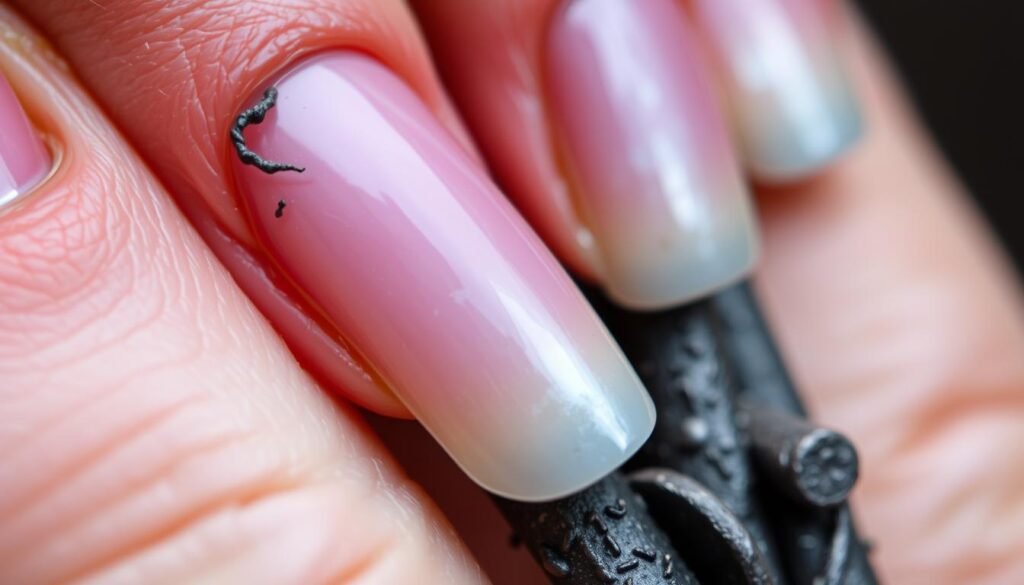
Iron is key to keeping nails strong and healthy. If you don’t get enough, your nails might not get the oxygen they need. This can make them weak and easily damaged. The link between iron and strong nails shows up when iron is low. At first, the body runs out of iron stores. This leads to weak nails.
When iron shortage gets worse, nails become brittle. You might also see other signs like brittle nails. By stage three, iron deficiency anemia occurs, making nail problems worse. It’s clear how important iron is for nail health. Make sure your diet has enough iron.
If you’re tired, have brittle nails, or crave strange things, you might lack iron. It’s important to find out why and fix it. Keeping iron levels right is good for your nails and your overall health.
| Stage of Iron Deficiency | Characteristics | Impact on Nails |
|---|---|---|
| Stage 1 | Low serum ferritin levels | Initial signs of weakness |
| Stage 2 | Low transferrin saturation, high zinc protoporphyrin | Brittle and damaged nails |
| Stage 3 | Iron deficiency anemia with low hemoglobin | Severe changes in nail appearance |
It’s vital to understand how iron affects nail health. This knowledge encourages us to eat iron-rich foods. And to look out for signs of not having enough iron.
Common Nail Issues Associated with Iron Deficiency
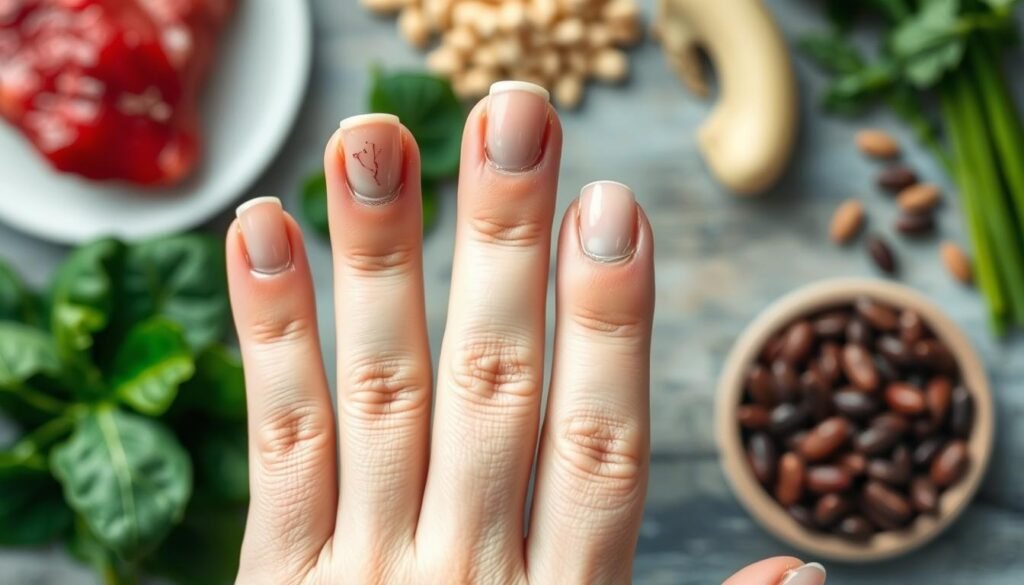
Iron deficiency can cause several common nail issues. These issues might show you have health concerns. Brittle nails are a key sign. They often crack and peel because they can’t hold moisture well or get enough nutrition. If you have brittle nails, washing your hands a lot or touching harsh chemicals can make it worse. For people with iron deficiency, eating right is very important to make nails stronger.
Nail ridges can appear as lines running up or across nails. Some nail ridges are normal as you get older. But, if you see a lot of them or they’re very noticeable, it could be because you don’t have enough iron. It’s important to pay attention to these signs. They could mean you have other health issues, too.
Problems like discolored nails or nails that don’t feel smooth can happen alongside brittle nails and nail ridges. If you have these problems, you might want to talk to a doctor to figure out what’s going on. If you think your nail problems are because you’re not getting enough iron, looking into your diet could help. Knowing how iron deficiency affects your nails can help you take care of them better. For more information on how nail problems can tell you about other diseases, check out this resource.
| Nail Condition | Description | Possible Causes |
|---|---|---|
| Brittle Nails | Prone to cracking and peeling | Nutritional deficiencies, harsh environments |
| Nail Ridges | Vertical or horizontal lines appearing on nails | Iron deficiency, aging, trauma |
| Discoloration | Change in color or texture | Health conditions, iron deficiency |
Exploring Spoon Nails and Their Link to Iron Levels
Spoon nails, or koilonychia, highlight iron levels in our bodies. This condition’s unique concave shape points to health concerns, like iron deficiency anemia (IDA). With IDA affecting many worldwide, it’s key to watch our nails for signs.
Low iron can lead to spoon nails by affecting epithelial cells. Severe IDA might show as pale nail beds, brittle nails, and tiredness. These signs suggest more than beauty issues; they indicate possible low oxygen in our blood.
Doctors use blood tests to find the cause. They check hemoglobin, iron, ferritin, and transferrin saturation. Treatments may include iron pills or diet changes. Foods like red meat, greens, and fortified cereals can help. It’s critical to monitor iron recovery with your doctor.
Knowing the link between spoon nails and iron helps us stay healthy. Look for symptoms of iron deficiency, such as tiredness and a pale look. These often go hand in hand with nail changes. For more info, read more here.
Dietary Sources of Iron for Healthy Nails
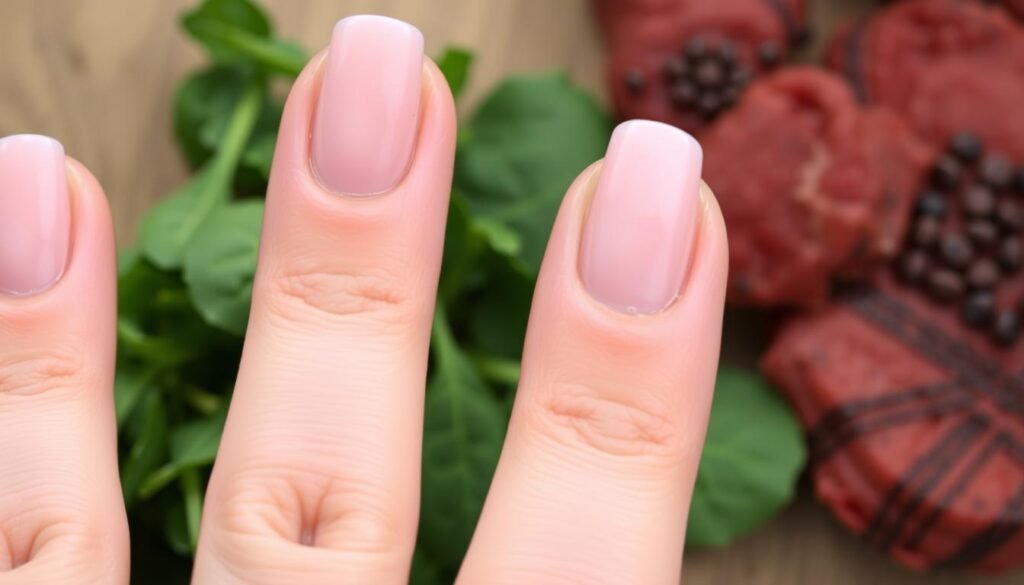
Focusing on dietary iron sources is key to stronger nails. Iron-rich foods boost nail strength and care. Foods like red meat and poultry are great as they contain lots of iron. Fish also provides vital nutrients for healthier nails.
For plant lovers, beans and lentils are top choices for dietary iron sources. With hundreds of bean types available, it’s easy to fit them into meals. Spinach and kale are great for adding more iron to your diet, which helps nails grow strong.
Eating iron with vitamin C foods helps iron absorption. Colorful veggies, especially orange and yellow ones, are good for nail growth because they have beta-carotene. Berries like blueberries and strawberries are full of antioxidants. They keep nails strong and healthy.
Drinking plenty of water is also crucial for strong nails. It helps your body absorb nutrients better. Omega-3 fatty acids are good for making nails less brittle. They add an extra boost to nail care.
Adding iron-rich foods to your diet prevents iron deficiency anemia. It also makes nails stronger and more beautiful. Following a balanced diet is key for better nail health. It’s important to watch what you eat.
The Role of Iron Supplements in Nail Care
Adding iron supplements to your nail care routine helps if you’re not getting enough from food. There are different types like ferrous sulfate, ferrous gluconate, and ferrous fumarate. Each has its own absorption rate and side effects. Always talk to a doctor before you start taking any supplement to get the dosage right.
Iron deficiency can make nails weak, cause breaks, and slow down growth. It affects blood flow to the nail matrix, which can make nails look pale and thin. Iron supplements can fix these problems. But too much iron makes nails brittle and discolored. So, it’s important to find the right balance in your nail care routine.
For those who don’t eat meat, like vegetarians and vegans, it’s even more important to take iron supplements. While you can find iron in foods like red meat, poultry, and fortified cereals, supplements help fill any empty spots in your diet. They’re important for energy, immune health, and many body functions.
Below is a table showcasing some common dietary sources of iron along with their iron content:
| Food Source | Iron Content (mg per 100g) |
|---|---|
| Tofu | 6 mg |
| Spinach | 3.5 mg |
| Red Meat | 2.7 mg |
| Poultry | 1.3 mg |
| Beans | 2.9 mg |
| Nuts and Seeds | 2.7 mg |
Incorporating iron supplements into your nail care can greatly improve your nails’ health, especially if you’re dealing with iron deficiency. By taking a balanced approach, you can have stronger and healthier nails and maintain your overall well-being.
Maintaining Proper Ferritin Levels for Optimal Nail Health
Ferritin is key for storing iron within our body. For great nail health, it’s vital to keep ferritin levels right. If ferritin drops too low, our iron reserves might be low, which can harm nail quality. It’s a good plan to check your ferritin with blood tests to catch any issues early.
It’s important to know the risks of ferritin levels being too low or too high. Low levels often point to iron deficiency, seen in kids and menstruating women. On the other hand, high ferritin can mean too much iron. This can lead to big health problems, like metabolic syndrome and heart diseases.
- Incorporate iron-rich foods in the diet, such as leafy greens, beans, and lean meats.
- Maintain regular health check-ups that include blood tests to monitor ferritin levels.
- Avoid excessive consumption of alcohol, which can exacerbate iron absorption issues.
- Consider using iron cookware or iron-fortified foods in moderation.
Being aware of your ferritin levels helps keep your nails healthy. It also boosts your overall well-being.
Conclusion
It’s key to understand how iron relates to nail health. Getting enough iron helps make keratin, which nails need to be strong. It also fights nail problems due to iron shortage. Eating iron-rich foods like red meat, chicken, beans, and spinach will make your nails stronger and look better.
Watch out for signs of not having enough iron, like weak or bumpy nails. These signs mean you might have health issues. Knowing these signs helps you eat better and stay healthy. For more info on iron and nails, you can explore recommended dietary sources of iron. This is especially useful for people who don’t eat meat or have trouble absorbing nutrients.
Understanding iron’s role is part of caring for your health as a whole. It makes you pay more attention to what you eat. This doesn’t just help your nails; it makes your overall health better.

