
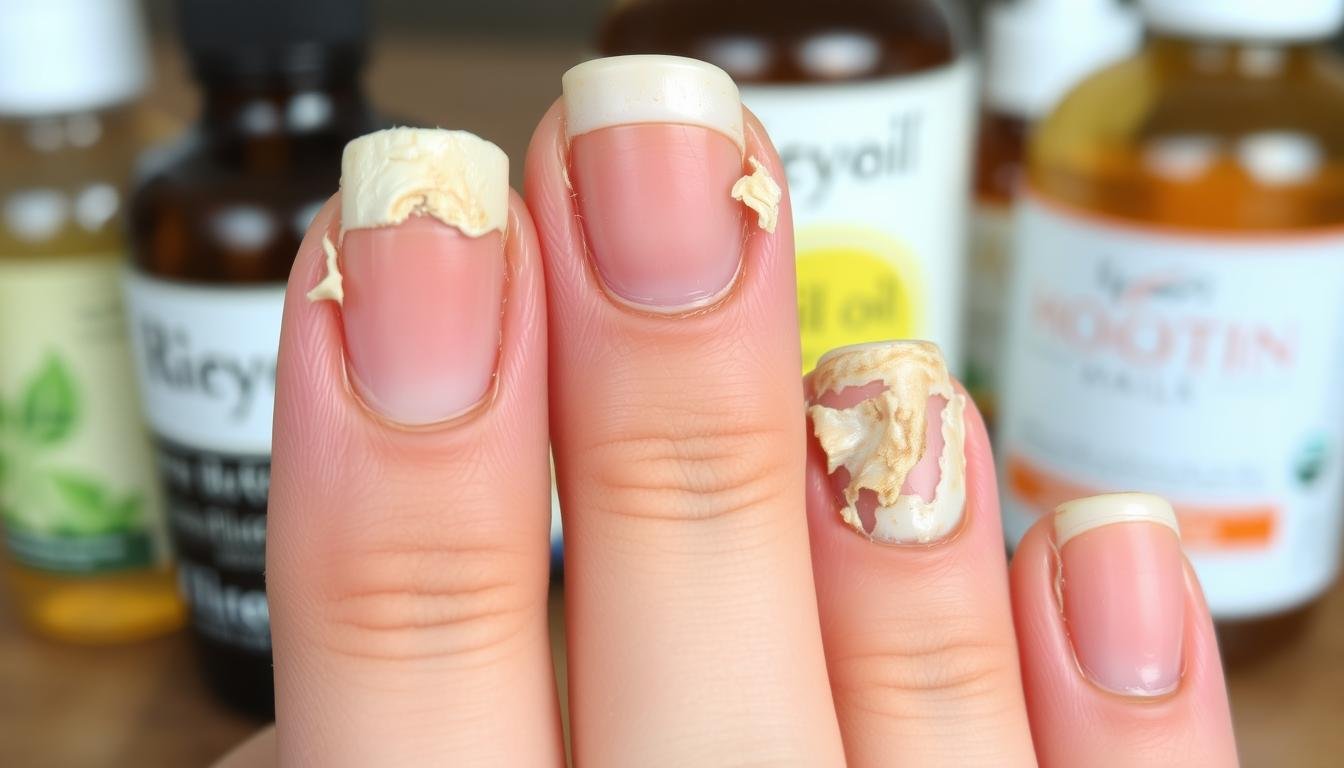
About one in 60,000 newborns has biotinidase deficiency. This condition shows how important biotin is for our health, nails included. Biotin deficiency isn’t always noticed, but it can make nails brittle and unhealthy-looking. Knowing the signs is key. It’s not just for new moms but for anyone worrying about their nail health and beauty. Let’s learn to spot these signs and understand their effects on nails.
Key Takeaways
- Biotin plays a crucial role in maintaining healthy nails and overall wellness.
- Signs of biotin deficiency include brittle nails, skin issues, and neurological symptoms.
- Pregnant women have a higher risk of developing marginal biotin deficiency.
- Adequate daily intake of biotin for adults is 30 mcg, while pregnant women should aim for 35 mcg.
- Common sources of biotin-rich foods include eggs, organ meats, and whole grains.
Understanding Biotin and Its Importance
Biotin is known as Vitamin H or B-7. It helps turn carbs, fats, and proteins into energy. This boosts our metabolism. It also plays a big role in keeping our skin, hair, and nails healthy.
What is Biotin?
Biotin is crucial for our body’s energy-making processes. It helps in producing keratin, important for strong nails and hair. Adults need about 30 micrograms daily, but pregnant and nursing moms need more. Good sources include eggs, nuts, and green veggies.
How Biotin Affects Overall Health
Having enough biotin is key for health. Without it, you might see hair loss, weak nails, and skin issues. People with certain health problems or on some meds might not get enough biotin. Eating biotin-rich foods or taking supplements can help fix these problems.
| Group | Recommended Daily Intake (mcg) |
|---|---|
| Infants (birth – 6 months) | 5 |
| Infants (7 – 12 months) | 6 |
| Children (1 – 3 years) | 8 |
| Children (4 – 8 years) | 12 |
| Children (9 – 13 years) | 20 |
| Adolescents (14 – 18 years) | 25 |
| Adults (19 years and older) | 30 |
| Pregnant women | 30 |
| Breastfeeding women | 35 |
Learning about B-7 benefits helps us choose the right foods. Boosting your biotin intake through diet or supplements is good for your hair, skin, and nails.
Common Symptoms of Biotin Deficiency
It’s good to know the signs of biotin deficiency early. Biotin is essential for metabolic processes. A lack of it can show in many ways.
Signs to Watch For
Signs of biotin deficiency appear slowly. It’s important to notice any body changes. Look out for thinning hair, dry skin, brittle nails, frequent fungal infections, and mood changes like depression.
- Thinning hair
- Dry, scaly skin
- Nail ridges and brittleness
- Recurrent fungal infections
- Neurological issues like depression and lethargy
Impact on Hair and Skin
Biotin deficiency affects more than nails. It also harms hair and skin. People may see brittle hair, skin rashes, and get infections easier.
- Brittle hair that easily breaks or falls out
- Skin rashes and an overall lack of hydration
- Increased vulnerability to infections, particularly fungal
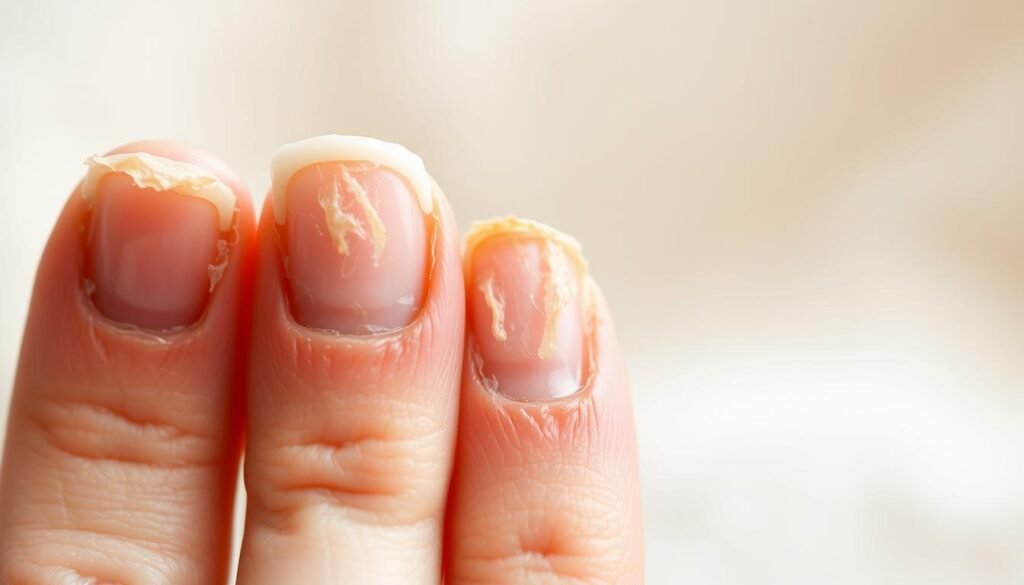
Spotting these signs early is key. Knowing the symptoms helps start treatment sooner. This can make a big difference in health and happiness.
| Symptom | Description |
|---|---|
| Thinning Hair | Loss of hair volume, leading to noticeable scalp visibility. |
| Nail Ridges | Visible lines and ridges on the surface of the nails. |
| Brittle Hair | Hair that breaks easily, leading to split ends and a damaged appearance. |
| Dry Skin | Rough, scaly patches that may also be itchy. |
| Neurological Issues | Symptoms like fatigue, depression, and mood swings. |
Nails Showing Signs of Biotin Deficiency
Nail health is key to our overall well-being. Signs like brittleness and color changes in nails point to a biotin deficiency. This lack of biotin negatively impacts nail strength and look.
Healthy adults have specific biotin levels in their blood and urine. If urine biotin levels drop too low, it might mean a deficiency is present. Things like drinking too much alcohol can make absorbing biotin harder. In fact, about 15% of people who drink heavily have low biotin levels.
Pregnancy can lower biotin levels in up to one-third of women. This fact stresses the need to watch nail health as part of good nutrition.
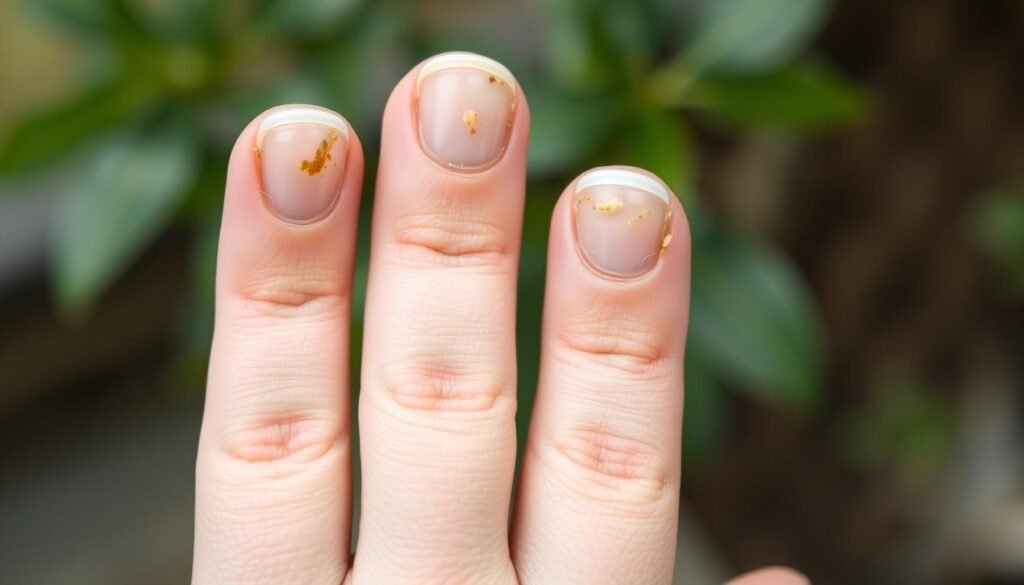
Biotin is vital for more than just skin and hair health. Symptoms include a red rash, hair loss, and very brittle nails. Our bodies absorb biotin well, even in doses up to 20 mg per day.
For strong nails, eating foods high in biotin is important. If you spot symptoms, getting medical advice is wise. To understand nail care better, professional medical resources can help. For tips on keeping nails healthy, check out this link.
Causes of Biotin Deficiency
Knowing why biotin deficiency happens is key to staying healthy. It’s a rare but serious issue. The top Causes of Biotin Deficiency are not eating enough biotin-rich foods, and certain health problems.
Dietary Factors
A diet missing biotin-packed foods can cause a deficiency. Important biotin sources are:
- Eggs
- Nuts and seeds
- Fish
- Sweet potatoes
- Spinach and broccoli
Eating too many raw egg whites is bad. They have a protein that stops biotin from being absorbed. A varied diet helps avoid this problem. Diseases like Crohn’s or celiac can also make absorbing biotin hard.
Health Conditions Affecting Biotin Levels
Some health issues and choices really lower biotin levels. Genetic problems, like biotinidase deficiency, are a big risk. Long-term use of antibiotics messes with your gut, hurting biotin production too.
Being pregnant or breastfeeding means you need more biotin. It’s crucial to watch your diet then. Also, certain meds, like for seizures, might mess with biotin inside you. Regular health checks can help spot and deal with these issues early on.
Brittle Nails and Biotin Supplementation
Many people find brittle nails a tough problem. Biotin supplements are catching on for making nails stronger. Some research indicates taking Brittle Nails Biotin regularly can make nails healthier and thicker as time goes by. Yet, seeing improvements can take from 6 to 12 months, but it’s a journey worth taking.
Can Biotin Strengthen Nails?
Biotin is key for keeping nails strong and intact. While solid studies on biotin supplements for healthy nails are scarce, lots report seeing benefits. If you’re low on biotin, you might end up with brittle nails. This shows how crucial biotin is for nail care. Adults should get 30 to 100 mcg of biotin daily, and those who are pregnant or breastfeeding need a bit more.
Types of Biotin Supplements Available
There’s a wide range of biotin supplements for healthy nails out there, including:
- Multivitamins with biotin
- Pure biotin pills or capsules
- Gummy vitamins with biotin and other goodies
- Targeted formulas for hair, skin, and nails, like Vital Proteins® Beauty Gummies
Biotin-Rich Foods for Nail Growth
Eating biotin-rich foods for nail growth every day is key to having healthy nails. Biotin is a vitamin that helps make our nails strong and prevents them from getting brittle. By eating certain foods, people can greatly improve the health of their nails and their overall health too.
Top Foods to Include in Your Diet
Here are some of the best foods for healthy nails:
- Beef liver — A three-ounce serving gives you 30.8 mcg of biotin.
- Eggs — One whole cooked egg provides 10 mcg of biotin, which is about 33% of what you need in a day.
- Salmon — Three ounces offer about 5 mcg, or 17% of the daily value.
- Pork chops — A three-ounce serving has 3.8 mcg, or 13% of what you need daily.
- Sunflower seeds — Just a quarter cup gives you 2.6 mcg of biotin.
- Sweet potatoes — Half a cup of cooked sweet potatoes offers 8 mcg of biotin.
- Almonds — A quarter cup has 1.5 mcg, filling about 5% of your daily requirement.
These biotin-rich foods for nail growth are great for getting stronger nails and improving your health overall.
How Cooking Affects Biotin Content
The way we cook can really change how much biotin we get from food. For instance, raw egg whites have a protein called avidin that blocks biotin. But when you cook the eggs, it breaks down avidin so your body can use the biotin. This shows how cooking methods can change how much nutrition we get from our food. So, it’s important to cook food the right way to help our nails stay healthy.
Having a diet full of biotin is key for keeping nails healthy and for staying strong and lively overall. To learn more about getting more biotin from your diet, check out this useful link: biotin benefits and sources.
Biotin Nail Treatments and Care Routines
Nail health is essential for looking good and feeling confident. Adding biotin to your nail care routine can make your nails stronger and healthier. There are many products aimed at improving nail health.
Popular Products for Nail Health
People often look for products that fix weak nails and help them grow. Here are some top biotin treatments:
- Biotin Nail Treatments: These are oils and serums made to fortify and nourish nails.
- Nail Strengtheners: Biotin-enriched formulas work to make nails thicker and less breakable.
- Topical Treatments: Creams with biotin keep nails hydrated and strong, so they’re less likely to get damaged.
A good Biotin Nail Care Routine can boost the health of your nails. It should include topical applications and eating foods high in biotin. Using nail treatments regularly and eating right can help your nails get healthier over time.
| Product Type | Benefits |
|---|---|
| Biotin Nail Treatment | Boosts nail growth and fights off brittleness. |
| Nail Strengtheners | Makes nails thicker and more durable. |
| Topical Treatments | Gives nails the moisture and care they need. |
How to Identify Biotin Deficiency
Knowing if someone has biotin deficiency is vital, especially with signs like weak nails and hair loss. An accurate diagnosis often needs a detailed look into one’s health. It might include Biotin Testing to check biotin levels in the body.
Testing and Diagnosis
A healthcare professional is key in the Diagnosis of Deficiency. They ensure symptoms like nail issues are linked to biotin lack. Blood tests reveal the exact biotin levels. This helps see if they’re in the normal range. Writing down what you eat and your symptoms can help. It makes it easier for you and your doctor to spot biotin deficiency.
It’s rare to lack biotin in the U.S. But, people getting nutrition directly into their veins or using certain drugs might be at risk. Thus, keeping an eye on biotin levels through tests is crucial. This avoids long-term deficiency and its effects on health.
Conclusion
Understanding biotin’s role is key for good nail health and overall wellbeing. The connection between biotin and stronger nails is clear. So, looking up Nail Health Tips is vital if your nails break easily. Eating foods rich in biotin, like egg yolks and soybeans, helps meet your daily needs of at least 30 micrograms.
However, be careful with biotin supplements, as it’s possible to take too much. If you find it hard to get enough biotin because of health issues or what you eat, talk to a doctor for advice. Knowing about biotin and spotting deficiency signs lets you take action for better hair, skin, and nails.
Learning about biotin and its importance can lead to improved health. Making informed choices helps avoid the downsides of not having enough biotin. It also means talking to healthcare experts to get the right amount of nutrients.

