
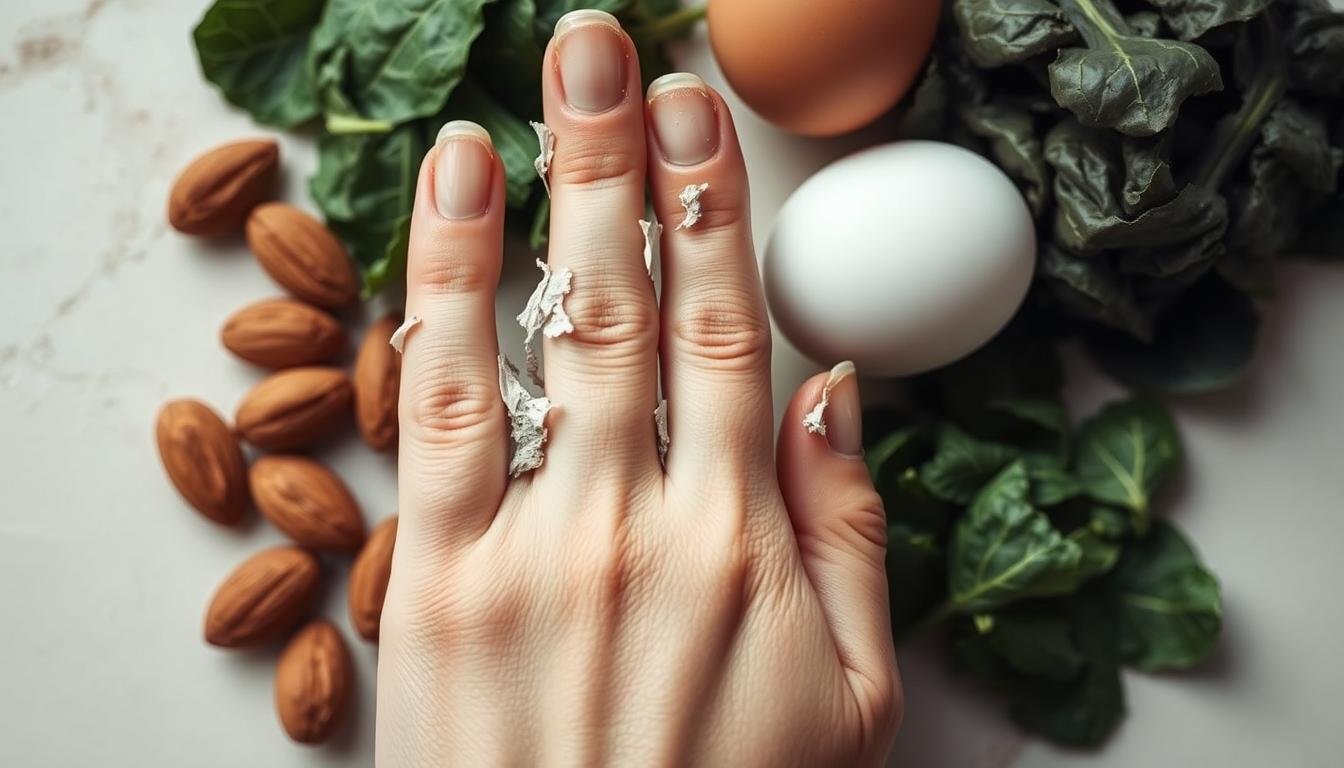
Did you know nearly half of adults might see some hair loss by 50? This could link to not getting enough vital nutrients. One big concern for nail health is biotin deficiency and brittle nails. Biotin, also known as vitamin H, is key for keeping hair and nails strong. In this section, we’ll show how biotin is linked to the problem of brittle nails. We’ll also cover other symptoms to watch for. By reading on, you’ll learn how to spot biotin shortage and its effect on nails.
Key Takeaways
- Brittle nails can be a sign of underlying biotin deficiency.
- Biotin is essential for maintaining healthy hair and nails.
- Identifying signs of biotin deficiency early can lead to better health outcomes.
- A balanced diet including biotin-rich foods can support nail strength.
- Monitoring symptoms of biotin deficiency is crucial for timely intervention.
Understanding Biotin: The Basics
Biotin is also known as Vitamin H or B7. It’s a water-soluble B vitamin that is key for our metabolism. It helps break down carbs, fats, and proteins, which gives us energy and keeps cells working well. Also, it’s very important for pregnant women because it helps babies grow well.
Biotin can’t be stored in our bodies, so we need to eat enough of it every day. Adults should get 40 mcg daily, according to the European Food Safety Authority. Pregnant and breastfeeding moms need a bit more. This helps ensure our bodies have what they need to function properly.
- Chicken liver (187 μg/100 g)
- Beef liver (42 μg/100 g)
- Eggs (21 μg/100 g)
- Peanuts (17.5 μg/100 g)
In the West, people usually get 35 to 70 μg of biotin daily from their diet. Biotin shortage is rare, but not having enough can cause skin problems and more. Most people don’t need extra biotin from supplements.
Biotin works as a helper for certain enzymes in our bodies. It supports many key metabolic processes and can even affect our DNA. Since it’s water-soluble, taking too much is not common. However, too much biotin can lead to symptoms like insomnia and increased thirst. It’s generally safe but always good to keep track of how much you use, especially with other medications or supplements.
Here’s a guide to how much biotin different people should get:
| Age Group | Recommended Biotin Intake (mcg/day) |
|---|---|
| 0-6 months | 5 |
| 7-12 months | 6 |
| 1-3 years | 8 |
| 4-8 years | 12 |
| 9-13 years | 20 |
| 14-18 years | 25 |
| Adults | 40 |
| Pregnant Women | 40 |
| Breastfeeding Women | 45 |
Learning about biotin shows why a diet with enough of this vitamin is key for good health. It helps avoid deficiencies and supports our overall well-being.
What is Biotin Deficiency?
Biotin deficiency is a rare condition. It happens when the body can’t properly use biotin, a vital vitamin. It’s unusual for healthy adults who eat a normal diet to experience this. But, if it happens, it can cause different symptoms. Genetic disorders, like biotinidase deficiency, are common causes. Some health conditions may also stop the body from absorbing it well.
Adults should get 30 micrograms of biotin daily, children 5 micrograms, and pregnant women 35 micrograms. In Western countries, people usually get 35 to 70 micrograms a day from their food. This means most people get enough biotin. Still, certain groups, like those with chronic alcoholism, might not get enough. About 15% of them could have low levels of biotin.
Pregnant women are more at risk. One-third might not get enough biotin while expecting. Their levels might drop even more if they are breastfeeding.
The signs of not having enough biotin can vary. They include:
- Thinning hair
- Red rashes on the skin
- Fatigue and muscle pain
- Loss of appetite
- Brittle nails
- Neurological issues such as depression and hallucinations
In conclusion, even though it’s rare, biotin deficiency can be handled by eating right and taking supplements. Knowing the symptoms and causes is key to dealing with it effectively.
| Age Group | Recommended Intake (mcg/day) |
|---|---|
| Infants | 5 |
| Children | 5 |
| Adults | 30 |
| Pregnant Women | 35 |
Connection Between Biotin Deficiency and Nail Health
Biotin is key for strong, healthy nails. It is crucial in linking biotin levels to nail health. Biotin aids in making keratin, a protein that nails need to stay tough. Low biotin can lead to weak, easy-to-break nails.
In the West, people typically get 35 to 70 mcg of biotin a day. Still, many, like pregnant women, don’t get enough. Around half of U.S. pregnant women have low biotin. This can make nails brittle, prone to damage.
Brittle nails can also come from low levels of iron, B vitamins, zinc, and protein. These nutrients are essential for nail strength.
Certain health issues can damage nails. These include psoriasis, thyroid disorders, and Raynaud’s syndrome. As people age, their nails may weaken. Environmental harm can make this worse.
Getting enough biotin is important for nail strength. Eating right or taking supplements can boost biotin levels. This helps fight brittle nails and keeps nails healthy.
Signs of Biotin Deficiency
It’s important to know the signs of not having enough biotin. While it’s rare, the effects can really change how well you feel. Brittle nails and thinning hair are big signs that you might need more biotin in your diet.
Brittle Nails: A Common Indicator
Brittle nails are a key sign you might not have enough biotin. If your nails break or split a lot, it could be a clue. You might also see a rash or feel tired and moody from not having enough biotin. It’s crucial to deal with these signs early. Eating foods high in biotin like brewer’s yeast, eggs, and nuts can help.
Thinning Hair and Other Symptoms
Thinning hair is another sign you might be low on biotin. Losing hair can really affect how you see yourself. Some studies show that not having enough biotin might lead to thinner hair. Adding biotin through food or supplements could help. For deeper insights on biotin’s role in keeping hair and nails healthy, check out this article.
| Age Group | Recommended Daily Intake (mcg) |
|---|---|
| Infants (birth – 6 months) | 5 |
| Infants (7 – 12 months) | 6 |
| Children (1 – 3 years) | 8 |
| Children (4 – 8 years) | 12 |
| Children (9 – 13 years) | 20 |
| Adolescents (14 – 18 years) | 25 |
| Adults (19 years and older) | 30 |
| Pregnant women | 30 |
| Breastfeeding women | 35 |
Common Causes of Biotin Deficiency
Biotin deficiency can happen due to many reasons. It’s important to know these causes. Some genetic issues can block the body’s use of biotin.
Taking antibiotics for a long time can mess up gut flora. This reduces how much biotin your body can absorb. Certain meds, like those for seizures, can also affect biotin levels.
Needing parenteral nutrition or having gut problems, like Crohn’s disease, can lower nutrient uptake. This makes Biotin Deficiency more likely.
At times, the body might need more biotin, especially with long-term seizure medication use. Adults need 30 micrograms (µg) of biotin a day. For some, hitting this target is hard due to their meds.
Though rare, lacking biotin can cause issues like hair loss and skin problems. It can also lead to ataxia, seizures, and other neurological issues. Catching Biotin Deficiency early is key to stopping these health problems.
| Cause | Description |
|---|---|
| Genetic Disorders | May impede biotin utilization in the body. |
| Prolonged Antibiotic Use | Disrupts gut flora, diminishing biotin absorption. |
| Medications | Specific drugs, especially anti-seizure, can interfere with biotin metabolism. |
| Parenteral Nutrition | Individuals relying on this may experience nutrient absorption issues. |
| Gastrointestinal Conditions | Conditions like Crohn’s disease can impair biotin absorption. |
Brittle Nails Causes
Brittle nails can really affect how confident you feel and how you look. It’s key to know what causes it to handle it well. Most of the time, not eating right and certain health issues are to blame. Eating well is super important for keeping your nails in good shape. Also, some health problems can make your nails more likely to break.
Nutrition and Diet
Not getting enough important nutrients is a big reason for Brittle Nails Causes. You need several nutrients for strong nails, like:
- Biotin
- Calcium
- Iron
- Other B vitamins
If you’re missing these in your diet, your nails might become weak and brittle. Eating a lot of fruits, veggies, lean meats, and whole grains can make your nails stronger and healthier.
Health Conditions Impacting Nail Strength
Some health issues can really affect how strong your nails are. For example, hypothyroidism makes nails brittle by messing with how minerals are absorbed. Anemia happens when there’s not enough hemoglobin, which means nails don’t get enough oxygen. Raynaud’s syndrome can also harm your nails by reducing blood flow.
Knowing how these health problems relate to brittle nails helps people take steps to get better overall.
| Health Condition | Impact on Nails |
|---|---|
| Hypothyroidism | Weakens nail structure |
| Anemia | Leads to brittleness due to oxygen deficiency |
| Raynaud’s Syndrome | Impairs circulation, affecting nail growth and strength |
Identifying Biotin Deficiency Symptoms
It’s important to spot the signs of biotin deficiency early. This problem is rare in the U.S., but some are more at risk. Watch for symptoms like hair getting thin and skin rashes. Catching these signs early means you can handle any issues better.
From Thinning Hair to Rash
Some key symptoms of lacking biotin include:
- Thinning hair or hair loss
- Brittle nails that split easily
- Red rashes on the skin
- Mood changes affecting daily life
Groups at higher risk include those with genetic issues or pregnant women. Eating raw egg whites often might also up your risk. You can improve things with the right diet or supplements.
Neurological Issues to Watch For
Biotin shortage might cause other problems too. Be on the lookout for:
- Unusual drowsiness
- Coordination problems
- Potential cognitive changes
Finding these symptoms early is key for a healthier life. Biotin-rich foods, like eggs and nuts, help prevent these issues. Learn more about biotin at this resource.
| Symptom | Description |
|---|---|
| Thinning Hair | Loss of hair density, leading to visible thinning and bald spots. |
| Brittle Nails | Nails that break or split easily due to lack of strength. |
| Skin Rashes | Red, inflamed patches appearing on the skin. |
| Coordination Problems | Difficulties with balance and movement. |
Biotin Supplements: Are They Effective?
Many people wonder if biotin supplements can really help with hair and nail health. Biotin is important for our bodies, especially for skin and hair. But, studies on extra benefits from supplements are not clear. The Mayo Clinic says adults should have about 30 to 100 mcg of biotin each day. If you have nail problems, taking biotin regularly for 6 to 12 months might help, according to Marcela Correa.
Nails naturally take about 4 to 6 months to renew. This means you need patience when using biotin for better nails. While not many have biotin deficiency, those who do see stronger nails by upping their biotin, either from food or pills.
The FDA doesn’t have a daily biotin guideline. Yet, experts say 30 mcg a day is good for adults. Pregnant or breastfeeding moms might need about 35 mcg. Eating foods like egg yolks, nuts, and sweet potatoes is a great way to get biotin. It’s better to try diet changes before.
Biotin is very safe, even in big amounts like 300 mg, without bad effects. But, if you have a thyroid issue, talk to a doctor before starting biotin. More research is needed to fully understand how biotin supplements affect our looks.
| Daily Biotin Intake Recommendations | Age Group | Micograms (mcg) |
|---|---|---|
| Adults | 19 years and older | 30 mcg |
| Pregnant Women | All ages | 30 mcg |
| Lactating Women | All ages | 35 mcg |
Natural Food Sources of Biotin
Eating nutrient-rich foods is key to staying healthy, including keeping biotin levels up. Foods rich in biotin can greatly improve your health. Known as vitamin H, biotin helps with lots of body functions like making hair and nails strong. If you want more biotin in your diet, it’s important to know which foods are good sources.
Incorporating Biotin-Rich Foods into Your Diet
Adding a variety of biotin-rich foods to your meals can help you reach the right biotin levels. Some top natural sources are:
- Eggs: A cooked egg offers up to 10 mcg of biotin, which is a lot for your daily needs.
- Organ meats: For example, a three-ounce serving of beef liver has about 31 mcg of biotin, covering a day’s need.
- Nuts: Almonds and sunflower seeds are great choices. Eating a quarter-cup of roasted almonds gives you about 1.5 mcg, and the same amount of sunflower seeds provides 2.6 mcg.
- Fish: A three-ounce portion of cooked salmon provides 5 mcg of biotin.
- Mushrooms: They offer about 2.6 mcg from 20 small caps, making them a good plant-based option.
- Sweet potatoes: Just a half-cup cooked can get you around 2.4 mcg of biotin, adding fun to your meals.
Cooking Tips to Preserve Biotin
The way you cook can affect the biotin content in food. Steaming and grilling are good methods to keep this nutrient. Don’t overcook vegetables to keep their vitamins. Fresh foods have more biotin than processed ones, which lose nutrients during canning or processing. Eating fresh fruits, vegetables, and natural proteins helps maintain a biotin-rich diet.
| Food | Biotin Content (mcg per serving) |
|---|---|
| Egg (whole cooked) | 10 |
| Beef liver (3-ounce cooked) | 31 |
| Almonds (1/4 cup roasted) | 1.5 |
| Sunflower seeds (1/4 cup roasted) | 2.6 |
| Salmon (3-ounce cooked) | 5 |
| Mushrooms (20 small caps) | 2.6 |
| Sweet potatoes (1/2 cup cooked) | 2.4 |
Risks Involved with Excessive Raw Egg White Consumption
Raw egg whites are popular for adding protein to diets. However, eating them raw has risks, especially for biotin absorption. A glycoprotein called avidin in egg whites binds to biotin. This makes biotin hard to absorb. If you eat too many raw egg whites, you could end up with a deficiency.
It’s important to know about the Raw Egg White Allergy. This allergy can lead to stomach problems and skin issues. It’s more common in people who already have food allergies. Being aware of these risks is key for anyone eating raw egg whites often.
- Potential for biotin deficiency due to avidin binding.
- Increased likelihood of experiencing allergic reactions.
- Nutrient absorption impairment, affecting overall health.
Cooking eggs well can lower these risks. Heat reduces avidin’s effect, which helps your body take in biotin better.
Here’s a quick look at the risks of eating raw egg whites:
| Risk Factor | Description |
|---|---|
| Biotin Deficiency | Avidin binds to biotin, decreasing its absorption. |
| Allergic Reactions | Raw egg whites can trigger allergic symptoms in some people. |
| Nutritional Impairment | Limited nutrient uptake harms overall health. |
Eating mindfully helps avoid these issues while benefiting from eggs. A balanced diet and cooked eggs are better for biotin intake and health.
Diagnosis and Treatment of Biotin Deficiency
To find out if someone has biotin deficiency, several steps are taken. Doctors usually start with blood tests. These tests look for biotin levels in the body, which should be between 133–329 pmol/L in healthy people. They also check how much biotin a person pees out. It should be in the range of 18–127 nmol/24 h. Very low levels might mean there’s a deficiency.
Too much of certain acids in pee, like 3-hydroxy isovaleric acid, can also hint at problems with how the body uses biotin. Drinking a lot of alcohol can mess with how well your body absorbs biotin. This is a problem for about 15% of heavy drinkers. Pregnancy can also lead to low biotin levels in about one-third of women, even if they eat right. This can cause hair loss, feeling tired, dry skin, and weak nails.
To fix a lack of biotin, taking biotin supplements can really help. People often start to see better nail and hair quality in a few weeks to months. Staying in touch with a doctor for diet tips and regular checks can keep the problem from coming back. It helps to eat foods high in biotin, like eggs, nuts, and whole grains.
| Diagnosis Method | Normal Range | Signs of Deficiency |
|---|---|---|
| Blood Test | 133–329 pmol/L | Low levels indicate deficiency |
| Urinary Excretion | 18–127 nmol/24 h | Abnormally low levels |
| 3-Hydroxy Isovaleric Acid | ≤3.3 mmol/mol creatinine | High levels suggest enzyme issues |
By taking early action and choosing the right treatment, health can get better. This ensures symptoms and overall health are cared for well.
Biotin Deficiency and Brittle Nails: How to Recognize the Signs
It’s vital to spot biotin deficiency signs for nail health. One in five people battle with brittle nails, known as onychoschizia. Various factors can cause this, including poor nutrition, getting older, and certain illnesses.
Getting old slows down keratin production. This makes nails weaker and more likely to get damaged.
Biotin is key for strong nails. It’s also called vitamin B7. Not having enough biotin, zinc, or iron can weaken your nails. Low iron is especially tied to brittleness.
Washing your hands a lot or using harsh chemicals can dry out your nails. This can make them even weaker.
Some medicines, like retinoids or drugs for HIV, can make nails brittle. Illnesses such as anemia, psoriasis, and thyroid problems can also lead to brittle nails. A study found that taking biotin can make your nails thicker and stronger if they are brittle.
Good nail care and eating well are important for fixing brittle nails. If your nails stay brittle or over-the-counter remedies don’t help, see a doctor.
| Factor | Impact on Nail Health |
|---|---|
| Biotin Deficiency | Causes weak and brittle nails, improving with supplementation |
| Iron Deficiency | Strongly linked to increased brittleness and breakage |
| Frequent Handwashing | Leads to moisture loss, contributing to nail dryness |
| Aging | Decreased keratin production results in brittle nails |
| Medications | Some treatments may exacerbate brittleness |
| Health Conditions | Disorders such as psoriasis affect nail integrity |
Conclusion
Know how biotin shortage affects brittle nails to keep healthy. Studies show many, especially women, lose hair due to low biotin. Indeed, 38% of women with hair loss lack biotin, showing its importance for strong hair and nails.
People in the U.S. usually get 35 to 70 mcg of biotin daily. Yet, getting enough can be hard for some. Poor diet, health issues, and certain meds may lower biotin levels. This shows why eating well matters. Those low in biotin see improvement when they take more, studies say. For more on biotin, check this study on biotin deficiency.
To keep hair and nails healthy, watch what you eat, especially if you might not get enough biotin. Noticing signs of biotin lack and its link to brittle nails is key. It helps improve health and happiness.

