
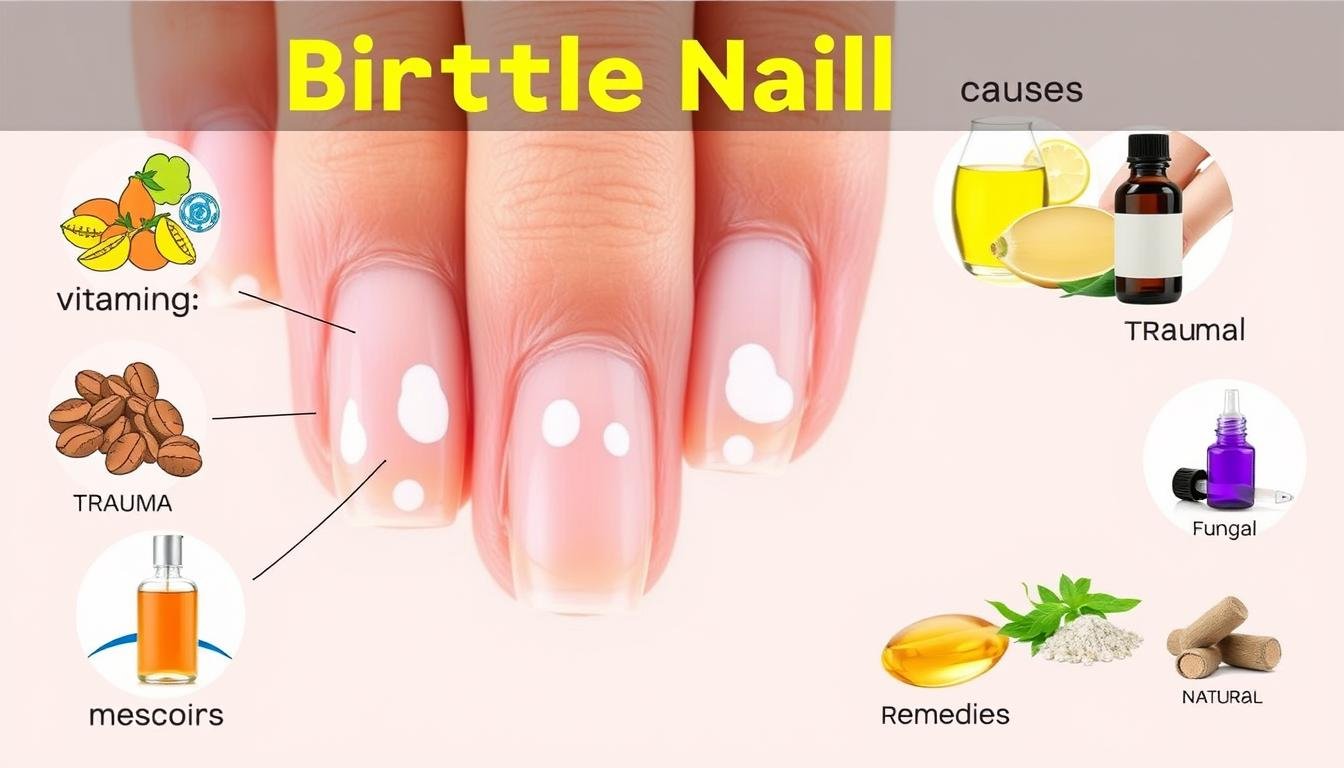
Did you know that nearly 10% of people get nail discoloration in their lives? Yellowing and white spots on brittle nails are not just about looks. They can show signs of health problems. This article looks at why nails change color and what it means for our health. It’s key to spot these signs early and know what they mean for treating brittle nails and staying healthy.
Key Takeaways
- Nail discoloration, such as yellowing and white spots, can indicate underlying health conditions.
- Common causes of yellow nails include fungal infections and potential chronic diseases.
- White spots often result from trauma but may also signal nutritional deficiencies.
- Maintaining proper nail care is vital in preventing discoloration.
- Consulting a healthcare professional is recommended when experiencing severe changes in nail appearance.
Introduction to Nail Discoloration
Nail color changes are key for checking nail health. These changes come from different causes like infections, not enough nutrients, or getting older. Knowing about these changes helps find health issues early.
Discolored brittle nails often show health problems needing a doctor’s look. For example, yellow nails usually mean a nail fungus spreading from the edges. White spots known as superficial onychomycosis can make nails crumble. This shows why nail care is vital.
Understanding nail color importance makes us watch our nails more. Bumpy or thick nails might signal an untreated fungal infection. Knowing the link between nail color and health encourages us to keep our nails healthy.
Finally, watching our nail color matters more than just for looks. It’s a big part of knowing about our health. When we see changes in our nail color, it’s a sign to pay attention to our nail health and overall condition.
Understanding Discoloration of Brittle Nails: Yellowing and White Spots
Nail color changes can tell us a lot about our health. The sight of yellow nails is very common. Many reasons can make this happen. By looking at our nails, we can spot signs like brittleness, yellow color, and white spots.
Common Symptoms and Appearance
People might see changes in their nails such as:
- Yellowing: A yellow color on the nail is a clear sign of change.
- Brittleness: Nails might break easily if they are weak from too much water or chemicals.
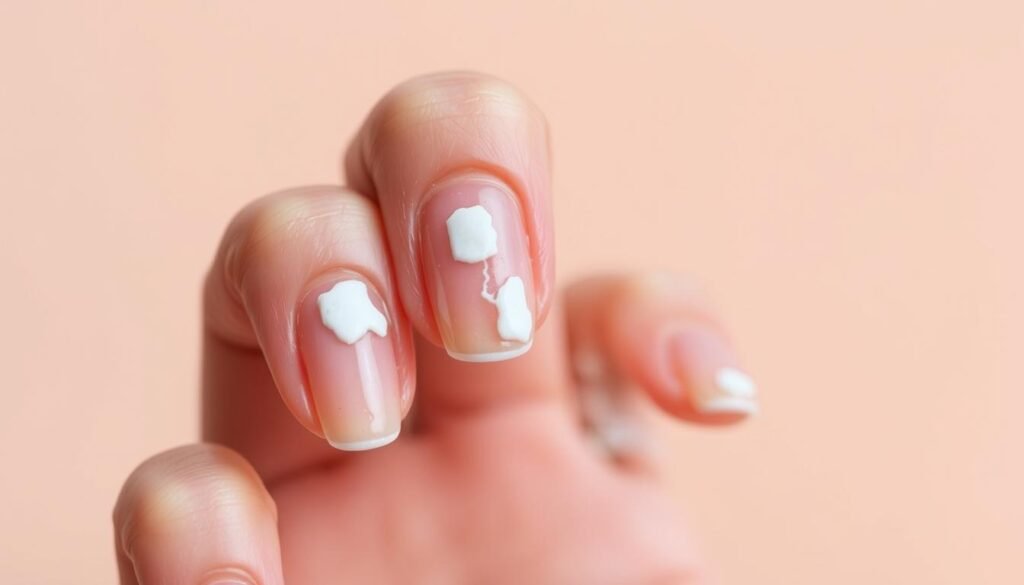
- White Spots: These spots could come from hitting your nails, allergies, or not having enough nutrients.
Spotting these signs early is key. They could mean there are hidden health problems. Watching our nails helps us catch these issues sooner.
Why Nail Color Matters
The color of our nails is more than just looks. If nails stay yellow, it might mean a nail fungus or other illness. White spots could point to not having enough zinc or an injury. Keeping an eye on our nail color and health is a smart move. It tells us a lot about our overall health, stressing the importance of eating right and looking after our nails. This way, we can stop bigger health problems before they start.
Causes of Yellowing Nails
Yellow nails come from different reasons, each needing attention. People see changes in their nail color and look. It’s important to understand why this happens and how to fix it.
Nail Fungal Infections (Onychomycosis)
Onychomycosis, a common nail fungus, usually causes yellow nails. This problem makes nails weak and could harm the nail bed. Treatments need to be quick and correct. Looking at health guides helps understand and fight this issue.
Vitamin Deficiencies
Vitamin shortages can turn nails yellow. These shortages may also make nails weak and discolored. This reflects our overall health. Nearly 10% of yellow nails are due to bad nutrition. Eating right and talking to doctors improve nail health.
Impact of Aging on Nail Color
As we get older, our nails change. They might start looking yellow because of this damage. This, along with diseases like diabetes and thyroid problems, makes it worse. Knowing this helps us accept the changes and keep our nails looking good.
White Spots on Nails: Possible Explanations
White spots on nails, known as leukonychia, can come from different causes. This includes nail injuries or underlying health issues. While often not serious, they can sometimes point to bigger health concerns.
Trauma and Injury
Nail trauma often results in white spots. This can happen from biting nails, accidental hits, or other injuries. These spots usually grow out with the nail. Many adults have experienced them without serious health risks.
Such incidents suggest the nail was stressed, not that there’s a major health issue.
Health Conditions Associated with White Spots
White spots might mean different health problems. Lack of minerals like zinc or fungal infections can cause these. Even serious issues like heart disease or diabetes might turn nails white. Rare conditions, such as Bart-Pumphrey syndrome, can also cause spots.
If white spots don’t go away or get worse, seeing a doctor is a good idea. They may do tests like nail biopsies or blood tests to find the cause.
The Role of Nail Care in Preventing Discoloration
Looking after your nails is key to staying healthy, and it helps stop nail discoloration. Simple daily care can make nails look and feel better. By keeping nails clean and dry, and using the right care methods, you can improve your nails’ condition.
Daily Habits for Healthier Nails
Adding good daily habits can greatly improve your nail’s health. To help prevent nail discoloration, try these steps:
- Regularly clean nails with mild soap and water to get rid of dirt and germs.
- Wear gloves when doing housework to keep nails away from strong chemicals.
- Try to limit how often you get acrylic or gel manicures since they could weaken nails.
- Check your nails often for any signs of discoloration or signs of fungal infections.
Importance of Moisturization
Keeping nails moist is very important for their health and to avoid damage. Nails that aren’t well-moisturized can become brittle and discolored. Putting emphasis on moisturization will help keep your nails flexible and reduce the risk of them cracking:
- Apply a good hand cream every day, making sure to cover the nails and cuticles.
- Use cuticle oil often to feed the nail bed.
- Drink a lot of water every day to stay hydrated.
Medical Conditions Linked to Nail Discoloration
Some health issues show up as nail color changes. These include thyroid problems and chronic diseases. Knowing about these conditions helps us understand their link to nail health better.
Thyroid Disorders and Their Effects on Nails
Thyroid issues greatly impact nail health. Diseases like hypothyroidism or hyperthyroidism make nails brittle. They can also cause onycholysis, where the nail separates from its bed. The thyroid hormone imbalance messes with how nails grow and their texture.
Research indicates those with thyroid problems often see changes in their nails. This shows how key thyroid function is to keeping nails healthy.
Chronic Conditions and Nail Discoloration
Long-term diseases like diabetes and liver conditions change nail appearance. These issues might cause clubbing, which shows not enough oxygen is getting to your blood. Other signs include nail pitting from psoriasis, forming tiny dips on nail surfaces.
Noticing these symptoms is a reason to talk with doctors about what might be affecting your nail color.
Treatment Options for Brittle Nails
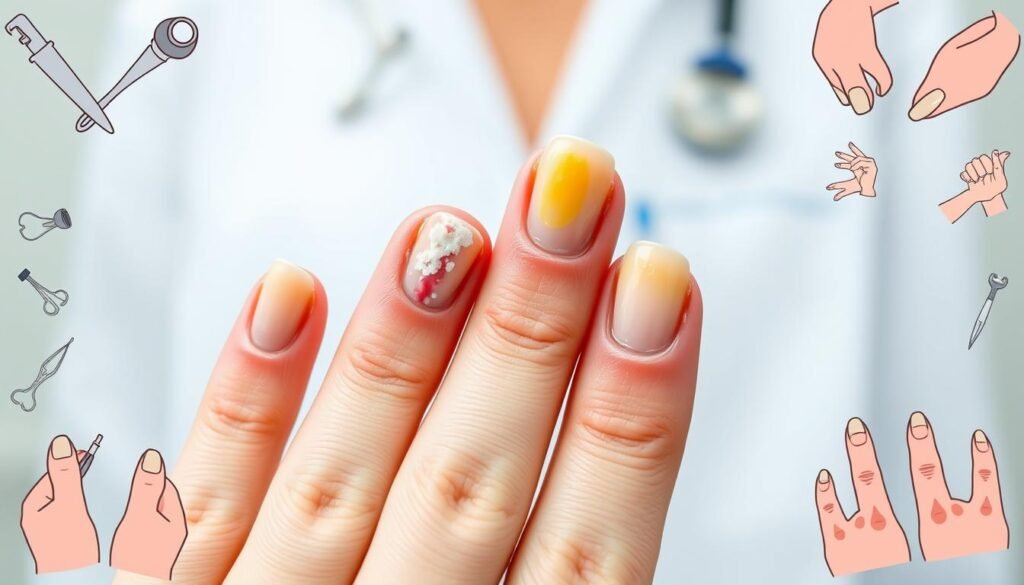
People with brittle nails have several treatment ways to help them. Effective remedies can make nails better and lessen discoloration. Choices include antifungal treatments and moisturizers from the store to make nails stronger and more hydrated. It’s key to check out both store-bought and doctor-given treatments to find what works best.
Over-the-Counter Remedies
Over-the-counter products can really help those with brittle nails. Available choices are:
- Topical antifungal creams, great for suspected fungal infections.
- Moisturizing lotions to keep nails from drying out and cracking.
- Nail strengtheners that make weak nails stronger.
Keeping up with good nail care, like regular moisturizing, boosts the benefit of these store-bought products.
Prescription Treatments for Fungal Infections
If you have a nail fungal infection, like onychomycosis, you might need a doctor’s prescription. Doctors often suggest oral antifungal drugs, such as terbinafine. These are good at getting rid of nail fungi and preventing more damage. There are also topical prescriptions for milder cases. Always get medical advice if the problem doesn’t go away, because ignoring a fungal infection can lead to more issues.
For more details on nail fungus and its treatments, check this resource.
| Treatment Type | Description | Effectiveness |
|---|---|---|
| Over-the-Counter Antifungals | Available for topical use on infected nails. | Moderate; may not clear the infection completely. |
| Moisturizers | Keeps nails moist and less brittle. | High; significantly improves nail health. |
| Prescription Antifungals | Taken by mouth or applied topically, as prescribed. | High; works well for tough fungal infections. |
When to See a Doctor
Knowing when to see a doctor for nail issues is crucial for good nail health. Changes in color and nail structure can signal deeper health issues. Recognizing certain signs early can help in taking quick action for better health outcomes.
Signs of Serious Nail Conditions
Several signs mean you should see a doctor. If you notice consistent changes in color, thickness or texture, or pain around your nails, get it checked. Other important signs include:
- Half-and-half nails: Often found in those with kidney problems or undergoing chemotherapy.
- Dark stripes: Especially in black individuals, which could be a serious condition called subungual melanoma.
- Clubbing of fingertips: A rounded fingertip look that could indicate serious health issues like lung or heart disease.
- Muehrcke’s lines: White lines that could mean low protein levels from liver disease.
- Koilonychia: Spoon-shaped nails that could signal iron-deficiency anemia or a condition called lupus.
- Beau’s lines: Deep lines in the nail that can warn of illness or trauma.
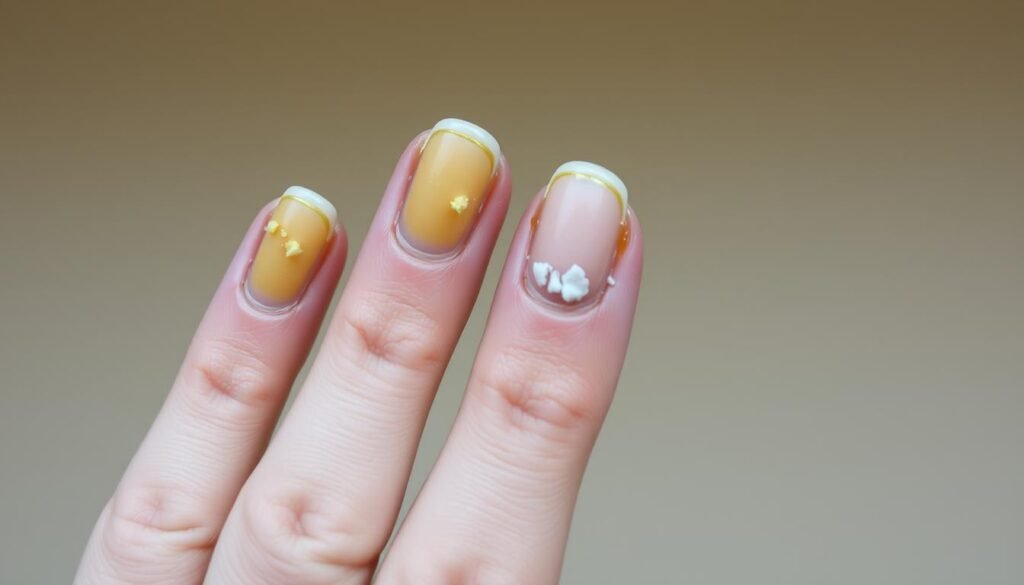
Yellow nails also need to be checked, especially if linked to thyroid disease or diabetes. Nail health reflects our overall well-being. If you see swelling, pain, or strange nail shapes, see a doctor quickly. A board-certified dermatologist or a healthcare provider can offer the right help.
| Symptom | Possible Conditions | Recommended Action |
|---|---|---|
| Persistent Discoloration | Nail fungus, liver disease | Consult a dermatologist |
| Clubbing of Fingertips | Lung disease, heart conditions | Visit a medical professional |
| Muehrcke’s Lines | Low protein levels | Seek healthcare evaluation |
| Beau’s Lines | Illness, trauma | Monitor and consult if persistent |
| Half-and-Half Nails | Kidney failure, chemotherapy treatment | Request a check-up |
Preventive Measures for Healthy Nails
Maintaining strong, attractive nails needs consistent care. Preventive measures for nails help avoid discoloration and cracks. Starting with basic practices can boost nail health.
Firstly, stay hydrated. Drinking enough water keeps nails flexible and prevents breakage. Eating a balanced diet helps too. It should include vitamins A, B, C, D, iron, zinc, and calcium. Adding leafy greens, nuts, fish, and dairy to your meals can strengthen your nails.
Taking care of hygiene is critical. Clean and dry nails ward off fungal infections. It’s important to regularly trim and shape your nails. Wearing gloves while washing dishes or doing similar tasks helps protect your nails. It helps avoid splits.
Avoid using nail products with harsh chemicals like toluene and formaldehyde. They can weaken your nails. Instead, choose products that are good for nail health. If nail problems persist, it’s wise to see a doctor. For more tips, you can check out effective treatment options for nail issues.
Last, refrain from biting your nails and cutting your cuticles. Such habits can cause infections and long-term harm. Concentrating on these preventive steps will help keep your nails healthy and avoid future problems.
Conclusion
It’s key to know about nail discoloration, such as yellowing and white spots. These signs can show health issues like not getting enough nutrients or chronic illnesses. Paying close attention to the health of your nails is a big part of being well overall.
Using good nail habits is crucial for avoiding discoloration. This includes keeping nails moist and eating a diet full of vitamins and minerals. If you see something unusual about your nails, you should see a healthcare professional quickly. This helps deal with any serious issues in the right way.
Looking after your nails well means you’ll have stronger, prettier nails. It also helps you stay healthy. If you want to know how not having enough vitamin D affects your nails, there’s more information available.
Learn more about Vitamin D deficiency and nail health

