
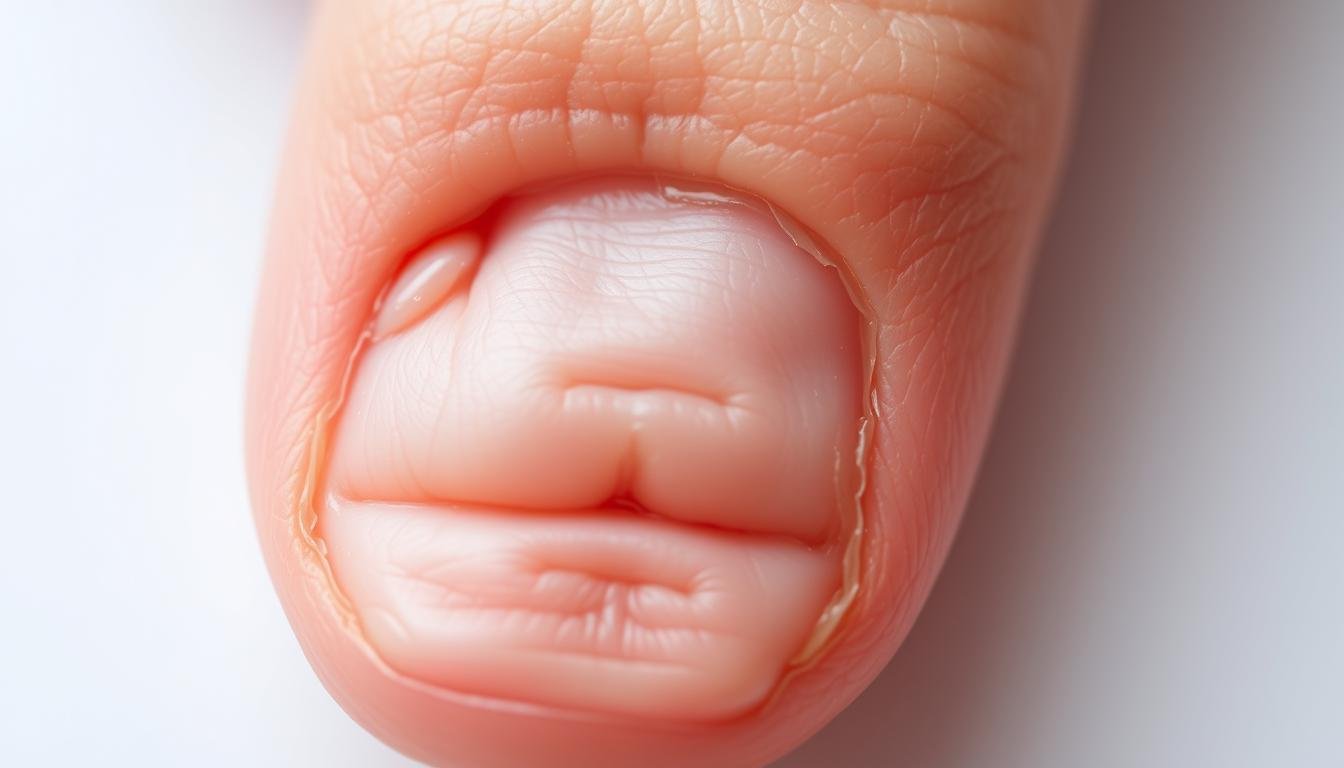
About 10% of people with horizontal ridges on their nails might have serious health issues. These issues range from lacking nutrients to more serious diseases. It’s a mistake to think these lines are just about getting older. Nail health tells us a lot about our overall well-being.
It’s important to know the facts about horizontal ridges on nails. Are they really just a sign of aging? Or are they telling us something more, like a hidden health problem? Let’s explore what these changes in your nails might mean for your health.
Key Takeaways
- Horizontal ridges can signal underlying health issues, not just aging.
- Beau’s lines may indicate serious conditions, including kidney disease.
- Regular nail changes should prompt a medical evaluation.
- Nutritional deficiencies can lead to various nail conditions.
- Age-related changes often manifest as vertical, not horizontal, ridges.
Understanding Nail Anatomy and Health
Nails are crucial for our look and health, mostly made of keratin. The nail matrix, under the cuticle, is key for growth and health. As we age, our nails change, becoming brittle or ridged and changing in texture.
Knowing how nails are structured helps us keep them healthy. As nails age, they can change color, thickness, and grow slower. These changes can lead to ridges and brittleness.
- Nail color changes: These can stem from aging, health problems, or certain nail products.
- Texture alterations: Nails might look uneven or ridged.
- Growth discrepancies: Slower growth can cause more ridges and make nails fragile.
Our daily actions and lifestyle choices affect nail health a lot. Good nail care, keeping them moist, and eating right are key. A good diet is important. Not getting enough nutrients can hurt nail health, causing ridges. Knowing this helps us care for our nails as we age.
| Factor | Impact on Nail Health |
|---|---|
| Aging | Reduces moisture retention, leading to brittleness and ridges. |
| Nutritional Deficiencies | Can lead to weakened nails, causing brittleness and changes in texture. |
| Trauma | Injury to the nail bed may lead to horizontal and vertical ridges. |
| Chronic Conditions | Affect overall nail appearance, potentially causing various abnormalities. |
Common Nail Conditions: An Overview
Nail problems show up in many ways, like ridges, discoloration, and brittleness. It’s key to know about these nail disorders. This helps spot health issues early. For example, vertical ridges on nails are common as we get older.
As people get older, nails might thicken or thin out. They lose their smooth feel and get vertical ridges. These aging signs tell us a lot about our health. Anemia might cause vertical ridges or dents on nail surfaces too.
Beau’s lines are horizontal ridges that point to serious health issues. These can be due to malnutrition, infections, or chemotherapy side effects. Nail injuries and some skin conditions like psoriasis and eczema also affect nail appearance.
Issues with digesting food, like Crohn’s or celiac disease, harm nail health. They stop the body from getting enough nutrients for nails to grow right. Lacking vitamins like iron, protein, A, B, C, D, and E can make nails brittle and ridged.
While aging-related ridges are usually okay, see a doctor if you notice other symptoms. Knowing about nail conditions helps us take care and get help when needed.
What Are Horizontal Ridges on Nails?
Horizontal ridges on nails, called Beau’s lines, are depressions running across the nail. They are an important nail health sign. Many factors can cause them, like injury, illness, or health conditions that affect nail growth. Sometimes, changes in nail appearance might show short disruptions. Yet, they can also point to more serious health issues.
To keep nail health at its best, knowing about horizontal ridges is key. Conditions such as severe kidney disease or thyroid problems might create Beau’s lines. Spotting these patterns early can help catch health problems quickly. Also, not getting enough zinc or vitamins can affect nail appearance negatively. To boost your nail health, eat a balanced diet and watch for deficiency signs. This can also improve your general health. To learn more about how nutrients affect nails, check out this resource.
Horizontal Ridges on Nails: Are They a Sign of Aging?
Horizontal ridges, or Beau’s lines, raise concerns for many. They may point to various health issues. Though some see them as aging signs, they do not solely indicate nail aging. These ridges can result from severe illnesses, fevers, or chronic conditions like diabetes and kidney diseases.
It’s key to note that horizontal ridges are not like vertical ridges. Vertical ridges are more common as we age. Horizontal ridges are caused by trauma or systemic health issues. Knowing the difference between natural aging and warning signs is critical. If you notice sudden nail changes, seek advice from a healthcare provider. For more details on nail ridges, check this source.
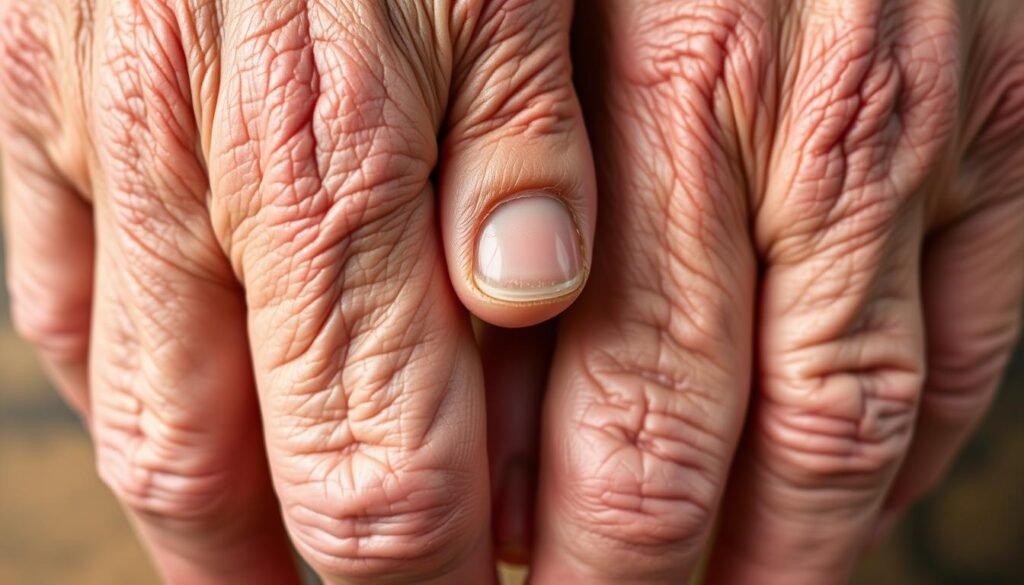
To keep your nails healthy, look after them well. Avoid harsh treatments and keep them moisturized. Paying attention to nail signs is important. It can tell you a lot about your health.
Causes of Horizontal Ridges on Nails
Horizontal ridges on nails tell us about our nail health. They come from different sources like what we eat and certain health problems. This could mean more serious issues are at play.
Nutritional Deficiencies and their Impact on Nail Health
Lack of important nutrients affects our nails. Not getting enough iron, zinc, or protein can change how nails grow. They may become weak and show horizontal ridges. Eating a balanced diet helps avoid nutrient deficiencies and keeps nails strong.
Medical Conditions Linked to Nail Ridges
Some health problems can cause horizontal ridges on nails too. Chronic kidney disease is one such problem. Also, injuries or being very sick with infections or high fevers can mess up nail growth. Knowing the medical conditions behind nail changes helps tackle the real issue.
| Condition | Effect on Nails |
|---|---|
| Nutritional Deficiencies | Weak nails, horizontal ridges |
| Chronic Kidney Disease | Horizontal ridges, changes in color |
| Trauma | Disrupted growth, visible ridges |
| Infections | Altered nail texture and ridges |
| High Fever Illnesses | Temporary nail changes, ridges |
How Aging Contributes to Changes in Nail Appearance
Aging changes how our nails look. It mostly does this by slowing down the nail growth cycle. As we get older, our cells don’t turn over as fast. This can lead to nails getting thinner and having more ridges.
Cell Turnover and Nail Growth Cycle
As we age, our nail health starts to show the effects of slower cell turnover. This can make our nails brittle and their surfaces uneven. A slower nail growth cycle also means minor flaws don’t get repaired as quickly. That’s why we may see vertical ridges on our nails. These ridges run from the tip to the cuticle. They are usually nothing to worry about but they do show how aging affects our nails or if we’re not eating right.
Vertical vs. Horizontal Ridges: What’s the Difference?
Different kinds of ridges on nails mean different things. Vertical ridges are common as we get older. They just show typical signs of aging. However, horizontal ridges, also called Beau’s lines, are more concerning. They could point to serious health issues, lack of nutrients, sickness, or the side effects of certain medicines. These issues need a closer look by a doctor.
Taking good care of our nails is important as we age. With regular upkeep and eating right, we can keep our nails looking better. If you notice big changes in your nails, it’s a good idea to see a doctor. They can check if there’s a health issue behind it. There are lots of tips and advice on how to take care of your nails here. There’s also info on how to avoid and treat brittle nails here.
Diagnosing the Cause of Nail Ridges
Understanding nail problems starts with a detailed medical check-up. A doctor will first inspect your nails closely. They look for visual clues. This includes checking your health history and other symptoms that come with nail changes.
After the initial check-up, blood tests might be done. They help find out if you lack nutrients or have other health issues. Issues like Lichen Planus affect a small part of the population. It causes long ridges on some people’s nails. Psoriasis, affecting about 4% of people worldwide, also leads to nail problems.
Also, anemia could make your nails brittle with ridges. It’s often because you don’t have enough iron or important vitamins. Bad circulation from Peripheral Vascular Disease can also cause long ridges on nails. This shows why looking at nail problems closely is key.
When nails change color to dark brown or black, it’s really important to see a doctor. This could mean very serious health issues, like endocarditis or melanoma. To sum it up, quickly finding out what’s wrong with your nails can help fix them. This makes your nails healthier overall.
Treatment Options for Nail Ridges
Nail ridges, especially horizontal ones like Beau’s lines, can hint at different health problems. It’s key to check for any health issues that might be causing them. Seeing a healthcare expert is crucial for getting the right treatment.
Addressing Underlying Health Issues
Tackling health problems is key for dealing with nail ridges. Issues such as diabetes, thyroid problems, and kidney diseases can affect your nails. A detailed check-up by a doctor helps create a plan that targets these issues. For example, fixing iron deficiency might make your nails stronger and lessen ridges. It shows how nail and overall health are linked, guiding people to proper care.
Nail Care Practices to Follow
Good nail care practices are important for healthy nails. Keeping nails moisturized helps avoid dryness that can make ridges worse. Wearing gloves during chores can protect your nails. It’s also best to not buff too much to prevent damage. Considering biotin products might help with nail strength, but studies are still ongoing. Knowing the right ways to look after your nails keeps them in great shape.

| Best Practices for Nail Care | Benefits |
|---|---|
| Regular Moisturization | Prevents dryness and brittleness |
| Using Gloves | Protects nails from harmful substances |
| Avoiding Excessive Buffing | Reduces the risk of damage |
| Incorporating Biotin | May strengthen nails, pending further research |
| Seeking Professional Advice | Identifies underlying health issues effectively |
Preventive Measures for Healthy Nails
Keeping nails healthy means being proactive. A good diet full of vitamins and minerals is important. Eating foods with folic acid, iron, and proteins helps prevent nail problems.
Drinking enough water is key to nail health. It prevents them from becoming brittle. It’s also crucial to protect nails from damage. Steer clear of biting your nails to help them grow strong.
Seeing a dermatologist regularly can catch problems early. If you notice any changes in your nails, get them checked. Proper nail care tips help avoid infections. Not cutting cuticles keeps a protective barrier against germs.
Salons should be clean and use disinfectants. Technicians must clean foot baths after each use. This helps stop the spread of infections and keeps nails in top shape.
| Healthy Nail Practices | Description |
|---|---|
| Balanced Diet | Incorporate foods rich in vitamins and minerals to counter nutritional deficiencies. |
| Hydration | Drink enough water to maintain nail flexibility and prevent brittleness. |
| Nail Care Tips | Implement good hygiene practices, like moisturizing and avoiding harsh chemicals. |
| Regular Check-ups | Consult dermatologists to catch potential issues early before they worsen. |
| Caution in Salons | Ensure that salons follow strict sanitation procedures to avoid infections. |
Conclusion
Horizontal ridges on nails can mean aging or a sign of health issues. It’s key to notice any changes in your nails. These ridges show more than just getting older. They might mean you lack certain nutrients or have a chronic health problem.
To improve nail health, it’s important to know what causes these ridges. Taking care of your nails, eating right, and drinking plenty of water help a lot. For more tips on dealing with nail ridges, check out how to manage nail ridges.
As we get older, our nails change too. Spotting signs early and getting expert advice is crucial. Knowing what to look for boosts your confidence in handling nail health.

