

Did you know about spoon nails? They are nails that turn into a concave shape. About 5.4% of people with iron deficiency have spoon nails. This fact shows us how crucial iron is for our nail health. Besides causing spoon nails in children, low iron levels can weaken nails and slow their growth.
Our bodies need iron for many important functions. One key role is to help make red blood cells. When we don’t get enough iron, our nails can start looking odd. They may become thin or split easily. This condition is called onychoschizia and is common in about one out of five people. Eating foods rich in iron is important to keep our nails strong and healthy.
In this article, we’re going to look at how not having enough iron affects our nails. We will talk about anemia symptoms and the nutrients that make our nails strong and beautiful. Understanding the link between iron and nail health helps us take better care of ourselves.
Key Takeaways
- Spoon nails impact 5.4% of individuals with iron deficiency.
- Children are most commonly affected by spoon nails due to iron deficiency.
- Iron deficiency can lead to brittle nails, particularly in elderly individuals.
- Nutritional deficiencies, including iron, zinc, and biotin, can compromise nail health.
- Regular nail care routines can vastly improve the appearance and strength of nails.
- Consulting healthcare professionals is crucial for severe nail brittleness or underlying health conditions.
Introduction to Nail Health and Iron Deficiency
Your nails reflect your overall health, serving as a indicator of health.
Changes in your nails often point to health problems, like nutrient shortages. Iron deficiency is a widespread issue, affecting more than a quarter of people worldwide. This lack of iron doesn’t just affect your overall health but also the condition of your nails.
Spoon-shaped nails, or koilonychia, are a key sign of iron deficiency anemia. Other signs include:
- Brittle nails
- Nail pitting from conditions like psoriasis
- Beau lines due to illness or lack of nutrients
Noticing these changes early can lead to quicker diagnosis and treatment. It’s important to understand how nail health connects to iron levels. For more info on how iron affects your nails, check out this resource.
Understanding Iron’s Role in the Body
Iron is key for our health. It helps make hemoglobin, a protein in red blood cells. This protein carries oxygen all over the body. Oxygen is vital for energy and keeping nails healthy. They need oxygen-rich blood to grow strong.
Many don’t realize how iron affects nutrient absorption and energy. Not enough iron means fewer red blood cells. This can lead to less oxygen in the body. It can cause health problems like iron deficiency anemia. This means not having enough healthy red blood cells.
The amount of iron you need changes with age, sex, and health. Adult men usually need 8 mg of iron a day. But, women who can have babies might need up to 18 mg. Knowing about nutrient absorption helps pick the best iron sources. Eating foods rich in iron with vitamin C foods helps your body absorb iron better. Good eating habits are important to use iron well and stay healthy.
| Population Group | RDA for Iron (mg) |
|---|---|
| Adult Men | 8 |
| Women (aged 19-50) | 18 |
| Pregnant Women | 27 |
| Postmenopausal Women | 8 |
Anemia Symptoms: The Connection to Nails
Anemia, especially iron deficiency anemia, brings several symptoms. Among these are specific nail abnormalities that reveal a lot about your health. People with this condition often see changes in their nails. They find pale nail beds and spoon-shaped nails, which are significant signs.
About 5.4% of people with anemia have spoon nails or koilonychia. This makes nails thin and brittle, curving up at the edges. Significant nail changes from untreated anemia highlight the need to notice these anemia symptoms.
Three million Americans live with anemia, reports the CDC. Knowing how anemia affects your body is crucial. Changes in nails are clear signs of low iron levels. They stress the importance of checking when you see signs like pale nail beds. Recognizing this link can lead to timely medical help. This can better your health and the condition of your nails.
| Type of Nail Change | Description | Associated Anemia Symptoms |
|---|---|---|
| Spoon Nails (Koilonychia) | Nails become concave, thin, and brittle. | Pale nail beds, fatigue, dizziness. |
| Pale Nail Beds | Nails lose their healthy pink color and appear washed out. | Weakness, irregular heartbeat. |
| Brittle Nails | Nails chip and break easily. | Shortness of breath, cold extremities. |
How Iron Deficiency Impacts Nail Growth
Iron deficiency can majorly affect nail health. It shows on nail strength and how fast they grow. Nails need nutrients like iron to stay healthy. Without enough iron, you might see problems in how your nails look and feel.
The Role of Ferritin Levels in Nail Strength
Ferritin levels indicate how much iron your body has stored. If ferritin is low, nails become brittle and weak. Anemia from not having enough iron can make nails change shape and seem concave. This condition makes us worry about how nails grow and look.
Effects on Nail Growth Rate and Structure
Iron deficiency affects how fast nails grow and their structure. Not enough iron can make growth slow and cause structural issues. Nails may start to lift from the nail bed or break easily, looking fragile. Eating right and sometimes getting a doctor’s advice on iron levels is key for healthy nails.
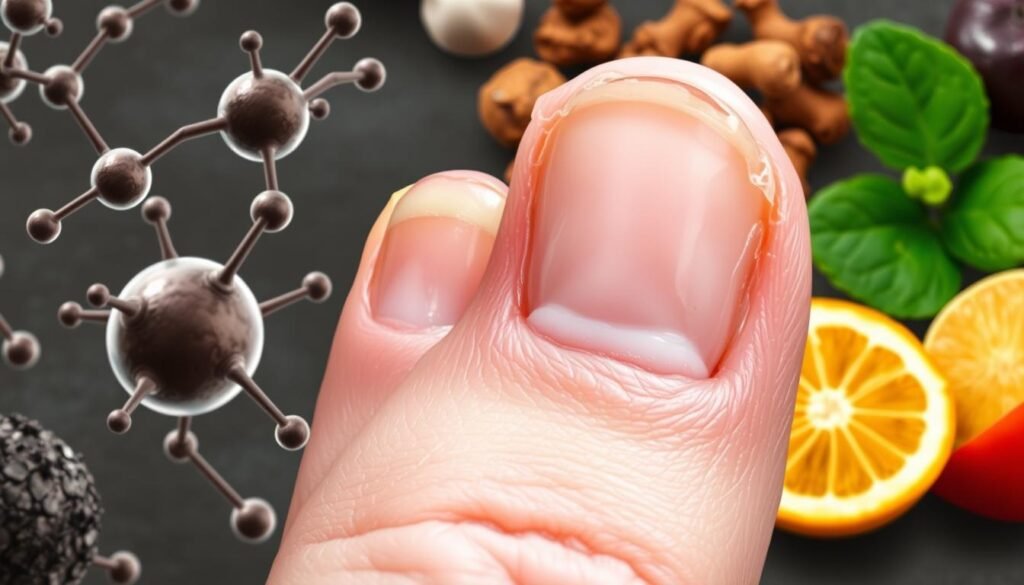
Nutritional Deficiencies and Nail Health
Nail health depends on more than just iron. Many vitamins are key for strong, growing nails. It’s important to know which nutrients make for healthy nails.
Essential Vitamins and Their Importance
Vitamins like Biotin and B12 are vital for nail health. Biotin is especially good for making nails strong, helping prevent splits and breaks. B vitamins help the body in ways that benefit nail health, too.
Not getting enough vitamins can weaken nails. For example, not enough B vitamins might make nails soft and easy to break. Knowing about vitamin effects helps people choose the best foods for their nails.
Impact of Other Nutritional Deficiencies
It’s not just about vitamins. Missing minerals like zinc, magnesium, and protein also affects nails. These shortages can cause nails to become brittle and peel. They can stop nails from growing well and lower nail quality.
| Nutrient | Role in Nail Health | Deficiency Symptoms |
|---|---|---|
| Biotin | Strengthens nails | Brittle, peeling nails |
| B12 | Supports nail growth | Weak, slow-growing nails |
| Zinc | Promotes cellular repair | White spots, nail splitting |
| Magnesium | Maintains nail structure | Brittle, soft nails |
| Protein | Essential for growth | Slow nail growth |
Fixing these nutrient gaps can really help your nails. Eating a diet full of key vitamins and minerals makes nails stronger and healthier. Keeping an eye on what you eat helps keep nails in top shape.
Recognizing Symptoms of Nail Abnormalities
Understanding nail abnormalities helps us know our health better. Changes in nail appearance may show us health issues. Signs like brittle nails point to things our body needs. Here’s what different nail problems could mean for our health.
Common Types of Fingernail Abnormalities
Nail issues show up in many ways. Knowing these signs helps find hidden health problems. Below are some key abnormalities to watch for:
- Beau’s lines: These lines could mean malnourishment or diseases like pneumonia and diabetes.
- Clubbing: When fingertips thicken and curve, it might signal low blood oxygen and illness.
- Koilonychia: Spoon-shaped nails often point to iron deficiency anemia.
- Leukonychia: White spots or lines can hint at minor harm or other issues.
- Mees’ lines: White lines across might show arsenic exposure.
- Onycholysis: If the nail plate separates from the bed, it could be from infection.
- Pitting: Small dents often relate to skin conditions like psoriasis.
- Terry’s nails: A dark band at the tip might show serious health problems.
- Yellow nail syndrome: Thick, yellow nails can link to breathing or lymphatic system issues.
Brittle Nails: Causes and Solutions
Brittle nails often come from not getting enough iron. They might split or peel. Many things can cause brittle nails:
- Poor nutrition, especially lack of iron.
- Too much water or chemical exposure.
- Illnesses like thyroid disease.
Eating iron-rich foods and taking care of your nails can help them get stronger. Here are foods that are good for your nails:
| Iron-Rich Foods | Serving Size | Iron Content (mg) |
|---|---|---|
| Spinach | 1 cup (cooked) | 6.4 |
| Red meat (beef) | 3 ounces | 2.1 |
| Legumes (lentils) | 1 cup (cooked) | 6.6 |
| Fortified cereals | 1 cup | 18.0 |
| Pumpkin seeds | 1 ounce | 2.5 |
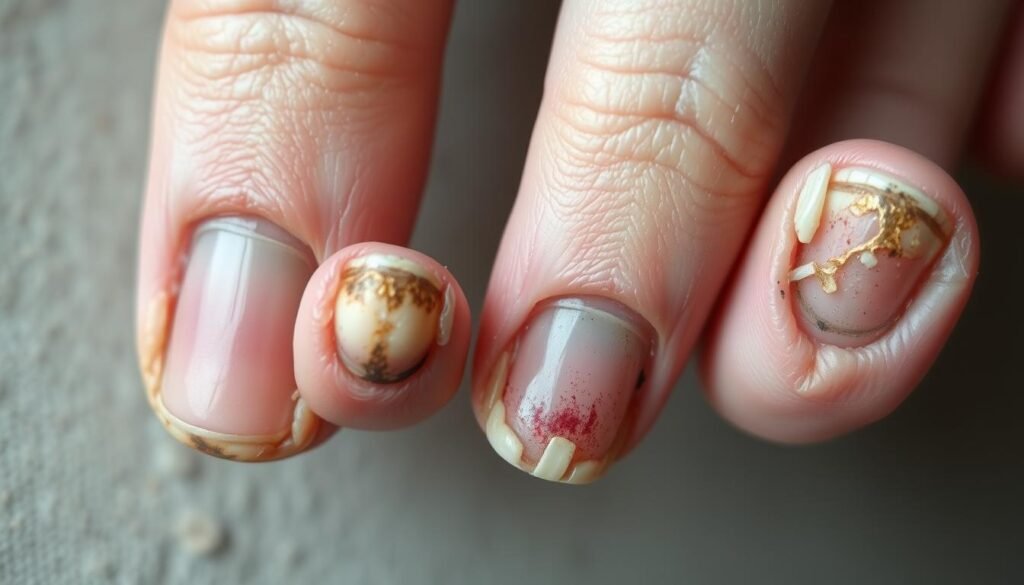
Paying attention to nail health can lead to better habits. With the right food and care, you can improve your nail’s condition.
Iron-Rich Foods to Consider for Healthy Nails
Having strong, healthy nails requires a balanced diet. Iron is key for nail strength and growth. This part will show the best iron sources and how to mix them into your meals.
Top Iron-Rich Foods for Your Diet
Many foods are great sources of iron. Here are some top choices:
- Red meats – Beef and lamb have lots of heme iron, which our bodies absorb well.
- Poultry – Chicken and turkey are low in calories but rich in iron.
- Seafood – Oysters and sardines are loaded with iron and other nutrients.
- Dairy products – These offer iron along with needed calcium.
- Beans and lentils – Perfect for those on vegan or vegetarian diets, they’re iron-rich.
- Dark leafy vegetables – Spinach and kale pack iron and many other nutrients.
Incorporating Iron into Plant-Based Diets
For plant-based eaters, getting enough iron is essential. Combine iron sources like beans and greens with foods high in vitamin C to boost iron absorption. Think citrus fruits and bell peppers.
Below is a list of plant foods rich in iron and their content:
| Food | Iron Content (mg per serving) | Vitamin C Content (mg per serving) |
|---|---|---|
| Cooked lentils (1 cup) | 6.6 | 3.3 |
| Spinach (cooked, 1 cup) | 6.4 | 17.6 |
| Chickpeas (1 cup) | 4.7 | 2.1 |
| Quinoa (1 cup) | 2.8 | 0.0 |
| Iron-fortified cereal (1 serving) | 18.0 | 0.0 |
By eating different iron-rich foods every day, you improve nail health and your overall well-being.
Nail Care Tips to Support Growth and Strength
Understanding how to take care of your nails is key. Applying effective nail care tips can make your nails stronger and help them grow. Keeping your nails clean and moisturized is vital for lovely nails that don’t break easily.
Best Practices for Nail Hygiene
Good nail hygiene is crucial for healthy nails. Follow these tips:
- Wash hands regularly to remove dirt and germs.
- Trim nails often to avoid snagging and breakage.
- Use a gentle nail polish remover to protect your nail bed.
- Avoid biting nails, as it can introduce germs and cause infections.
- Keep nails dry to stop fungal infections, especially in humid places.
The Role of Moisturization in Nail Care
Moisturizing your nails is very important. It makes them less likely to break or get damaged. Try these moisturizing tips to keep your nails strong:
- Apply cuticle oil every day to soften cuticles and prevent cracks.
- Use a hand cream with shea butter or glycerin for extra moisture.
- Try overnight treatments with heavy creams or oils for deep hydration.
- Eat foods with omega-3 fatty acids, they fight dryness.
With these nail care steps, you can keep your nails strong and healthy. Adding moisturizing routines will also protect against brittleness and make your nails look better.
Medical Treatments and Supplements
Fixing iron deficiency is key to getting healthy nails. There are many treatments and supplements out there. They combine diet tips with possible medical steps. Knowing when to see an expert for nail problems is vital.
When to Consult a Healthcare Professional
You should see a doctor if your nails look odd, weak, or change shape. Seeing a doctor means you might get blood tests. These can check for iron deficiency anemia. This condition is common and can affect your nails.
Available Treatments for Iron Deficiency
There are many ways to treat iron deficiency. Eating the right foods and taking supplements is a good start:
- Iron supplements: They boost your body’s iron levels.
- B12 supplements: These are for B12 deficiency anemia. They’re crucial if brittle nails are a problem.
- Dietary sources: Foods like lean meats, seafood, nuts, beans, and fortified grains help fight iron deficiency.
In tough cases, things like blood transfusions might be needed. Doctors could also suggest medicines to help make more red blood cells. Keeping you healthy is their main goal.
It’s important to know what vitamins and minerals do for nail strength. Not every supplement is checked by regulatory bodies. Being careful about which supplements to take is key. Doing so can prevent side effects like feeling sick. Eating well along with supplements can make your nails better.
| Treatment Type | Description | Notes |
|---|---|---|
| Iron Supplements | Tablets or liquids that increase iron levels in the body. | Consultation recommended to avoid excess intake. |
| B12 Supplements | Injections or oral supplements to treat deficiencies. | Essential for nail and overall health. |
| Dietary Adjustments | Incorporating iron-rich foods. | Prioritize whole foods over processed supplements. |
| Medical Procedures | Blood transfusions and medications for severe anemia. | Used as last resort after thorough assessments. |
For more info on keeping your nails healthy and dealing with deficiencies, check out nail health and nutrition.
Conclusion
This article links iron deficiency directly to nail health issues. It shows that lacking nutrients can cause nails to become brittle and change color. About 10% of skin problems are nail-related. Conditions like spoon nails often point to health problems such as iron deficiency anemia.
To keep nails strong and growing, eating a diet full of iron and other important nutrients is key. Eating right helps not just your nails, but also stops symptoms like tiredness, mood swings, and hair loss. If your nails look odd or grow weirdly, it’s smart to get advice from a doctor for the best care.
Keeping an eye on nail health and fixing deficiencies early is good for your overall health. Getting enough iron and a mix of nutrients makes your nails healthier and stronger. This not only makes you look better but boosts your confidence too.

