

About 5.4% of people with anemia get spoon-shaped nails, also called koilonychia. This statistic shows the strong connection between iron deficiency anemia and nail health. In the U.S., over 3 million people have anemia. Spotting symptoms of iron deficiency is key. It helps keep nails looking good and protects overall health.
Nails can tell us a lot about our health. Changes in their look might mean there are bigger health issues, like not getting enough nutrients. By knowing how lack of iron affects us, we can work on our nail problems and avoid more issues later. If you want to make your nail health and general health better, this info is vital. For deeper insights, check this resource on nail abnormalities and their.
Key Takeaways
- Iron deficiency can lead to various nail abnormalities, including brittle and spoon-shaped nails.
- Spotting early symptoms of iron deficiency can stop serious health problems.
- Eating foods rich in iron can greatly improve nail health.
- Women and older adults often face iron deficiency anemia.
- Taking care of our nails regularly helps us stay healthy and catch issues early.
Introduction to Iron Deficiency and Nail Health
Iron deficiency is a common health issue that impacts well-being. It leads to conditions like iron deficiency anemia. Without enough iron, nails can’t grow strong and healthy because the body struggles to make hemoglobin.
It’s crucial to know the symptoms of iron deficiency to keep nails healthy. Signs include fatigue, looking pale, and feeling out of breath. Problems with nails, like brittleness or spoon nails, show how the body is struggling.
For more on iron’s role in health, see this resource. Symptoms can also be cold hands and feet, irregular heartbeats, and strange cravings. Spotting these early helps avoid bigger health problems.
Eating foods high in iron is crucial for healthy nails. Changing what you eat can prevent issues and boost nail health. This step is key to avoiding other health problems.
Understanding Iron Deficiency Anemia
Iron deficiency anemia is when there’s not enough iron for making hemoglobin. Hemoglobin carries oxygen in our blood. Without enough hemoglobin, we can feel very tired, look pale, and be weak.
People with this condition might also have restless leg syndrome. They may crave odd things like ice or clay. Plus, they could bruise more easily because their blood platelets drop.
The symptoms aren’t just physical. They affect our minds too. Folks may feel moody, get dizzy, or can’t focus well. Losing hair and having nails that break easily are more clues.
Feeling cold, getting headaches, and having a fast heartbeat when exercising are signs too. It’s crucial to watch how much iron you get. This is especially true for women who bleed a lot during their period or anyone with stomach issues.
How Iron Deficiency Affects the Body
Iron deficiency doesn’t just make you tired. It affects different systems in the body. Iron is needed to carry oxygen to every cell. If you don’t have enough iron, your health suffers, especially the heart and immune systems.
Anemia is often due to not eating enough iron-rich foods, losing blood, or some health issues. It means you have fewer red blood cells. Signs include looking pale, feeling tired more often, and not being able to exercise as well.
Your immune system also takes a hit when you don’t get enough iron. You might get sick more easily. For older folks, not eating much can make it worse.
Knowing how iron deficiency effects your health is key. If you have symptoms, talk to a doctor. They can help stop these health consequences.
| System Affected | Iron’s Role | Consequences of Deficiency |
|---|---|---|
| Cardiovascular | Oxygen transport | Fatigue, increased heart rate |
| Immune | Support immune function | Increased infection risk |
| General Health | Cellular energy production | Weakness, paleness of skin |
Signs of Iron Deficiency in Nails
Nails can tell us a lot about our health. If you’re low on iron, your nails might show it. Spotting these signs early can help you get better faster.
Brittle Nails and Their Causes
Brittle nails break easily and it’s a sign you might not have enough iron. Taking care of your nails becomes hard. Not getting enough iron is a big reason your nails could be weak.
Other reasons include using too much nail polish, being in harsh environments, or having another health problem.
Spoon Nails and Their Significance
Spoon nails dip in the middle like a spoon. This can be a sign you’re low on iron. About 5.4% of people with iron problems get spoon nails.
This is common in kids who don’t have enough iron. Spoon nails get better after 4 to 6 months of iron treatment. They warn us to check our iron levels.
Other Symptoms Associated with Iron Deficiency
Iron deficiency includes symptoms that go beyond just the nails. Feeling tired and looking pale are common signs. These can greatly affect everyday life.
Fatigue and Weakness
Fatigue is often felt by people with low iron. Without enough hemoglobin, the body can’t get enough oxygen to its parts. This makes you feel tired and weak all the time.
Doing even easy tasks can seem hard. This can lower how much you get done and affect your life’s quality.
Paleness of Skin and Nails
Having pale skin and nails can show someone might have iron deficiency. People with this issue may look more washed-out than usual. Their nail beds might also not look pink and healthy.
These signs suggest anemia could be present. It’s a hint to check iron levels more closely.
Is Your Iron Deficiency Hurting Your Nails?
Iron deficiency can affect your nails in many ways. You may notice changes that worry you about your health. One common sign is brittle nails, which means you might not have enough iron. This can make your nails weak and easily broken.
In some cases, nails might start to curve upwards, looking like a spoon, which is called koilonychia. This is a clear sign of a serious iron shortage.
You might see changes in the color of your nails, like them being pale or discolored. This can point to problems caused by not enough iron. Some people also get a dry mouth or a painful tongue, which are easy to overlook. These are signs that you need more iron.
Sometimes, people with low iron crave non-food items like ice or clay, a condition known as pica. This is a strong warning that you need more iron. Also, iron deficiency can lead to feeling tired, dizzy, and cranky, making things worse.
Knowing these signs is the first step to fixing the problem. Getting the right diagnosis and treatment can really help your nails and your health. It shows how important enough iron is for healthy nails and overall wellness.
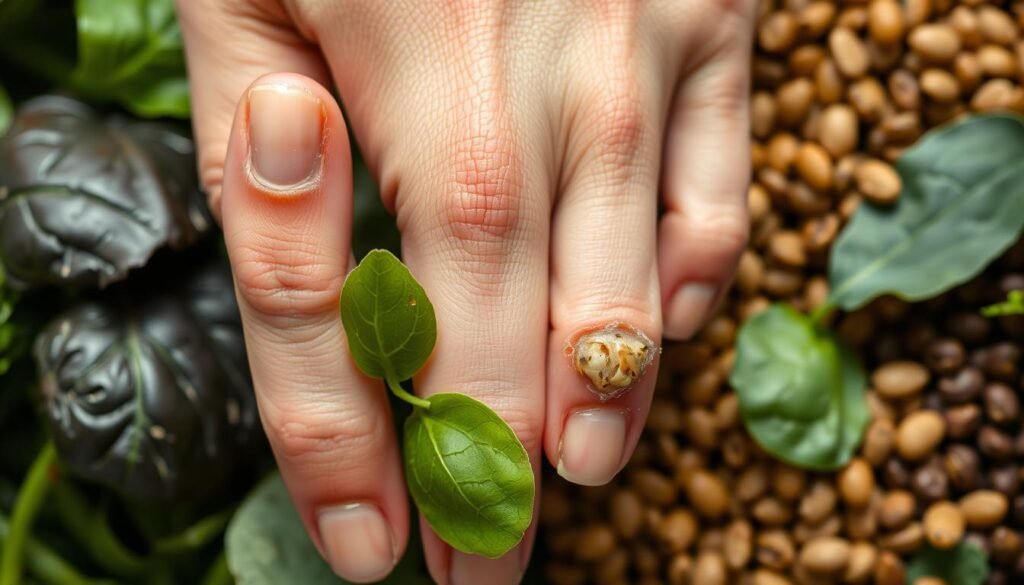
Nail Abnormalities Related to Anemia
Nail problems can hint at a person’s health, especially about iron lack anemia. Spotting things like nail ridges and color changes helps spot health problems needing a closer look.
Nail Ridges: What They Indicate
Nail ridges can point to health issues, like low iron. These lines on your nails can show if you’re not getting enough nutrients. If you have these ridges for a long time, it might mean you’re not following iron treatment well.
Nail Discoloration: Causes and Effects
Nail color changes can mean many health problems. With iron deficiency, nails might look pale or white. This happens because there’s less hemoglobin, leading to less oxygen. Fungus or stains from smoking can also change nail color. Knowing the difference helps find iron problems or other serious health issues.
| Type of Nail Abnormality | Associated Symptoms | Potential Causes |
|---|---|---|
| Nail Ridges | Visible lines or ridges on nails | Poor nutrition, chronic iron deficiency |
| Nail Discoloration | Pale or unusually colored nails | Systemic health issues, fungal infections |
Keeping an eye on nail changes, like ridges and color shifts, is key for checking iron levels and health. Early notice can lead to quick doctor visits and better health results.
Assessing Your Risk for Iron Deficiency
Knowing the risk factors for iron deficiency is key for your health. Different things can make you more likely to get iron deficiency anemia. This can really affect certain people. It’s important to know these factors so you can prevent it.
Common Causes of Iron Deficiency Anemia
There are many reasons why someone might lack iron. This includes not eating right, losing blood, and health problems. Let’s look at some main reasons:
- Heavy menstrual periods (menorrhagia) in women of reproductive age
- Gastrointestinal bleeding due to ulcers or cancers, particularly in men and post-menopausal women
- Pregnancy, which increases iron demand for fetal growth
- Chronic kidney disease (CKD) that may reduce iron production and absorption
- Dietary deficiencies, especially in vegetarians and vegans who may lack sufficient iron
- Blood loss from non-steroidal anti-inflammatory drugs (NSAIDs)
High-Risk Groups for Iron Deficiency
Certain people need to be extra careful about iron deficiency. They should watch for symptoms and maybe change what they eat. These people include:
- Pregnant women
- Women with heavy menstrual cycles
- Infants and young children
- People with chronic diseases, such as cancer or gastrointestinal disorders
- Individuals with poor dietary habits or frequent blood donors
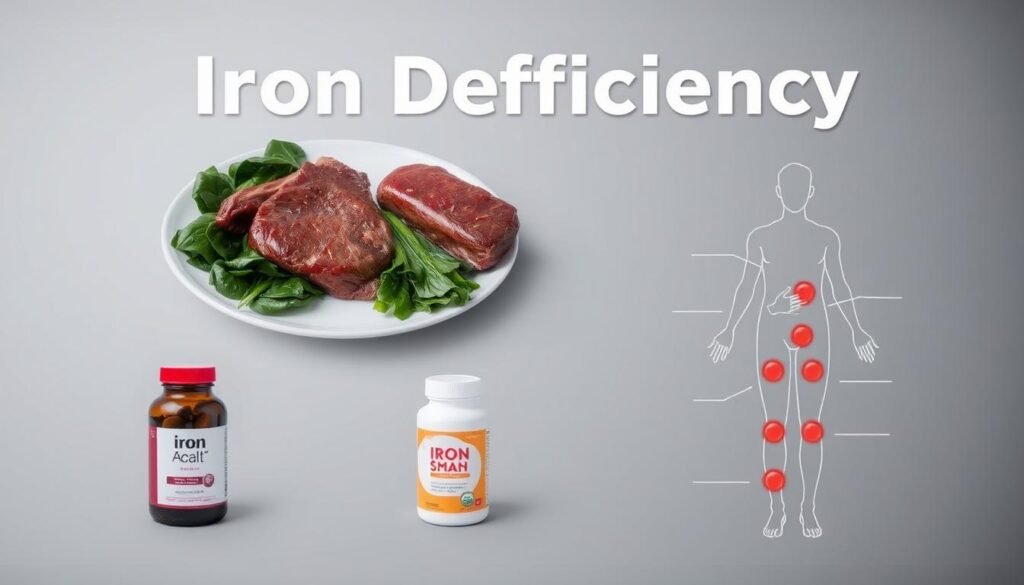
Being aware of risk factors helps catch iron deficiency early. By knowing the causes and who’s at risk, we can keep our iron levels right. This helps us stay healthy and avoids iron deficiency problems.
Dietary Solutions for Improving Nail Health
For strong and healthy nails, we need to focus on what we eat. A diet good for your nails can help make them better and tackle iron shortage. It’s key to eat foods rich in iron and get enough vitamins to help your body use the nutrients well.
Iron-Rich Foods to Include in Your Diet
- Lean meats such as chicken and beef are great because they have heme iron. Your body absorbs this type of iron easier.
- Legumes like lentils and beans are great for non-heme iron, which is also important.
- Dark leafy greens, like spinach and kale, are packed with iron and other good nutrients.
- Fish, especially salmon and tuna, give you iron and are high in omega-3 fatty acids. These are great for your overall health.
- Nuts and seeds, like pumpkin seeds and cashews, have a lot of iron and healthy fats.
Vitamins and Nutrients that Support Iron Absorption
To help your body take in iron better, some vitamins and nutrients are very important:
- Vitamin C: Eating foods high in vitamin C, like citrus fruits and bell peppers, can help your body absorb more iron from foods.
- Vitamin B12 and Folate: These are found in animal products and leafy greens. They help make red blood cells, which is good for your nails.
- Omega-3 Fatty Acids: Fish and flaxseeds have these fats, which help your overall health and nutrient use.
- Magnesium and Zinc: They help in many body functions, including helping your body use iron better.
The Role of Iron Supplements
Iron deficiency anemia (IDA) affects millions, especially women under 50. They are at a higher risk. Many use iron supplements as treatment to fight symptoms like fatigue and pale skin. Recognizing the need for iron supplements is critical. For some, eating iron-rich foods isn’t enough, especially in severe cases.
Iron supplements are a powerful treatment for IDA, but consulting a doctor is key. Taking too much iron can cause serious health problems, like liver and heart damage. Blood tests help diagnose iron deficiency. They measure hemoglobin and ferritin. Consulting a healthcare provider is crucial to get the right iron supplement.
Sometimes, oral supplements don’t work, or someone loses a lot of blood. Then, injections might be needed. Pregnant women must also watch their iron levels closely to avoid problems.
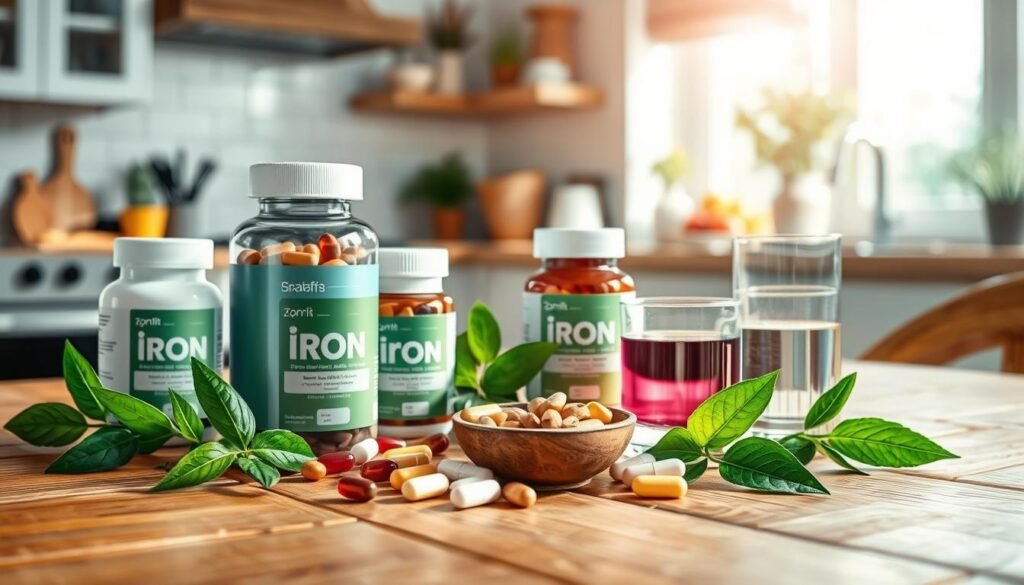
Certain foods can also provide iron, supporting health with supplements. Eating red meat, poultry, and green vegetables helps. Combining these foods with iron supplements increases effectiveness. This approach is great for treating deficiencies.
| Food Source | Iron Content (mg per serving) | Type of Iron |
|---|---|---|
| Red Meat | 2.7 | Heme |
| Poultry | 1.0 | Heme |
| Dark Leafy Greens (Spinach) | 0.8 | Non-Heme |
| Beans | 3.9 | Non-Heme |
| Fortified Cereals | 18.0 | Varies |
In summary, iron supplements help fight iron deficiency anemia. But, it’s crucial to use them wisely and under a doctor’s care. This ensures treatment is both effective and safe.
Preventing Nail Problems Linked to Anemia
Healthy nails are very important, especially if you have iron deficiency anemia. By taking care of your nails, you can prevent nail problems. This also makes your nails look better. These simple steps can greatly lower your chance of having issues.
General Nail Care Tips
- Moisturize regularly: Keep your nails and cuticles moist. This stops them from getting dry and breaking.
- Use gloves: Wear gloves for housework. This protects your nails from strong chemicals and too much water.
- Trim nails regularly: Short nails are less likely to get injured. They also have less contact with irritants.
- Limit exposure to water: Too much hand washing can weaken nails. Make sure to dry them well afterwards.
- Consider biotin supplements: A daily dose of 2.5 milligrams of biotin can make your nails stronger.
When to Seek Medical Advice for Nail Changes
If you notice any big changes in your nails, you should get medical advice. Some symptoms to watch for include:
| Symptoms | Possible Indications |
|---|---|
| Brittle or peeling nails | Lack of nutrients or environmental causes |
| Discoloration, like white nails with dark tips | Could mean liver problems or anemia |
| Spoon-shaped nails (koilonychia) | Often a sign of iron-deficiency anemia |
| Red or brown streaks under nails (splinter haemorrhages) | May show systemic health conditions |
Nail health is a mirror of your overall health. If you have ongoing nail problems, it’s smart to seek medical advice for nails. This helps to catch any serious health problems early and get the right treatment.
Conclusion
Looking at iron deficiency, we see that nail health tells us a lot about our overall health. If someone has spoon nails, or koilonychia, it might mean they have iron deficiency anemia. This shows why our nails are key in spotting health issues early on.
Eating foods rich in iron and taking supplements can help keep our nails and body healthy. It’s especially important for pregnant people and those with chronic illnesses to watch their iron levels. They should often check their health to avoid anemia-related problems.
Knowing how iron deficiency affects our nails shows us the value of looking after our health as a whole. By noticing symptoms early and choosing the right foods, we can keep our nails healthy. This improves our overall well-being.

