
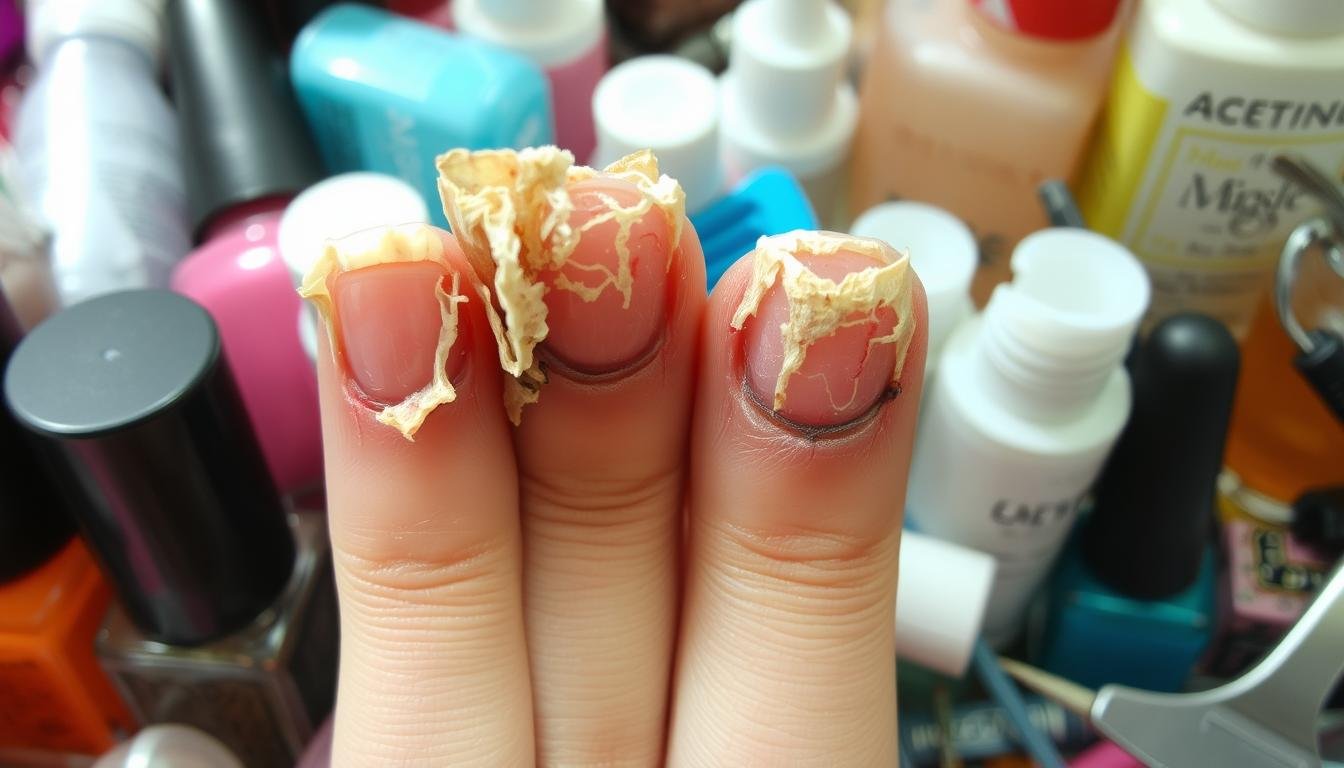
Did you know that 20% of people deal with brittle nails? This issue affects women more often. Nails grow slowly—about 2 to 3 millimeters each month for fingernails. So, they can suffer from using too many nail products. This guide examines how too much nail product use can cause onychorrhexis, leading to unsightly vertical ridges on the nails.
Onychorrhexis isn’t just about looks; it can point to health issues or lack of nutrients. The constant use of manicures, nail polish, or treatments can make nails fragile and weak. This is a big problem for people like musicians or those in manual labor. By understanding this link, readers will learn how to take better care of their nails. They’ll also learn about the risks of using too many nail products.
Key Takeaways
- Brittle nails are more commonly seen in women and can lead to significant challenges in everyday life.
- Onychorrhexis presents as vertical ridges and may signal underlying health or nutritional issues.
- Frequent use of nail products can weaken nails and contribute to long-term damage.
- Understanding the causes of brittle nails is crucial for prevention and treatment.
- Protective measures and proper nail care can mitigate the negative effects of nail product overuse.
Understanding Onychorrhexis
Onychorrhexis affects the nails, leading to noticeable changes. It makes nails split or develop longitudinal ridges, becoming brittle. This issue highlights the importance of understanding onychorrhexis for nail health.
What is Onychorrhexis?
This condition is marked by ridges or grooves on nails. It can show up on fingers and sometimes toes. Symptoms can appear on just one or several nails. Even though these signs are usually not harmful, they can point to health issues or damage from nail products.
Common Symptoms and Signs
People with onychorrhexis might see signs like:
- Vertical ridges on the nail surface
- Increased nail brittleness
- Splitting of the nail
- Chipping, also known as onychoschizia
These symptoms can be due to many problems, including lack of nutrients or diseases like lichen planus and hypothyroidism. Keeping nails healthy is key, as these signs could alert you to more serious issues.
How Nail Product Overuse Leads to Onychorrhexis
It’s important to understand how too much nail product use can harm your nails. This problem happens because of the products used and how often they’re applied.
Impact of Nail Enamel on Nail Health
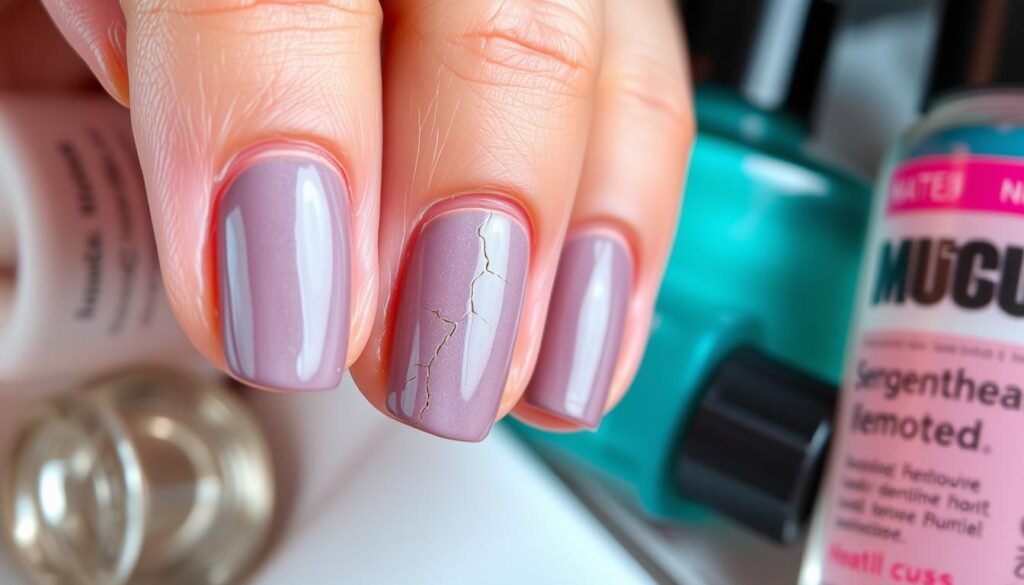
Nail enamels have tough chemicals that can weaken nails over time. Using these products often makes nails thin and brittle. This leads to onychorrhexis. Such chemicals attack keratin, making nails weak after many manicures and pedicures.
The Role of Nail Polish Remover
Using nail polish remover plays a big part in this issue. Removers with acetone or strong solvents dry out the nails. This dries up the nails and damages their strength. Without enough moisture, nails become even more fragile.
Consequences of Frequent Manicures and Pedicures
Regular manicures and pedicures might be fun but they’re not great for your nails. These treatments expose nails to harsh chemicals and too much moisture. This can make nails weak and damaged. If you often get these treatments, think about how to keep your nails safe.
Causes of Onychorrhexis
Onychorrhexis can happen for many reasons. These include aging, what we eat, and our health. Knowing what leads to it is key to keeping nails strong.
Natural Variations and Aging
As we age, our nails change. They become thin and brittle. This makes them prone to onychorrhexis. Aging slows down how fast our nails grow, making them weaker.
Nutritional Deficiencies
Eating right is important for nail health. Lack of vitamins and minerals like iron and biotin weakens nails. A good diet supports not just our nails but our whole body. For tips on keeping nails healthy with diet, visit this resource.
Underlying Medical Conditions
Certain health problems can cause onychorrhexis. Anemia, psoriasis, and a low thyroid can make nails weak. It’s important to treat these issues to keep nails healthy.
The Relationship Between Nail Products and Keratin Damage
Many people worry about how nail products might harm their keratin and make their nails weak. It’s important to know which products can harm your nails. This helps avoid brittle nails and similar problems. We’ll look at how some nail products hurt the keratin structure. We’ll also talk about what signs show keratin damage.
How Products Affect Keratin Structure
Certain nail products have harsh chemicals. These can remove the natural oils guarding the keratin in your nails. If your nails meet these chemicals too much, they can get weaker. Once the keratin’s strength is lowered, your nails might break easily.
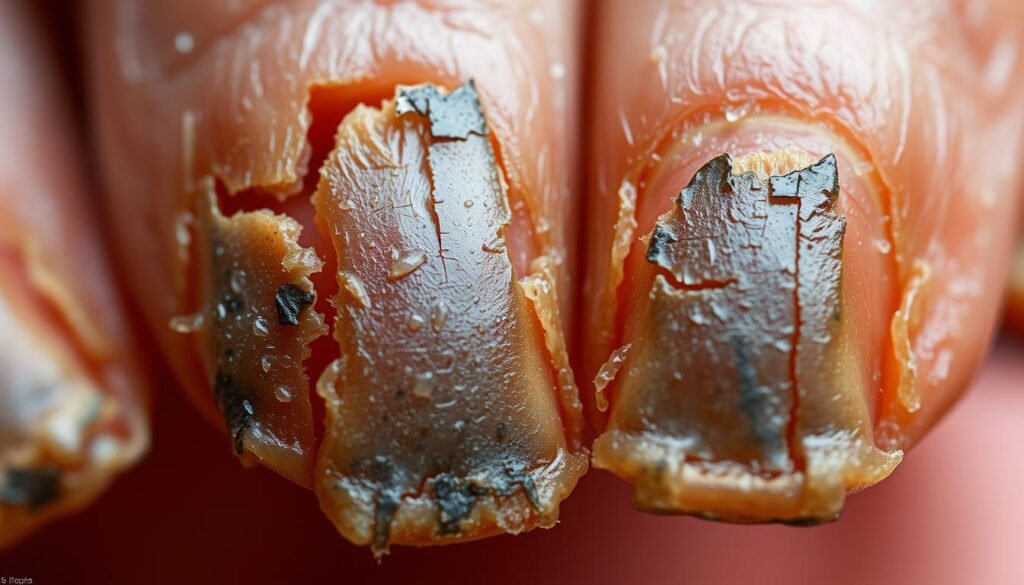
Signs of Keratin Damage in Nails
Signs of keratin damage in nails include:
- Brittleness: Weak nails may chip or break easily.
- Thinning: The nail plate may become thinner, reducing nail strength.
- Visible Ridges or Grooves: Irregularities on the nail surface can indicate keratin issues.
Spotting these signs early is vital. It helps you make better choices about nail products. Focusing on healthy practices boosts nail strength and prevents serious keratin damage. For more information, check out this source.
| Symptoms of Keratin Damage | Description |
|---|---|
| Brittleness | Nails easily break or chip, indicating low strength. |
| Thinning | Lack of thickness in the nail plate may lead to increased fragility. |
| Visible Ridges | Ridges or grooves signal potential underlying issues with keratin. |
Tips for Proper Nail Care
Keeping nails healthy is about more than just looking good. It involves moisturizing correctly, being choosy with nail products, and taking care during manicures and pedicures. Doing these things can make your nails stronger and healthier.
Moisturizing Techniques
For better nail health, moisturize regularly. Use oils like vitamin E or olive oil to keep moisture in, which fights off brittleness. Slip on cotton gloves after applying the oil to help your nails absorb it better.
Choosing the Right Nail Products
It’s crucial to pick the right products for your nails. Choose nail polishes and removers that are free from harsh chemicals. Look for products filled with vitamins and minerals, as they help your nails become healthier and look better.
Best Practices for Manicures and Pedicures
It’s key to have good habits for manicures and pedicures to avoid hurting your nails. Use fewer tools that can damage nails and don’t soak them too long in water. This can make them weak. Keeping nails trimmed and filing gently helps keep a good shape and stops damage.
Home Remedies for Strengthening Brittle Nails
Brittle nails can look bad and come from different things like not enough vitamins and environmental stress. Many people look for home remedies to make their nails stronger and healthier. Here, we will talk about natural treatments and diet changes that can help improve nail strength.
Natural Oils and Treatments
Using natural oils is a great way to make brittle nails stronger. Coconut oil, olive oil, and vitamin E give your nails the moisture they need. You should apply these oils every day for the best results. Massaging your nails with these oils not only keeps them hydrated but also boosts blood flow. This helps your nails grow better.
Dietary Changes for Healthier Nails
Making changes to what you eat is key for better nail health. Eat lots of fruits, veggies, and proteins for balance. Foods rich in zinc, like whole grains, chicken, beans, and beef, are important. They help fix nail problems caused by not having enough nutrients. You might also want to try supplements like biotin to improve your nails.
If you have ongoing nail problems, knowing why can help. Things like getting older, using nail products too much, and health issues can make nails brittle. Using home remedies, changing your diet, and applying natural oils can lead to stronger nails over time.
Medical Treatments for Onychorrhexis
Onychorrhexis involves nails that are brittle and tend to split. It’s more serious than just lacking nail care. There are medical treatments that can make nails strong again. Here, we’ll look into prescription options and advice on seeing a dermatologist.
Prescription Options for Nail Repair
For those with onychorrhexis, there are several prescription treatments. Polyurethane nail lacquer is a top choice. It protects nails from further damage and helps them recover. Other treatments might include vitamin D derivatives to improve nail health. It’s important to work with healthcare professionals for a plan that meets your specific needs.
When to Consult a Dermatologist
If you have symptoms like lasting nail damage, pain, or signs of infection, see a dermatologist. They offer specialized treatments and tips on handling issues that weaken nails. They can spot problems like nail psoriasis or infections, needing unique treatments for the best results.
Preventative Measures Against Onychorrhexis
To keep your nails healthy, it’s crucial to understand how to prevent onychorrhexis. Avoiding too much use of nail products helps reduce damage. Also, everyday habits can greatly protect your nails from things that stress them out.
Avoiding Overuse of Nail Products
It’s important to give your nails a break between manicures to fight the negative effects of overusing nail products. Using harsh products less often can make your nails healthier. Choosing treatments that nourish your nails helps prevent rough treatment.
Protective Measures During Daily Activities
Protecting your nails during daily tasks is good for their health. Wear gloves when doing housework, like cleaning or doing dishes, to guard against harsh chemicals and moisture. This helps keep your nails strong and less prone to breaking.
Conclusion
Understanding the effects of too much nail product use is key for keeping nails healthy. This stops onychorrhexis. Nails get weak if they touch harsh chemicals too often.
Nails show us if we have bigger health problems. It’s important to look at them often and take care of them right. About 50% of nail problems come from infections.
To have healthier nails, try using fewer harsh products. And moisturize them well. Eating foods that help nails grow is also good for their health.
Being proactive with nail care stops many problems. This protects nails in the long run.
Learning more about nail health is useful. For more info on nail problems and care, check out this detailed analysis. By knowing and caring for nails properly, we can keep them strong and good looking.

