
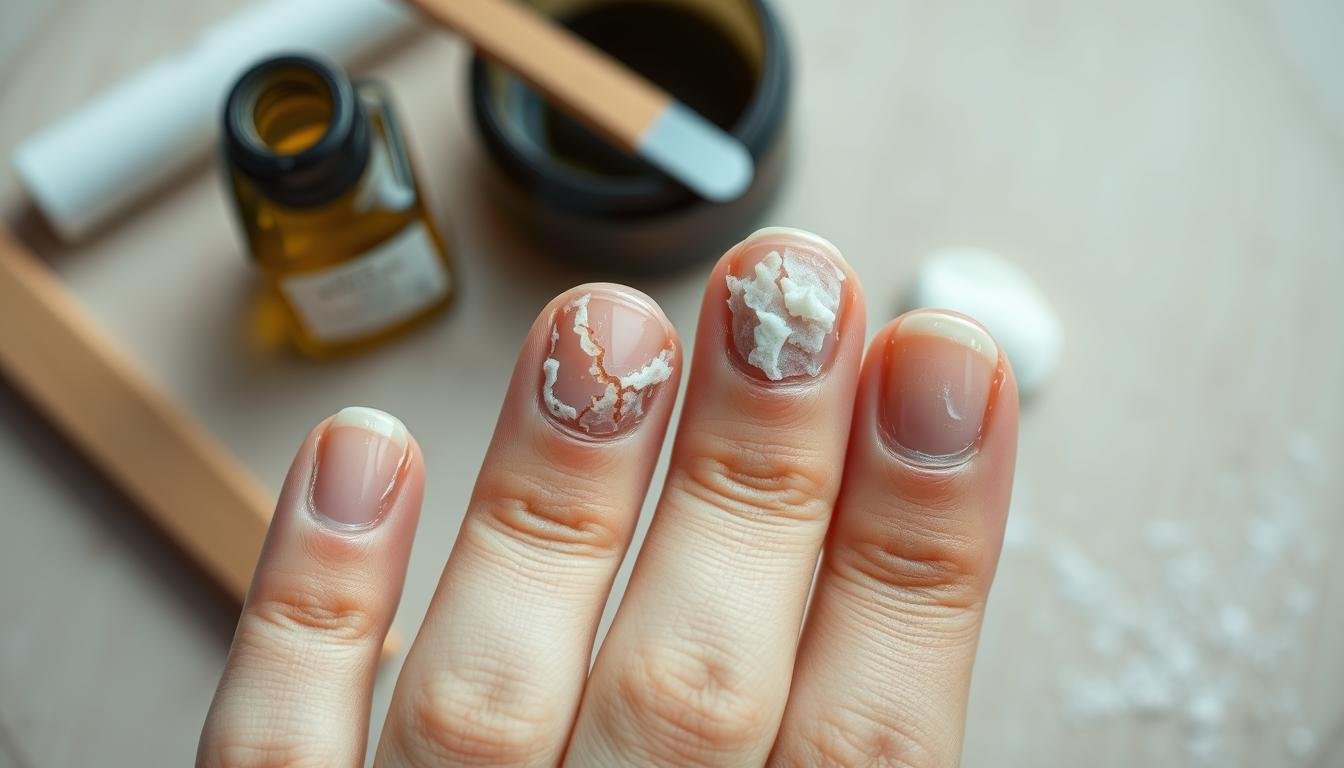
Did you know nearly 20% of people have nail problems, and onychorrhexis is common? It shows up as vertical lines and nails that split easily. Though it’s often just a surface issue, it can signal deeper health problems.
We look at what causes onychorrhexis and how aging, missing nutrients, and certain illnesses affect nails. In this article, we’ll explore onychorrhexis, its reasons, signs, and treatments. This will help you keep your nails strong and healthy.
Key Takeaways
- Onychorrhexis causes visible vertical ridges and brittle nails.
- It can be linked to conditions like anemia and thyroid disease.
- Aging often makes onychorrhexis worse.
- Lack of iron and protein is a big factor.
- Regular nail care helps avoid and treat nail problems.
Understanding Onychorrhexis
Onychorrhexis is known for creating longitudinal ridges on the nail plate. These grooves or ridges make the texture uneven. Nails become brittle and break easily. It’s usually not a major health worry unless it signals other nail issues or nutritional problems.
About 20% of people have brittle nail syndrome, with women being more affected. The symptoms include nail weakness along with onychorrhexis and onychoschizia. These signs often stem from genetic, environmental, or health issues.
To manage onychorrhexis, it’s key to know the risk factors. Chemicals or big moisture changes can make nails more brittle. Also, as we get older, our nails grow slower and disorders are more common. Knowing this helps in keeping nails healthy.
Causes of Onychorrhexis
Onychorrhexis has many causes that affect nail health. Nail matrix trauma can lead to its characteristic longitudinal ridging. Harsh chemicals and too much moisture also play a role. This is common in jobs like hairdressing and housekeeping. Plus, frequent use of nail polish remover can make it worse.
Causes of onychorrhexis include nutritional deficiencies too. Not getting enough folic acid, iron, and proteins can make nails brittle. To keep nails healthy, eating a balanced diet is key.
Some health problems can change how fingernails look. This includes conditions like eczema, psoriasis, and hypothyroidism. These may cause onychorrhexis. As people age, nails often get thinner and break more easily. This means more ridges or grooves can happen.
Knowing what causes onychorrhexis can help avoid it. Caring for your nails, choosing healthy foods, and not doing harmful things gives a chance for better nail health.
Symptoms and Signs of Onychorrhexis
Onychorrhexis is known by certain symptoms of onychorrhexis, like vertical ridges on the nail. These ridges make the nail surface feel uneven and rough. People with this condition often have brittle nails. This leads to nails that split or break easily, especially on the sides.
Other signs of nail ridging and nail abnormalities might be seen with onychorrhexis. Symptoms like yellowing, peeling, and nails crumbling could show up too. These could be signs of a fungal infection or other serious health problems. It’s important to see a healthcare professional for the right diagnosis and treatment.
Paying attention to these symptoms helps in catching any health issues early. Knowing about onychorrhexis symptoms helps you take better care of your nails and health.
The Connection Between Onychorrhexis and Nail Health
Onychorrhexis is a key sign of nail health. It shows how nails react to stress from inside and outside the body. This issue includes long lines and cracks in nails, affecting both fingers and toes. It makes nails fragile and prone to breaking.
Getting older impacts nail strength. As people age, their nails might get brittle. This increases the chances of onychorrhexis. Lack of important nutrients like biotin and iron also weakens nails.
Some medical conditions, like hypothyroidism and psoriasis, are connected to onychorrhexis. Damage from manicures or harsh chemicals can hurt nails too. This highlights the importance of watching your health for the sake of your nails.
Spotting onychorrhexis symptoms is vital for managing it. Symptoms include ridges, splits, color changes, and sometimes pain. Early detection and treatment benefit from regular health checks. For deeper understanding, looking into nail disorder studies can help. Knowledge helps people focus on prevention. This includes care, diet, and staying hydrated.
Onychorrhexis: What It Is and How It Affects Your Nails
Onychorrhexis is a common nail problem that leads to brittle nails. These nails often have deep ridges and split easily. Both fingernails and toenails can be affected, causing not just aesthetic issues but also discomfort in everyday tasks. Aging is a key factor in this condition, with older people more likely to suffer from brittle nails.
Lacking biotin and iron can weaken your nails. Poor nail health can also be a sign of other health issues, like hypothyroidism, psoriasis, and eczema. These conditions might make onychorrhexis worse. Things like using your hands a lot or being around harsh chemicals can also harm your nails.
People with this condition often see their nails ridged and split. Taking care of your nails is very important to help lessen the problem. Tips for better nail care include:
- Avoiding too much nail polish and removers.
- Wearing gloves around chemicals to protect your nails.
- Keeping nails and cuticles moisturized to avoid dryness.
Dr. Joseph Jorizzo says that onychorrhexis is pretty common as people get older, affecting both genders. Even though there’s no cure approved by the FDA for brittle nails, using biotin supplements might make your nails stronger. Products like Appearex are good examples. But since nails grow slowly, about 1 mm per week, it could take up to half a year to see a full new nail.
| Factor | Impact on Onychorrhexis |
|---|---|
| Aging | Increased brittleness and splitting |
| Nutritional Deficiencies | Weakened nails from lack of biotin and iron |
| Medical Conditions | Associated with issues like hypothyroidism and psoriasis |
| Environmental Factors | Frequent solvent exposure contributes to split nails |
Knowing about onychorrhexis helps you take steps to keep your nails healthy. This can lower your chance of getting severe nail problems in the future.
How Aging Contributes to Onychorrhexis
As people get older, the link between aging and onychorrhexis becomes clear. Our nails change as we age, becoming weaker and more prone to damage. Starting at age 25, nails grow slower by about 0.5% each year. This slowdown makes nails more brittle, highlighting the impact of aging on nail health.
Older adults may notice their nails are less moist. Normally, nails have a water content of 18%. But as we age, this drops, making nails brittle and easy to break. Aging nails often have ridges and may split easily.
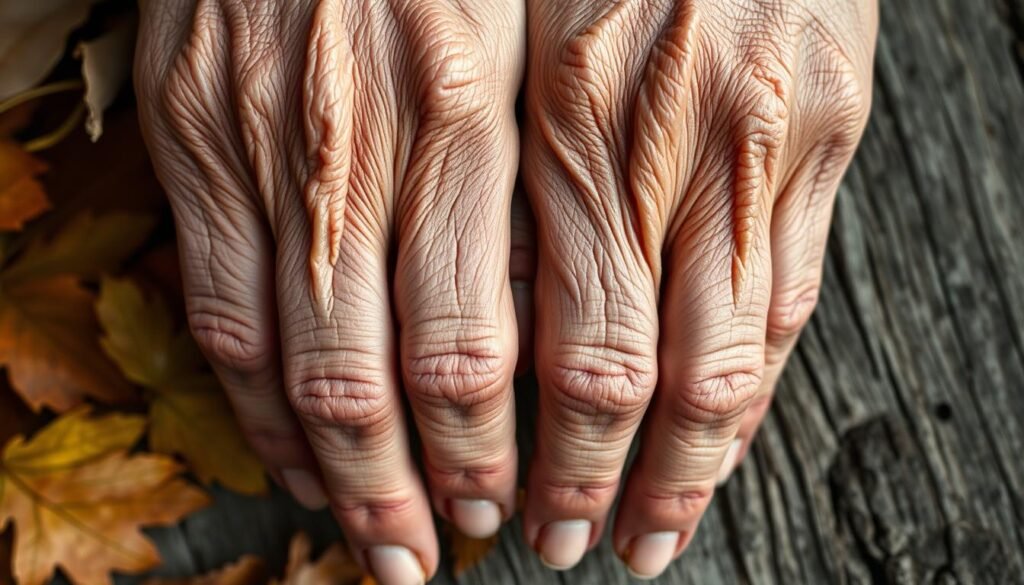
Aging doesn’t just change how nails look. It affects their overall health. Studies show that around 20% of people over 70 have nails with discolored bands, known as the “Neapolitan nail.” These and other changes, like Terry nail, hint at aging and possible health issues. So, aging greatly changes our nails, underlining the need for good nail care as we get older.
Nutritional Deficiencies Linked to Onychorrhexis
Lacking key nutrients like iron, folic acid, and proteins affects nail health greatly. These are crucial for strong, healthy nails. Not getting enough can make nails brittle and easy to break.
Nails are made of 80% to 90% hard keratins. They need the right nutrients to form and be strong. The nail plate also holds important minerals like magnesium and calcium. Not having enough of these can harm your nails, causing onychorrhexis.
Those on strict diets or with eating disorders risk not getting enough nutrients. This can show in their nails through ridges or a soft, dry texture. To learn more about dealing with brittle nails, check out this informative guide.
To fight nutritional deficiencies for better nail health, eat foods packed with essential nutrients:
| Nutrient | Food Sources | Benefits for Nails |
|---|---|---|
| Iron | Red meat, beans, spinach | Strengthens nail structure and prevents brittleness |
| Folic Acid | Leafy greens, fruits, whole grains | Supports healthy nail growth |
| Protein | Poultry, fish, legumes | Helps build keratin for stronger nails |
| Zinc | Meat, dairy, nuts | Improves nail strength and reduces brittleness |
Having a diet full of these nutrients helps nail health and lessens onychorrhexis risks. Checking what you eat regularly and focusing on nutrients makes nails stronger. This way, you can prevent nutritional shortages and have resilient nails.
Treatments for Onychorrhexis
Improving nail health starts with the right treatments for onychorrhexis. Good nail care plays a big part in making nails stronger and look better. When a health issue is the cause, treating that condition is key. Take inflammatory diseases for example – they often need corticosteroids to protect nail health.
Eating right and getting the right supplements can also make nails stronger. Biotin is a popular supplement known for helping nails. There are creams and varnishes that can be applied directly to the nails too. These products, like polyurethane coatings or formaldehyde-based varnishes, boost nail strength and encourage growth.
Below is a table summarizing the available treatments for onychorrhexis:
| Treatment Type | Description | Examples/Products |
|---|---|---|
| Topical Treatments | Creams and solutions applied directly to nails to prevent breakage and promote growth. | Tavaborole, Ciclopirox, Efinaconazole |
| Oral Medications | Systemic treatments prescribed to combat underlying fungal infections or other conditions. | Fluconazole, Griseofulvin, Terbinafine |
| Corticosteroid Injections | Injected treatments for specific inflammatory nail diseases. | Various corticosteroid preparations |
| Nutritional Supplements | Vitamins and minerals aimed at enhancing nail health. | Biotin |
| In-office Procedures | Medical procedures for severe cases or to rule out cancer. | Nail biopsies, removal of damaged nails |
Knowing which treatments for onychorrhexis are best can help people take charge of their nail health. By including proper nail care and targeted treatments, healthier and stronger nails are possible. This reduces the impacts of this nail condition.

Home Remedies for Healthy Nails
To make your nails stronger, try various home remedies. These focus on keeping nails tight and avoiding more damage. Using oils like vitamin E for moisture is key. It’s also important to stay away from too much water and harmful substances.
Having a nail care routine is good for your nails. Cutting them often reduces breaks. Choosing nail polishes that feed your nails helps too. Using urea gels adds moisture. Drinking plenty of water helps nails and skin stay healthy.
Here are some effective home remedies:
- Moisturize with vitamin E oil to strengthen nails.
- Avoid harsh nail products, including acetone-based removers.
- Utilize glass nail files to prevent splitting.
- Incorporate a diet rich in vitamins and minerals to support nail growth.
- Consider adding Biotin supplements, as they may benefit nail resilience.
These tips help with onychorrhexis and overall nail care. For deep insights and more on stopping nail peeling, see more details on nail care.
Using these home remedies will greatly improve your nail care routine. This leads to stronger, healthier nails for people.
The Role of Nail Care in Preventing Onychorrhexis
Taking care of your nails is key to preventing onychorrhexis. It also keeps nails healthy. By using the right care methods, you can lower your risk of this condition. Stick to gentle cleaning to avoid hurting the nail bed.
Some nail products have harsh chemicals that can make things worse. Too much nail polish can make your nails brittle. So, it’s best to use it in moderation.
Wearing gloves while doing housework protects your nails from chemicals and injury. Keeping your nails moisturized is important for their growth. Trimming your nails regularly helps avoid breakage and keeps them strong.
Eating foods rich in vitamins strengthens your nails too. For more information, check out how nutrition affects your.
Adding vitamins and minerals to your diet can also help. Biotin, especially, is known for making nails stronger. Focusing on nail hygiene is crucial to avoid onychorrhexis and improve nail health.
Regular care and being careful with how you treat your nails can make them healthier and stronger over time.
When to Consult a Doctor
People with onychorrhexis should watch for other symptoms. If nails hurt or change color, it might signal a bigger problem. Yellow, crumbling nails or a weird smell point to infection or something worse.
Seeing a doctor early is key for nail problems. It can make things much better for those with onychorrhexis. The right diagnosis leads to treatments that help nails and body issues.
It’s important to get medical advice for ongoing nail changes. Acting quickly helps with nail care and health.
Conclusion
Onychorrhexis is more than just a cosmetic issue. It shows a lot about a person’s health and how they care for their nails. If your nails have grooves or vertical ridges, it might be a sign of health problems. These could include not getting enough nutrients or suffering from other nail issues.
Good nutrition and taking care of your nails can make them stronger. For example, getting enough zinc can help. Also, looking out for age-related changes, injuries, or illnesses like rheumatoid arthritis is crucial. It’s important to see a doctor if you notice nail problems. This can help stop issues before they get worse, leading to better nail health.
Putting effort into nail health can make your nails look and feel better. It also helps you avoid nail-related problems. With the right actions, having strong, healthy nails is definitely achievable. Always taking care of your nails is key to better health and well-being overall.

