
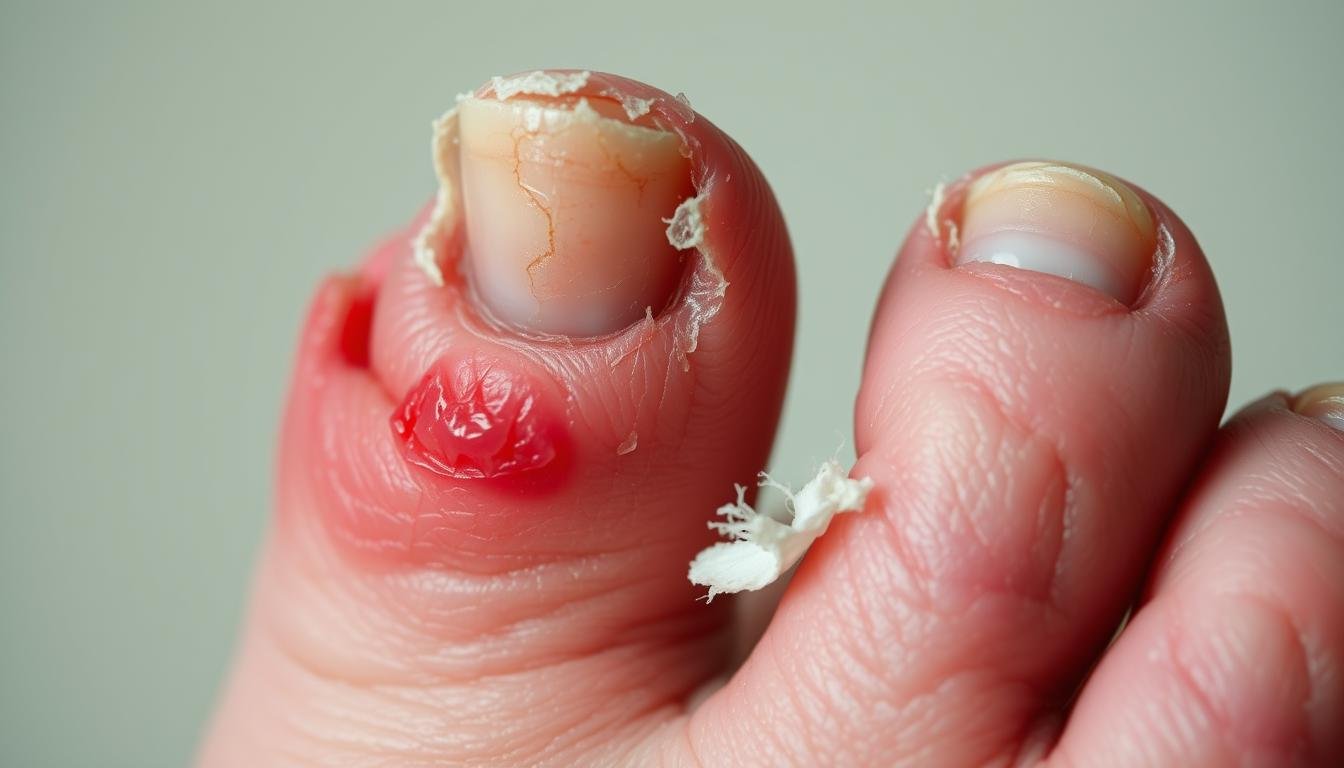
About 27 percent of women deal with brittle nails that lead to pain and sensitivity. This problem is not just about looks. It also points to deeper health issues causing discomfort. Knowing why brittle nails hurt is vital. Things like harsh chemicals and too much moisture play a role. So do missing nutrients and health problems like anemia and thyroid issues.
This article will delve into why brittle nails happen and the pain they cause. It will show how tweaks in nail care, eating habits, and lifestyle can really help. For those looking to understand more about brittle nails and how to treat them, check out this resource.
Key Takeaways
- Brittle nails affect around 27 percent of women, leading to pain and sensitivity.
- External factors like chemical exposure and excessive moisture can worsen nail conditions.
- Nutritional deficiencies, particularly in biotin and iron, may contribute to brittle nails.
- Underlying health issues, including anemia and thyroid disorders, are linked to nail pain.
- Effective nail care practices and dietary changes can improve nail strength and health.
Understanding Brittle Nails
Brittle nails, often called onychoschizia, present challenges for people worried about nail texture. This condition is marked by symptoms like splitting, peeling, and softness. Recognizing these signs is key to understanding brittleness, which falls into two types. Dry and brittle nails lack moisture, while soft and brittle nails are too moist.
How our environment affects our nails is significant. For instance, dry climates tend to dry out nails, making them brittle. On the other hand, jobs that require lots of hand washing can make nails soft and weak. This shows why it’s crucial to care for your nails based on your environment.
Looking at nail health, we must think about what’s inside our bodies too. Brittle nails might mean you’re lacking vitamins or have a thyroid issue. Often, they’re also harmed by harsh chemicals in cleaning products and nail polish removers. Thus, protecting nails from these threats is key to keeping them strong.
| Type of Brittle Nails | Causal Factors | Symptoms |
|---|---|---|
| Dry and Brittle | Lack of moisture, dry climates | Splitting, uneven surface |
| Soft and Brittle | Excessive moisture exposure | Peeling, excessive softness |
| Brittle from Diseases | Psoriasis, eczema, fungal infections | Discoloration, irregular growth |
Understanding and managing these factors is not just about having healthy nails. It also helps spot other health issues that might show up as nail problems. Custom care routines based on individual situations can greatly improve nail strength and health.
The Role of Keratin in Nail Health
Keratin is key to keeping nails healthy, as the main structural protein. This protein composition provides strength and resilience, which are crucial for nails’ durability. Lack of keratin may cause issues like brittleness and peeling, often in women over 50.
Aging, harsh chemicals, and environmental stress can lower keratin levels in nails. Conditions like psoriasis can weaken keratin, leading to fragile nails. Up to 50% of psoriasis patients see their nails get brittle because of this.
Eating foods that boost keratin can help make nails stronger. It’s important to understand keratin’s role to tackle brittle nails. For more tips on nail care, check out brittle nails and their causes.
What Causes Brittle Nails?
Brittle nails affect nearly 20% of people. The causes of brittle nails can be from outside or inside the body. There are two main reasons: moisture problems and health issues.
Moisture imbalance can make nails brittle. Washing hands a lot or using harsh chemicals can dry them out. Also, as we get older, our nails grow slower and get weaker.
Health issues can also make nails brittle. Changes in hormones, especially with thyroid problems, can weaken nails. Not getting enough protein, iron, or vitamin B can also harm your nails. Getting good nutrition and staying hydrated can help. Taking probiotics and biotin is also useful. You can find more tips here.
Some conditions show up as changes in nails:
| Condition | Symptoms |
|---|---|
| Hypothyroidism | Brittle nails, slower growth |
| Anemia | Weak, brittle nails, color changes |
| Raynaud’s syndrome | Reduced blood flow leading to brittleness |
| Psoriasis | Dry, scaly skin affecting nail strength |
| Fungal infections | Nail thickening, yellowing, and cracking |
To fight nail brittleness, taking steps is key. Use gloves when cleaning, drink water, and eat well to keep nails strong. Consistent care and understanding health connections also help improve nail health.
External Factors Impacting Nail Sensitivity
Various external factors can have a big impact on nail sensitivity. Conditions like humidity and temperature changes can harm nail health. Nails can become brittle and more sensitive if they often get wet, like when doing dishes.
Detergents and strong chemicals in cleaning products are tough on nails. They can take away oils from your nails, making them weak and uncomfortable. Wearing gloves when cleaning can protect your nails from these effects.
Nail care items like polishes and removers affect sensitivity too. Using removers with acetone a lot can make nails weak and brittle. Choosing products without acetone can be better for keeping nails strong.
Here are some common external factors and their impacts on nail sensitivity:
| External Factors | Impact on Nail Sensitivity |
|---|---|
| Water exposure | Increases dryness, leading to brittleness |
| Detergents | Strips moisture, causing vulnerability |
| Environmental conditions | Temperature and humidity fluctuations affect nail durability |
| Nail polish removers | Acetone-based products can weaken nails |
| Lifestyle choices | Nail biting or picking may lead to irritation and pain |
It’s very important to deal with these external factors to keep nails healthy. Avoiding harmful substances can really help avoid nail sensitivity and keep nails in good shape.
Internal Health Conditions Linked to Brittle Nails
Brittle nails can tell us a lot about our health. Many health issues can weaken and damage them. Knowing these problems helps with finding the right treatment.
Anemia caused by iron deficiency is closely linked to brittle nails. This can cause nails to become spoon-shaped, known as koilonychia. It’s a sign that the body needs more iron, or there might be other health troubles.
Thyroid problems can also make nails brittle. For example, hypothyroidism leads to brittle nails. Heart and lung diseases can mess up nail growth too.
Psoriasis can cause nail problems as well. This includes pitting, marked by small dents on the nails. It means chronic inflammation is affecting nail growth. Cancer near the nails can also change how they look, making close checks important.
Infections are big factors in brittle nails too. Fungal infections change nail color and texture. Bacterial infections might turn them discolored and painful, risking nail loss. These issues often point to poor circulation or bad nutrient absorption.
Other nail signs like horizontal or vertical lines can hint at health problems. Horizontal lines might mean kidney disease. Missing half moons could show malnutrition or depression. Watching these signs helps in getting timely medical advice.
Understanding the full health picture is key in caring for brittle nails. Getting checked out helps find the root causes of brittle nails. This way, both the nail issues and their underlying causes can be treated.
Pain and Sensitivity Around Brittle Nails: What Causes It?
Nail pain and sensitivity often start when nails become brittle. Conditions like onychorrhexis can cause vertical ridges in nails. These are linked to health problems such as anemia and thyroid disease. These health issues don’t just change how nails look. They also make them hurt and feel sensitive.
Things around us also make nail pain and sensitivity worse. Being in water too much can make nails weak. This makes it easier for infections and injuries to happen. Older adults might get fungal infections, like onychomycosis more often. This is because of poor circulation and lower immune responses. These infections make nails yellow and peel, which hurts more.
Health issues affecting the heart and blood flow can also weaken nails. Not having enough iron, protein, or folic acid makes nails brittle and sensitive. Eating better or taking supplements might help ease the pain.
Conditions on the skin, like psoriasis and lichen planus, can hurt nails too. Psoriasis leads to brittle nails, changes in color, and ridges. These changes make nails more painful to touch.
Spotting nail pain and sensitivity is crucial. It could show there are other health issues. Watching these symptoms and getting checked by a doctor is important. This can help find out why the nails hurt. Then, the right treatment can help make nails healthy again.
Moisture Levels and Nail Health
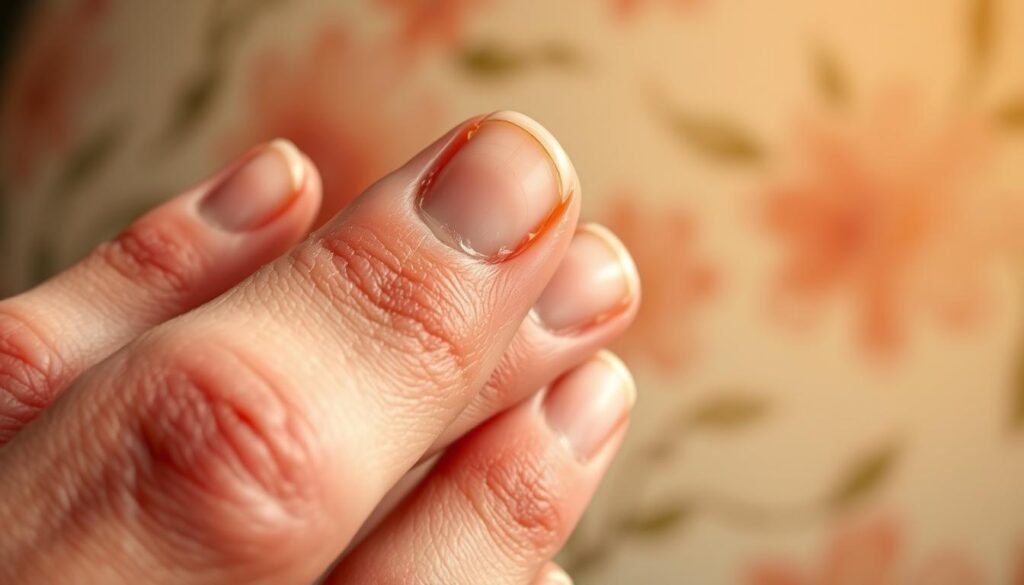
Having the right moisture balance is super important for nail health. Too little or too much moisture can cause problems like brittle nails. This is key to avoid nail issues.
Not enough moisture leads to dry, cracked nails. These nails can split easily. If your nails often meet water, they might become even more brittle. Using creams with lanolin or glycerin helps a lot.
Too much moisture isn’t good either. It can bring on fungal infections that change your nails’ look and feel. It’s all about finding that moisture sweet spot for strong nails.
Here are ways to keep moisture levels just right:
- Using nourishing cuticle oils daily
- Avoiding long soaks in hot water
- Wearing gloves while doing household chores
- Applying a good-quality hand cream regularly
Keeping up with a moisture routine helps fix nail problems. Caring for your nails now means they’ll stay beautiful and strong. It’s a wise investment in your nail health.
Aging and Its Effects on Nail Strength
As people get older, their nails can change. They might not be as strong or flexible. And, they might not hold moisture as well. Aging nails can easily break or split. This happens because of their age. It’s important to know how aging changes nails. Studies show nails grow about 3.0 mm a month. But this growth slows down as we age. After turning 20, nail growth decreases slightly each year.
There’s also a change in how thick our nails are. Women’s fingernails are usually about 0.5 mm thick, and men’s are about 0.6 mm. Aging can make nails thicker or thinner for some. But, for others, their nails stay the same. Aging nails can also feel different. They may become brittle or develop fungal infections.
Older nails might change color, turning yellow or gray. About 20% of elderly people have nails with three color bands. This is called the “Neapolitan nail” look. Age can also make nails ridge. This makes putting on nail polish hard.
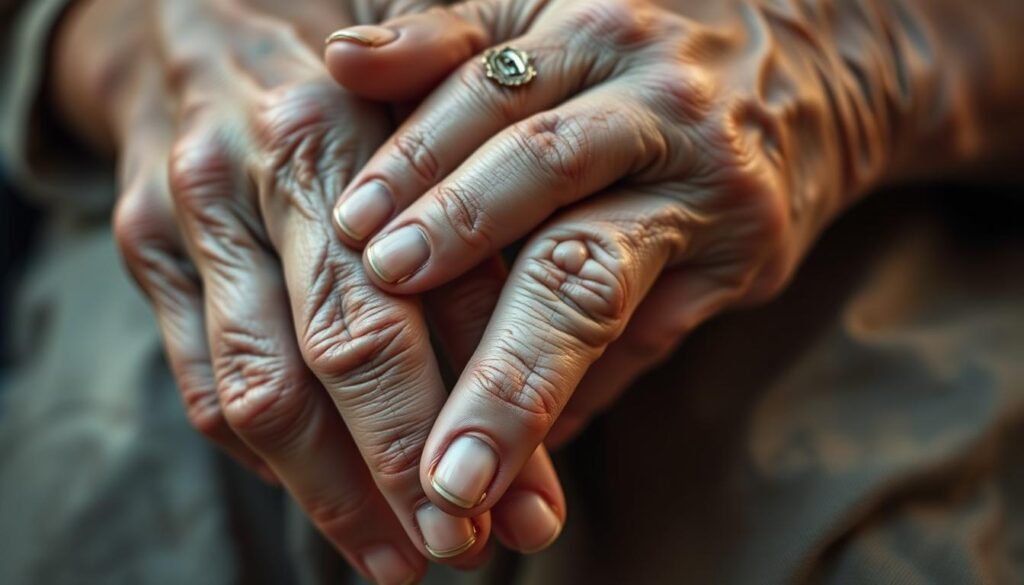
It’s crucial for older adults to take care of their nails. Keeping nails moisturized helps fight off brittleness. When getting a manicure, picking softer textures can hide ridges. A soft gel overlay can make nails look smoother. Good nail care can boost their strength and look, even as we age.
Vitamin and Mineral Deficiencies
For strong and healthy nails, getting enough vitamins and minerals is key. If you lack these nutrients, your nails may become brittle and break easily. To keep your nails and body healthy, it’s important to fix any vitamin and mineral shortages.
Iron deficiency is a big reason some people have nail problems. If your nails look like spoons, called koilonychias, you might not have enough iron. This can also cause anemia, making you feel tired and weak. Eating foods like spinach, red meat, beans, and cereals with added iron can help make your nails stronger.
Other Nutritional Factors That May Affect Nails
Biotin, a B vitamin, plays a part in making nails strong. If you don’t have enough, your nails might be brittle. You might want to try biotin supplements if you’re having trouble with brittle nails. Not having enough vitamin B12 can also cause problems, like grooves in your nails. This might mean you need to eat more foods with B12 or take supplements.
Protein is also crucial for nail health. Not getting enough protein can make your nails weak and thin. To get stronger nails, make sure you eat enough protein from sources like meat, fish, eggs, and legumes.
| Nutrient | Impact on Nails | Dietary Sources |
|---|---|---|
| Iron | Prevents brittleness and spoon-shaped nails | Spinach, red meat, beans, fortified cereals |
| Biotin | Promotes strength and reduces brittleness | Nuts, eggs, whole grains, organ meats |
| Vitamin B12 | Supports nail growth, prevents grooves | Fish, meat, dairy products, fortified cereals |
| Protein | Strengthens the nail structure | Meat, fish, eggs, legumes |
Preventative Measures for Nail Care
Keeping nails healthy is doable with the right preventative steps. Acting early not only prevents nails from becoming brittle but also makes them stronger. By learning moisturizing tricks and protective steps, you can keep your nails in great shape.
Moisturizing Techniques for Healthy Nails
Moisturizing regularly is key to nail health. Nails that are well-hydrated don’t crack or get brittle easily. Here are some tips for keeping your nails moisturized:
- Apply a quality hand cream that contains ingredients like shea butter or glycerin to keep nails and cuticles hydrated.
- Use cuticle oil regularly to nourish the nail bed and prevent dryness.
- Moisturize after washing hands or using sanitizers to counteract drying effects.
Protecting Your Nails During Daily Activities
It’s important to protect your nails from damage during daily tasks. These simple habits can help minimize the risk of your nails becoming brittle:
- Wear gloves while cleaning or doing dishes to prevent prolonged exposure to water and harsh chemicals.
- Avoid using nails as tools; this practice can lead to cracking and splits.
- Limit exposure to hot water, which can dehydrate nails and skin.

When to Seek Medical Attention
If your nails start looking different, it might mean health problems. It’s key to spot nail health problems early for quick help. Knowing when to see a doctor is crucial.
Look out for these signs:
- Persistent pain around the nails.
- Discoloration, like white nails, might mean liver or kidney problems.
- Dark stripes, or linear melanonychia, could point to skin cancer in adults.
- Brittle nails with other symptoms like tiredness or weight changes.
Brittle nails are common, affecting about 20% of people. But, be alert if you have other symptoms too. White nails could signal serious issues like lack of iron or diabetes.
Seeing a medical attention expert, like a podiatrist, is smart. You don’t need a general doctor’s referral to see them. They can help figure out the issue and how to treat it.
The NHS website has info to help you understand when it’s time to get help.
Don’t wait to get help if your nails keep causing concern. It’s key for keeping your nails healthy.
Conclusion
Discussing brittle nails shows how many factors affect our nail health. This condition impacts up to 20% of people. It hits women twice as much as men. Knowing the signs, like lamellar onychoschizia and onychorrhexis, can help with better care.
It’s key to note how the environment and diet matters for healthy nails. Too much water, harsh chemicals, and lacking vitamins A-E can make nails brittle. Not getting enough iron and zinc is also a problem. Plus, some illnesses and meds can make things worse. This shows we need to watch our nail care.
If your nails hurt or feel sensitive, it’s time to act to prevent damage. Getting help from a professional is crucial for bad nail health. This info empowers us to take good care of our nails.

