
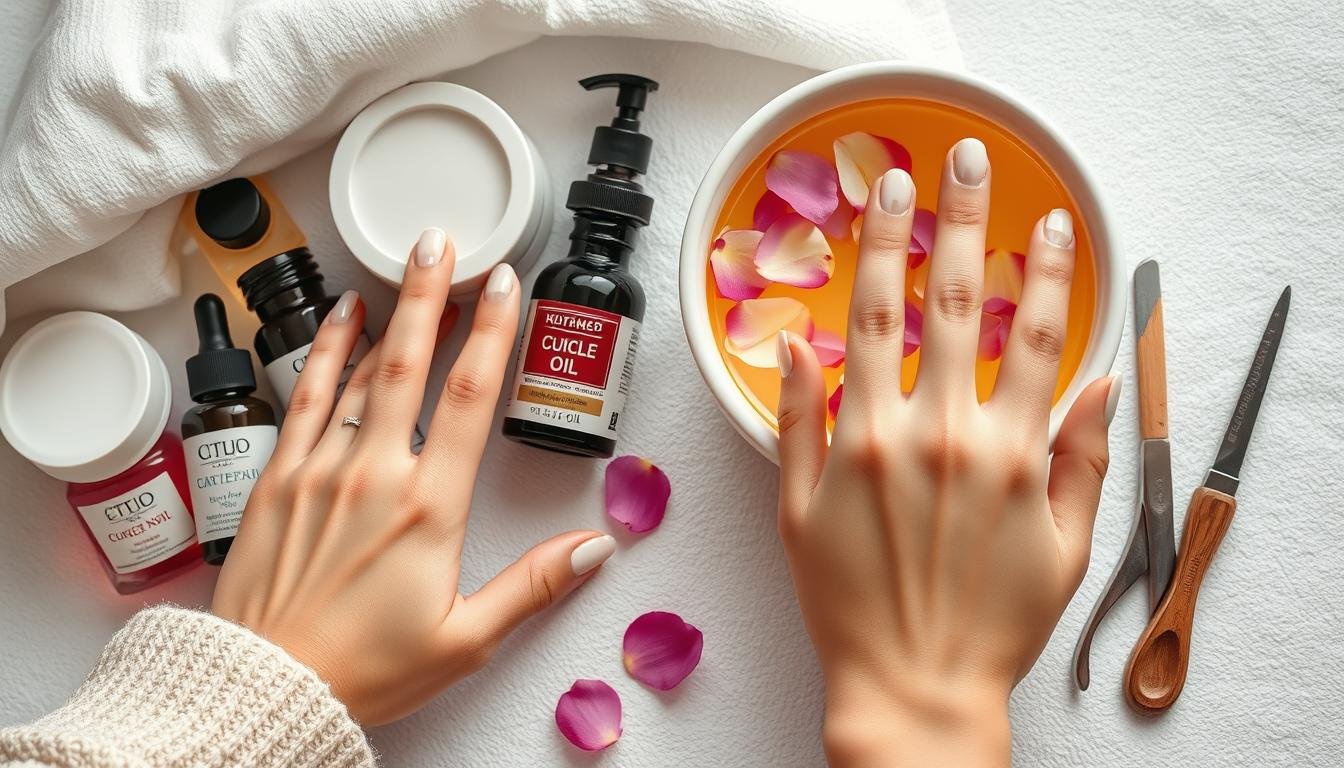
About 20% of adults struggle with brittle nails. This often comes from not eating right, harm from the environment, and not taking care of nails properly. Knowing how to take care of brittle nails is key to improving their health and strength.
Having the correct care routine is very important. Brittle nails can make you look bad, feel uncomfortable, and even cause infections. You can make your nails stronger by moisturizing them and eating foods full of nutrients. For more tips on taking care of brittle nails, check out this detailed article. It talks about everything from daily care to expert advice for better nail strength.
Key Takeaways
- Around 20% of adults face brittle nails, emphasizing the need for effective care.
- Daily hydration and moisturizing techniques are vital to nail health.
- Biotin and a nutrient-rich diet can significantly strengthen brittle nails.
- Proper nail hygiene includes using sterile tools during manicures and avoiding water exposure.
- Choose non-toxic nail products to prevent damage and maintain nail strength.
- Utilizing nail hardeners may help in reinforcing weak and brittle nails.
- Consulting a healthcare professional is essential for noticeable changes in nail condition.
Understanding Brittle Nails
Brittle nails come from different causes and can lead to nail health problems. By knowing the common causes and signs, people can spot problems early. As people get older, their nails grow slower and get drier, making it key to know the signs of brittle nails.
Common Causes of Brittle Nails
Several things lead to brittle nails:
- Aging: Hormonal changes and dry air can harm nail health as we age.
- Nutritional Deficiencies: Missing important nutrients like biotin, iron, and protein weakens nails.
- Harsh Chemicals: Often using cleaning products and nail items with strong chemicals can take away natural oils from nails.
- Excessive Moisture: Getting your nails wet a lot, especially when doing dishes, may weaken them.
- Medical Conditions: Issues like psoriasis, thyroid disorders, and fungal infections can cause brittle nails.
- Nail Trauma: Injuries or too much tool use can make nails brittle.
Signs of Brittle Nails
Knowing the signs of brittle nails helps in getting the right treatment. Main signs include:
- Split Nails: Nails that often crack or split show brittleness.
- Peeling: If the edges of your nails peel, it shows damage underneath.
- Breakage: Nails breaking a lot means they’re weak and need better care.
- Discoloration: Odd colors or spots could point to health problems.
- Texture Changes: Roughness or strange texture means the nails are getting worse.
It’s crucial to notice these signs early and understand what causes brittle nails for better nail health. With the right care and good nutrition, your nails can get healthier.
| Cause | Effect on Nails |
|---|---|
| Aging | Slower growth and increased dryness |
| Nutritional Deficiencies | Weakness and brittleness |
| Harsh Chemicals | Stripping natural oils and moisture |
| Excessive Moisture | Increased fragility |
| Medical Conditions | Manifestation as brittle nails |
| Nail Trauma | Increased brittleness and breakage |
Essential Nail Care Practices for Brittle Nails
Having strong, healthy nails takes a good plan. It means keeping nails clean and moisturizing well. If you stick to a few key steps, your brittle nails will start to look and feel better. They’ll become strong and tough.
Importance of Proper Nail Hygiene
Good nail hygiene is super important. This is especially true for those with brittle nails. By keeping nails clean and dry, you lower infection risks. Infections can make your nails even more brittle.
Washing your hands often and taking care of your nails keeps dirt and germs away. It’s also smart to stay away from harsh cleaning products. They can hurt your nails.
Moisturizing Techniques for Healthy Nails
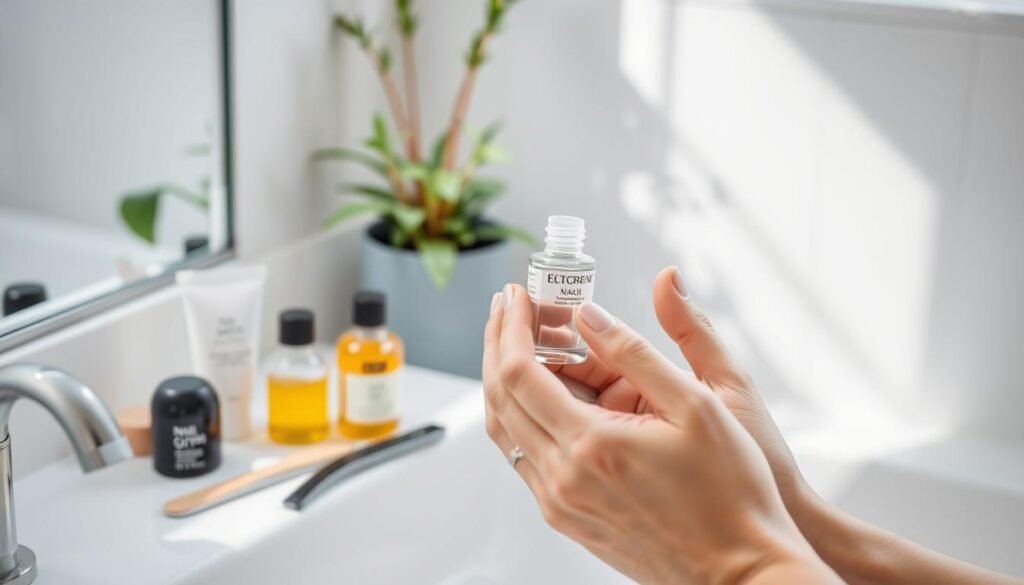
Keeping nails moisturized is key. Use quality hand creams and nail oils often. This stops them from getting dry, which leads to brittleness. Moisturize after washing hands or taking off nail polish to keep in moisture.
Adding oils like jojoba or vitamin E boosts hydration. This helps your nails grow strong.
| Nail Care Practice | Benefits |
|---|---|
| Proper Nail Hygiene | Prevents infections and enhances nail strength |
| Regular Moisturizing | Prevents dryness and promotes nail flexibility |
| Choosing Quality Products | Reduces exposure to harmful chemicals |
| Hydration | Supports overall nail health |
Nail Strengthening Techniques
To keep nails strong and healthy, using a mix of strategies is key. Nail hardeners are a top choice for many. Biotin is also famous for its nail-strengthening effects.
Use of Nail Hardeners
Nail hardeners protect weak nails. They create a barrier against damage. Make sure to pick options without harmful chemicals like formaldehyde.
Look for “3-free” labels on nail hardeners. This means they don’t have dangerous substances. These products are safer and help strengthen nails.
Importance of Biotin for Nail Health
Biotin is vital for nail strength. It’s in foods like legumes, salmon, and eggs. Adults usually need about 30 micrograms (mcg) daily.
Some people might take up to 3,000 mcg of biotin supplements. Full benefits can take six months to show. Eating foods rich in biotin also boosts overall health.
| Source of Biotin | Content (mcg per serving) | Benefits |
|---|---|---|
| Eggs | 10 mcg | Supports nail growth |
| Salmon | 5 mcg | Strengthens nails |
| Legumes | 2 mcg | Improves overall nail thickness |
Using the right nail hardeners and eating more biotin can really help. These steps create a strong foundation for better nail health.
Nail Hydration Tips
Keeping your nails well-hydrated is key to their health. Hydration makes nails strong and flexible. This prevents them from becoming brittle. Using good moisturizers along with staying hydrated can boost the vitality of your nails.
Staying Hydrated: The Impact on Nail Health
Hydration has a big impact on your nails. Not drinking enough water can make your nails dry and brittle. They can easily chip or break. Drinking plenty of water each day will help keep your nails hydrated and healthy. It helps them recover and stay strong.
Choosing the Right Moisturizers for Nails
Finding the right moisturizers for your nails is important. Look for products with natural oils, like jojoba oil, and vitamins such as vitamin E. These ingredients nourish and rejuvenate your nails. Moisturize after washing your hands or taking off nail polish to keep moisture in. This protects your nails from harm.
Adding nail hydration tips to your daily care can bring lasting results. It improves the health and look of your nails. Regular use of good moisturizers creates a barrier against dryness. This makes your nails stronger and improves their quality.
Brittle Nail Remedies
Many people struggle with brittle nails. Effective remedies can greatly improve their strength and health. Natural oils can nourish and revitalize nails. They’re also simple to use every day.
Natural Oils and Treatments
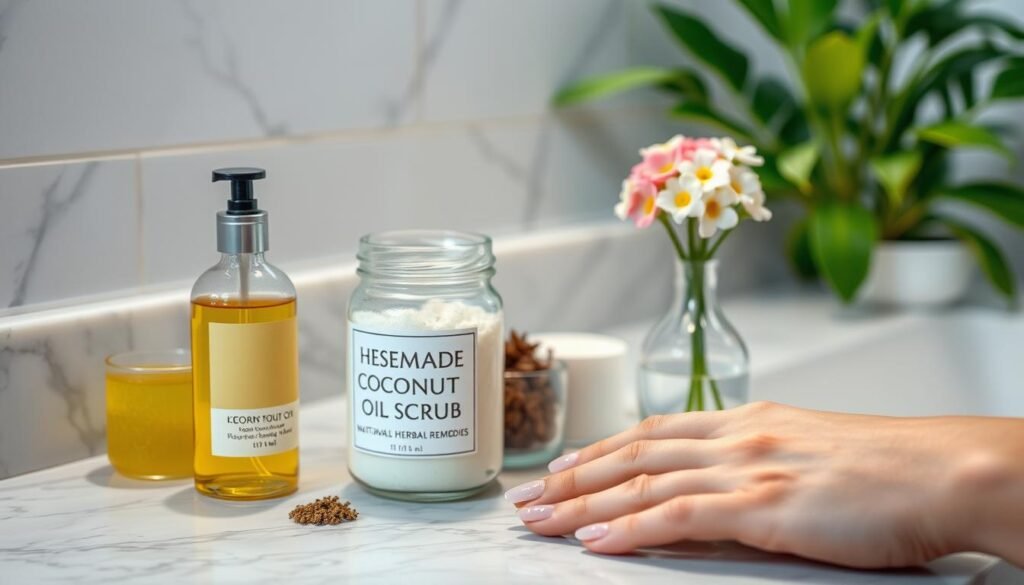
Essential oils like lavender, tea tree, and myrrh are great for brittle nails. Mix them with a carrier oil such as jojoba or almond for a nourishing treatment. Regular use can boost hydration and make nails stronger. You might see less splitting over time.
Recommended Supplements for Nail Health
Supplements can help keep your nails strong and healthy. Biotin, zinc, and collagen peptides promote growth and fight brittleness. Eating biotin-rich foods like eggs, nuts, and leafy greens helps too. Always check with a healthcare professional before starting new supplements.
| Supplement | Benefits | Sources |
|---|---|---|
| Biotin | Promotes nail growth and reduces brittleness | Eggs, nuts, leafy greens |
| Zinc | Supports new cell production and repair | Meat, shellfish, legumes |
| Collagen Peptides | Enhances nail structure and strength | Bone broth, collagen protein powders |
Cuticle Care Routine
Keeping your cuticles healthy is key to having strong nails. A good cuticle care routine shields your nail bed from infections. It also helps your nails grow healthier. It’s important not to cut your cuticles too much. This can cause problems. Keeping them moisturized prevents them from cracking. Using the right tools and methods is also important for the best care.
How to Maintain Healthy Cuticles
Follow these tips for great cuticle care:
- Moisturization: Use cuticle oil or thick creams like petroleum jelly often. This keeps your cuticles well-hydrated.
- Dry Manicure Technique: It’s a safer option to protect your nail bed and lower infection risks. You can improve your skills by taking a Dry Manicure Prep Course.
- Limit Aggressive Manipulation: Don’t push or cut too much. Focus on gentle exfoliation and moisturizing instead.
- Use of Protective Gear: Wearing gloves while doing household tasks protects cuticles from strong chemicals and drying out.
Products to Avoid for Cuticle Care
Be careful when picking cuticle care products. Avoid certain items:
- Harsh Chemicals: Stay away from cuticle removers with harsh elements that could irritate or harm your skin.
- Low-Quality Tools: Avoid tools that lose their effectiveness quickly. It’s best to replace buffers and files often to prevent injuries.
- Overly Aggressive Treatments: Be cautious with treatments, like hot wax, to maintain healthy cuticles.
Healthy cuticles are a big part of nail care. Choose the right practices and know what products to stay away from. For more tips on keeping your nails strong, check out this resource.
Avoiding Nail Damage
Making healthy choices every day is key to avoiding nail damage. Many people don’t think about the small habits that can help their nails stay strong. Knowing what harms your nails and how to protect them is crucial.
Best Practices for Everyday Activities
Our daily actions can sometimes hurt our nails. To keep your nails safe, try these best practices for nail health:
- Wear gloves while doing household chores to protect nails from harsh chemicals and moisture.
- Avoid using nails as tools; employing proper tools for tasks can prevent splits and breaks.
- Limit exposure to excessive moisture, particularly during prolonged handwashing.
- Maintain a consistent nail care routine that includes regular moisturizing and trimming.
- Choose acetone-free nail polish removers to reduce drying effects on nails.
- Give nails a break between applications of polish or artificial enhancements to regain strength.
Understanding the Risks of Artificial Nails
Artificial nails might look good, but they have risks of artificial nails. They can make your real nails weaker and more likely to break. It’s important to let your nails rest between uses. Also, removing them the right way matters to avoid damage. Watch out for any bad reactions to artificial nails and talk to a doctor if problems don’t go away.
By taking care of your nails and knowing the dangers, you can keep them strong and good-looking for a long time.
Proper Manicure Methods
To get beautifully manicured nails, it is crucial to know the right methods. These methods should keep your nails strong and healthy. They include safe ways to trim and file your nails.
Techniques for Safe Nail Trimming
Safe nail trimming is vital to avoid injuries and help your nails grow well. You should trim your nails every two weeks, cutting them straight across. By slightly rounding the corners, you can prevent your nails from snagging and breaking.
Regular nail trimming gets rid of unneeded length and helps your nails grow. This is especially good for nails that break easily.
Best Nail Filing Practices
Proper filing is key to a good manicure. You should use a gentle approach and file in one direction. This avoids nail splitting and damage. A quality nail file is important for smoothing and shaping your nails.
After filing, use conditioning treatments to keep your nails strong. These treatments help seal in moisture.
| Technique | Description | Benefits |
|---|---|---|
| Nail Trimming | Cutting nails straight across and rounding edges | Prevents snags and encourages nail growth |
| Nail Filing | Filing in one direction, avoiding back-and-forth motion | Reduces splitting and maintains nail strength |
| Conditioning Treatments | Applying oils or creams after trimming and filing | Locks in moisture and protects against damage |
Following these manicure methods faithfully will help keep your nails healthy. Avoiding issues like brittleness or breaks is easier when you stick to these practices.
Conclusion
Keeping your nails strong and healthy is very important. To do this, you need good hygiene, lots of water, and to be gentle with your nails. If you take care of your nails properly, they will become stronger and healthier. It’s also key to eat right and live well, making sure to get enough biotin, iron, and zinc. These elements help keep your nails tough and looking good.
Things like harsh cleaners and bad weather can dry out your nails. You should moisturize often and use less chemicals to keep them strong. Also, try to avoid fake nails as they can make your natural nails weaker. If you’re having trouble with your nails, getting advice from a pro can help a lot. They can offer custom tips for your nail issues.
To wrap up, the right nail care habits and daily choices can really help with brittle nails. If you want to know more about how to take care of your nails, check out this guide on nail care.

