
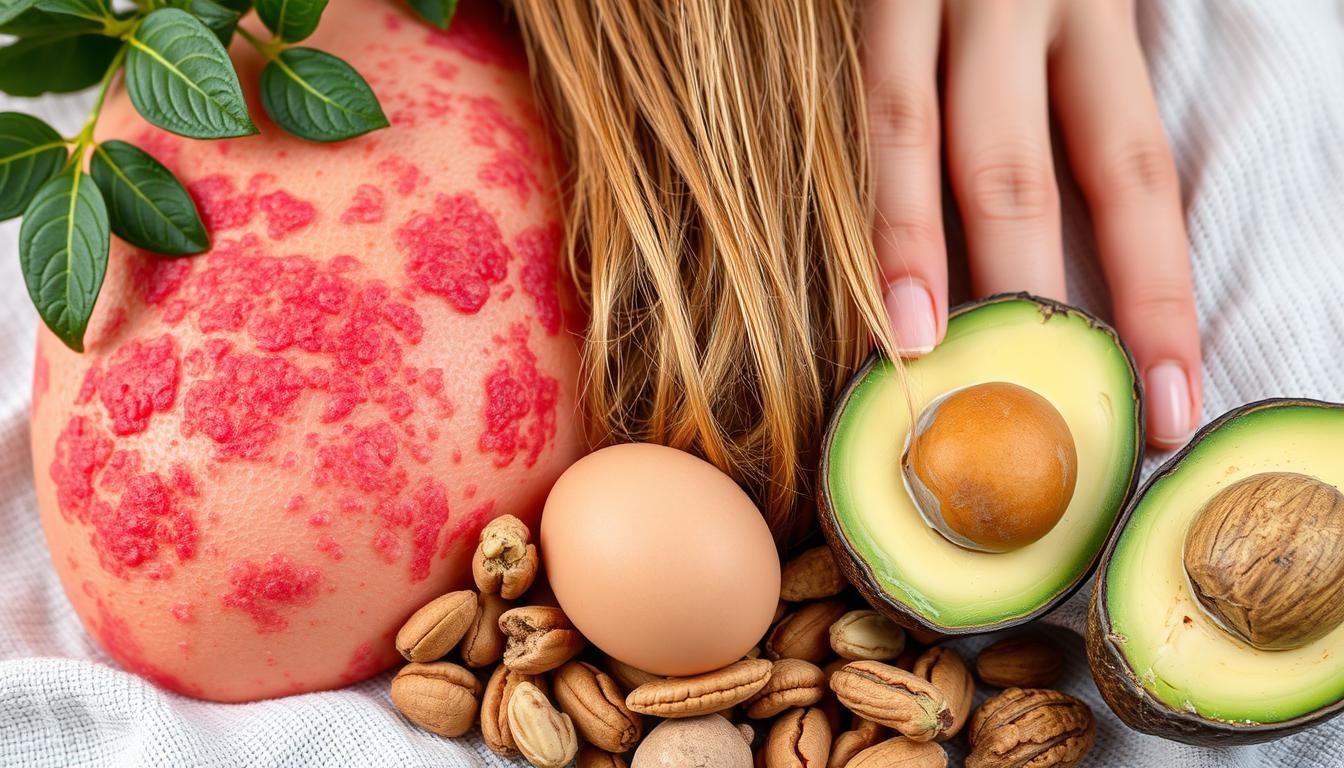
Did you know biotinidase deficiency is found in about 1 in 60,000 newborns? This shows how crucial biotin, or Vitamin B7, is for our health. If you don’t get enough, it can lead to noticeable problems.
People might see their hair fall out or get thinner. They might also notice their skin getting dry or developing rashes. But it’s not just about looks. Biotin is key for turning food into energy. So, a deficiency can make you feel tired and low on energy. Spotting these signs early is important for getting the right treatment.
Key Takeaways
- Biotin deficiency may affect 1 in 60,000 newborns.
- Symptoms include hair loss, skin rashes, and fatigue.
- Early recognition of symptoms is crucial for treatment.
- Energy metabolism is impacted by biotin levels.
- Vitamin B7 plays a critical role in skin and hair health.
Understanding Biotin
Biotin is also called Vitamin B7 or Vitamin H. It is a vital water-soluble nutrient needed for our metabolism. It helps turn carbohydrates into glucose, giving us energy. Biotin also helps in breaking down fats and proteins, vital for fixing and making cells.
This nutrient is in foods like eggs, nuts, and leafy greens in small amounts. Our gut also makes some Biotin. This shows how important it is for good health. Pregnant women need it a lot because it helps babies grow well.
Adults should get 30 micrograms (mcg) of Biotin a day, and kids need 5 mcg. Pregnant women should get more, about 35 mcg daily. Even with these guidelines, many people, including pregnant ones, often don’t get enough Biotin.
| Age Group | Recommended Daily Intake (mcg) |
|---|---|
| Adults | 30 mcg |
| Children | 5 mcg |
| Pregnant Women | 35 mcg |
In the Western world, people usually take in 35 to 70 mcg of Biotin a day. But many don’t reach the needed amount. Knowing about this water-soluble vitamin’s role is key for health at all life stages.
The Role of Biotin in the Body
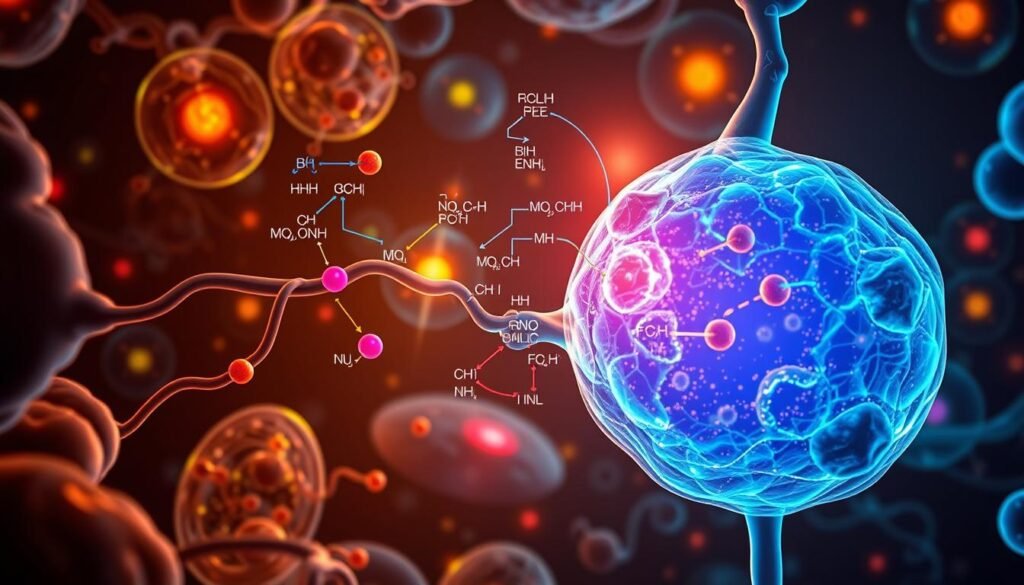
Biotin is crucial in the B-vitamin family. It plays a vital role in our health by aiding in several biological functions. One main role is in energy metabolism. Here, it acts as a coenzyme, turning food into energy we can use.
This process is vital as it involves metabolizing amino acids and fatty acids. These steps are essential for keeping our cells healthy and working well.
The need for biotin becomes even more critical during embryonic growth. It’s necessary for cells to develop correctly. Thus, pregnant women need to ensure they’re getting enough biotin. This helps keep both the mother and the baby healthy. Pregnant and breastfeeding women need more biotin. They should get 30 mcg a day, and nursing mothers 35 mcg.
Biotin’s significance doesn’t stop with metabolism and growth. It also plays a key role in gene regulation and cell signaling. These actions help maintain our overall health, affecting growth, cellular repair, and regeneration.
It’s crucial to keep an eye on biotin levels. This is particularly true for those who might not get enough. In the West, a balanced diet usually offers 35–70 mcg of biotin daily. But, some conditions and habits can impair how well our body uses biotin. This highlights the importance of biotin in energy metabolism and cellular health.
| Category | Biotin Role |
|---|---|
| Energy Metabolism | Assists in converting nutrients into energy |
| Amino Acids | Facilitates conversion and utilization of amino acids |
| Cellular Health | Supports gene regulation and cellular repair |
| Embryonic Growth | Essential for healthy fetal development |
Biotin Deficiency: Causes and Risk Factors
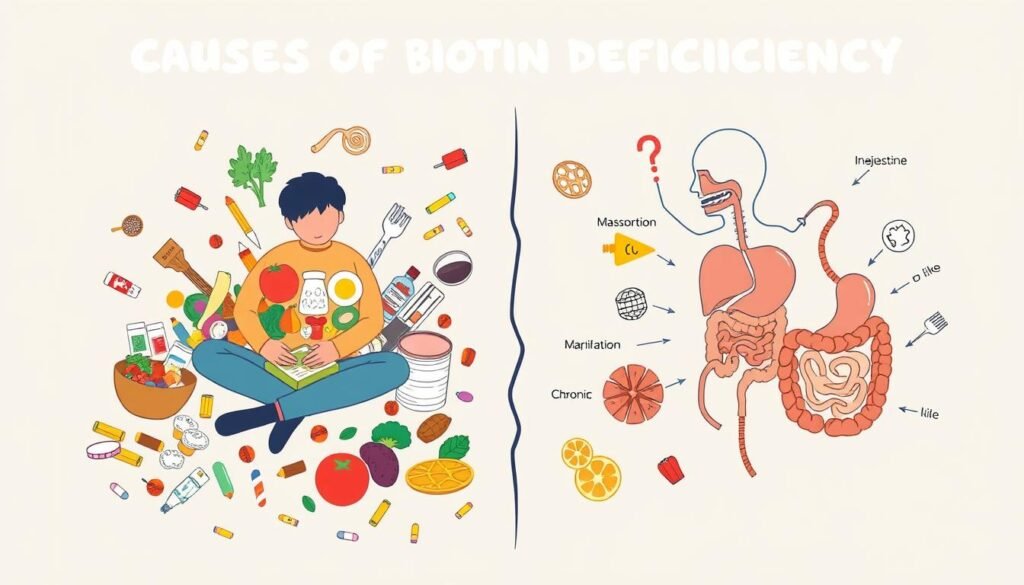
It’s rare for someone in the United States to lack biotin. Yet, it can happen due to several Causes of Biotin Deficiency. Some people are at higher Risk Factors due to their lifestyle or health conditions.
Eating raw egg whites often can block biotin from being absorbed. It’s because of avidin, a protein. If your diet is low in biotin-rich foods, this problem gets worse. Smoking can also reduce how much biotin your body gets.
People with conditions like Crohn’s disease may find it hard to absorb nutrients, including biotin. Drinking alcohol a lot can make this problem worse. It can stop your body from getting enough biotin and other important nutrients.
Some medicines, like antibiotics and drugs for seizures, can affect how nutrients are absorbed. This can lead to not getting enough biotin. Pregnant or breastfeeding women and those with a condition called biotinidase deficiency are more at risk.
The table below shows the main causes of biotin deficiency and what they mean:
| Risk Factor | Description |
|---|---|
| Raw Egg Whites | Consistently consuming raw egg whites may prevent biotin absorption due to the avidin they contain. |
| Poor Diet | A diet lacking biotin-rich foods can lead to deficiency over time. |
| Chronic Alcohol Use | Alcohol dependence can hinder nutrient absorption and increase risk for deficiencies. |
| Medications | Use of antibiotics and anti-seizure medications can lead to decreased nutrient absorption. |
| Genetic Disorders | Conditions like biotinidase deficiency prevent the body from recycling biotin effectively. |
Being aware of what causes biotin deficiency is key for staying healthy. By watching these risk factors and making good food choices, you can avoid biotin problems. This can help keep you healthy.
Common Symptoms of Biotin Deficiency
It’s vital to know the symptoms of biotin deficiency for good health. Signs can appear slowly and be hard to notice. Knowing them helps with quick action and care.
Hair Loss and Thinning Hair
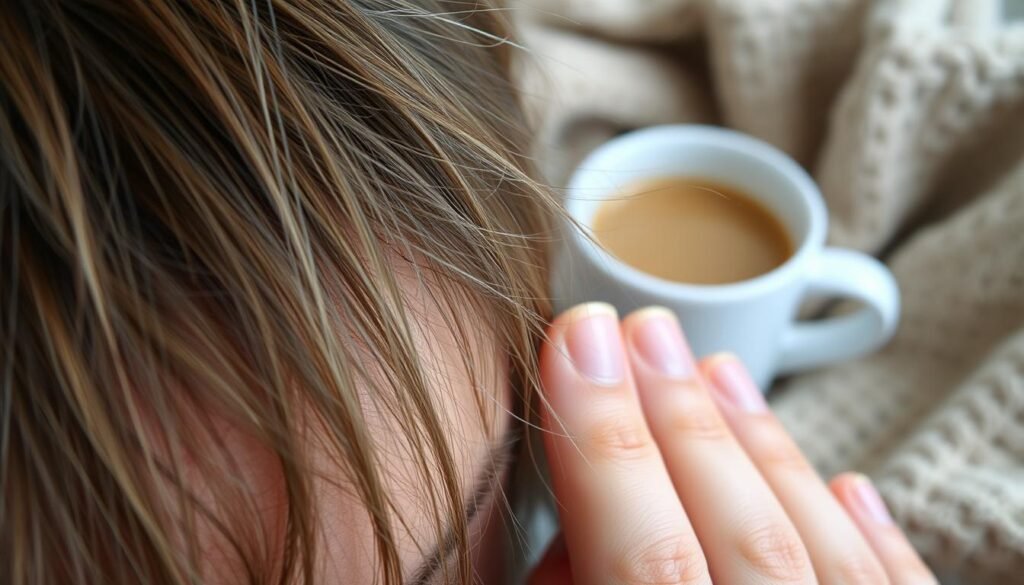
Hair loss is a clear sign of biotin deficiency. People may notice their hair getting thinner or see bald spots. This hair loss can be troubling and hurt someone’s confidence. Research shows that 38% of women with hair loss have low biotin levels. This shows how important biotin is for keeping hair healthy.
Brittle Nails
Weak nails are also a symptom of not enough biotin. Your nails might split or break easily. They look unhealthy. Taking biotin regularly helps make your nails stronger. This improves the health of your nails.
Skin Rashes and Eczema
A lack of biotin can affect your skin too. You might get skin rashes or eczema. The rashes, often red, can show up around your eyes, mouth, and nose. These skin issues underline biotin’s role in keeping skin healthy. It’s not just important for hair and nails.
| Common Symptoms | Details |
|---|---|
| Hair Loss | Thinning hair, patches of baldness |
| Brittle Nails | Easy splitting and breaking |
| Skin Rashes | Red rashes around eyes, mouth, and nose |
| Eczema | Skin inflammation requiring attention |
Fatigue and Neurological Symptoms
Biotin deficiency is more than skin deep. It causes fatigue and several neurological issues. People often feel extremely tired, which can lower their quality of life. Fatigue is linked with other symptoms like depression and mood shifts. This shows how vital biotin is for our mental health and brain work.
Depression and Mood Changes
Lacking enough biotin can lead to depression. This makes people feel more sad and hopeless. These mood swings can disrupt daily life and hurt friendships. It’s crucial to understand how biotin levels affect our mental well-being to tackle these problems.
Muscle Pain and Weakness
Muscle pain and weakness are also symptoms of not having enough biotin. Low biotin can harm nerve function. This causes muscle problems and weakness. Dealing with these issues not only eases pain but also boosts our overall health. Getting enough biotin is key to keeping our muscles strong and full of energy.
| Symptom | Description | Potential Impact |
|---|---|---|
| Fatigue | Persistent tiredness that affects daily activities. | Reduced productivity and quality of life. |
| Depression | Mood shifts leading to feelings of sadness. | Impacts relationships and emotional stability. |
| Muscle Pain | Discomfort in muscles often linked to nerve issues. | Limitation in physical activities and overall mobility. |
| Weakness | Lack of strength, making tasks more challenging. | Increased risk of injury and decreased exercise capacity. |
Identifying Biotin Deficiency in Infants
Biotin Deficiency in infants is a serious health issue. It needs quick action. Signs often start in the first months of life, showing different symptoms. These include:
- Hypotonia (weak muscle tone)
- Seizures
- Developmental delays
- Skin rashes
- Hair loss
These symptoms raise alarms about a baby’s health and growth. Sometimes, biotin deficiency comes from genetic disorders like biotinidase deficiency. This disorder stops the body from using biotin right. Newborns in the United States get tested early to find these issues. Quick finding of the problem is key to avoid serious problems and start treatment.
Spotting Biotin Deficiency early in infants is vital. It can really change the treatment and how well infants recover. Doctors suggest regular check-ups to track a baby’s progress. They also stress teaching parents about what to watch for. This helps parents act fast if they notice something wrong with their baby’s health.
How to Diagnose Biotin Deficiency
Finding out if someone lacks biotin takes a detailed look at their symptoms and tests. A deep medical assessment helps pinpoint the condition. Symptoms like tiredness, losing hair, and skin rashes often hint at a deficiency.
A key step is the blood test to check biotin levels. It looks at biotin in the blood and certain metabolites. If biotin levels are low, it means there might be a deficiency.
Doctors also look at a patient’s medical history. They consider what the patient eats, their medication, and if their family has biotin-related disorders. Knowing what someone eats is important, as most people get 35 to 70 micrograms of biotin daily.
Certain conditions like long-term antibiotic use, drinking too much alcohol, and some medicines can make a deficiency worse. Sometimes, genetic issues can cause biotin problems that show up later. Reviewing these factors helps doctors understand a patient’s risk.
For a thorough biotin deficiency diagnosis, checking urine biotin can help, too. Urine should normally have 18–127 nanomoles (nmol) of biotin per 24 hours. This helps decide if someone needs more biotin in their diet or as a supplement.
Treatment Options for Biotin Deficiency
Treatment options for biotin deficiency include dietary changes and supplementation. This approach helps ease symptoms like dermatitis, hair loss, and neurological issues. It’s crucial to increase intake of biotin-rich foods to improve biotin levels.
Dietary Changes
Adding dietary sources of biotin to your meals can boost your health. Important foods are:
- Eggs
- Nuts, especially almonds and walnuts
- Legumes such as peanuts and soybeans
- Fish, like salmon
- Sweet potatoes and certain vegetables
These foods offer biotin and support a balanced diet. However, for some, eating more biotin-rich foods might not be enough. This is especially true if symptoms are bad or don’t go away.
Biotin Supplements
In cases of serious deficiency, doctors might suggest biotin supplements. These supplements are great for getting biotin levels back to normal. They come alone or with other B vitamins. Always talk to a healthcare provider before starting supplements. The recommended dose varies. It can start from 30 mcg to higher, based on health needs and conditions. Studies say that even high doses of biotin are safe and not toxic.
Conclusion
Knowing the signs of biotin deficiency matters a lot for our health and happiness. Spotting issues early and getting the right help can stop worse health problems later. Biotin is key in our diet, with foods like veggies, fruits, nuts, and dairy being great sources.
Adequate biotin does more than improve our hair, skin, and nails. It’s vital in breaking down fats and sugars, supports our nerves, and keeps our immune system strong. People at risk of biotin deficiency, like pregnant women or those on special nutrition plans, should talk to doctors for the best diet advice.
Being smart about biotin supplements is also crucial. Some folks take them hoping to look better, but there’s not much proof they help. Too much biotin can also mess with lab tests. So, getting advice from a doctor is the best move. For deeper insights on biotin and why it’s essential, check out this resource.

