

Up to 20% of people have nail brittleness, more so in women over 50. This issue, called onychorrhexis, leads to vertical ridges and nail splitting. It can cause much discomfort and make people feel unsure about themselves. Knowing how to treat onychorrhexis and brittle nails is key. It helps keep nails healthy. This piece explores treatments and home remedies. They help strengthen nails and improve their health.
Key Takeaways
- Onychorrhexis affects many individuals, especially older women.
- Treatment options include both medical interventions and home remedies.
- Good hygiene and protective practices are essential for nail care.
- Addressing underlying health issues is critical for effective treatment.
- Nutritional deficiencies can significantly impact nail health.
Understanding Onychorrhexis
Onychorrhexis involves vertical ridges and splits in the nails. It points to several health issues. The trouble usually starts in the nail matrix, where our nails grow from. Interestingly, women are more likely to get brittle nails than men.
Getting older increases your chances of facing this condition. Most people with brittle nail syndrome are over 60. Lack of nutrients like iron, diseases including anemia and thyroid disorders contribute to onychorrhexis. For instance, spoon-shaped nails suggest iron deficiency, while split nails often hint at thyroid problems. It’s important to keep an eye on our nail health.
Brittle nails can also come from nail diseases. For example, psoriasis, eczema, and fungal infections are common culprits. They cause vertical ridges and weaken the nails. That’s why checking your nails regularly is a good habit.
Several things can make onychorrhexis worse. Not drinking enough water can dehydrate and split the nails. Allergies to nickel and formaldehyde are also harmful to nail condition. To learn more about onychorrhexis, check out this resource.
| Factors Influencing Onychorrhexis | Possible Effects |
|---|---|
| Age | Increased likelihood of developing brittle nails |
| Nutritional Deficiencies | Weakened nails, possible splits and ridges |
| Underlying Health Conditions | May indicate systemic issues like anemia |
| External Factors | Exposure to chemicals leading to nail brittleness |
| Allergies | Can cause nail splits and brittleness |
Causes of Brittle Nails
Many things can make nails brittle. Not getting enough nutrients is a big reason. If you’re missing iron, protein, or folic acid, your nails might not grow strong. This leads to nails that break easily.
Also, anemia and hypothyroidism can make your nails weak. These conditions make it hard for your body to keep nails healthy. As people age, their nails often get thinner and more brittle. This makes them easier to damage.
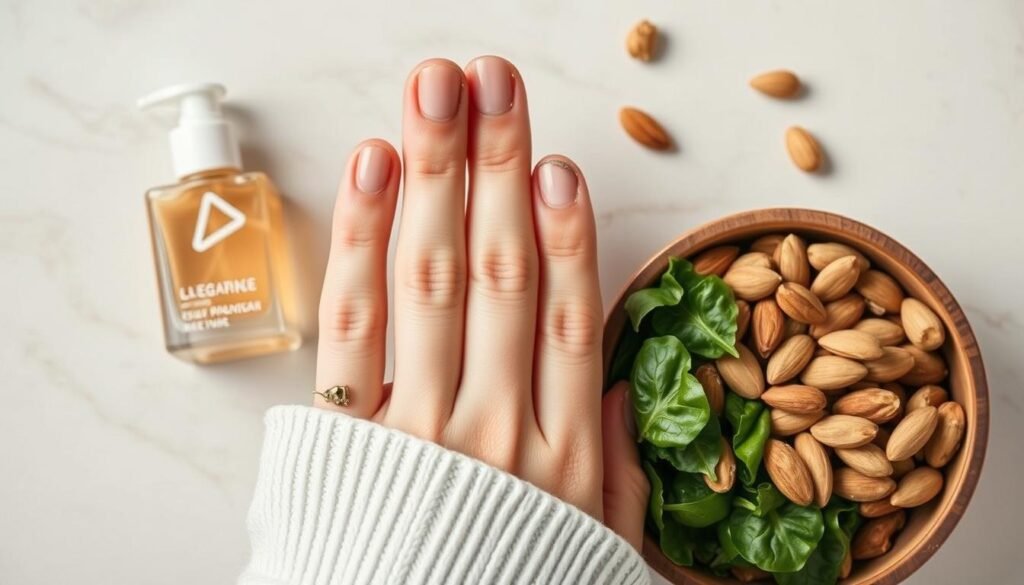
Things around us can also make nails worse. Being around strong chemicals, like in hairdressing, harms nails. Washing your hands a lot or using harsh cleaners can make it worse. This hurts your nails’ strength.
To deal with brittle nails, it’s important to know what causes them. Look at your diet, health, and the things around you. For those looking for ways to treat brittle nails, more information can be found here.
Symptoms Associated with Onychorrhexis
The symptoms of onychorrhexis include vertical ridges along the nails. These ridges often become more visible as people grow older. They can make the nails look bad. Along with these ridges, one might see their nails turn yellow, start to crumble, or peel. These signs of brittle nails can be bothersome and interfere with daily tasks.
In more severe cases, individuals might notice splinter hemorrhages or a change in nail color. These issues call for a doctor’s visit. They could point to serious health problems. Keeping an eye on these symptoms is crucial. It helps to know if onychorrhexis is a minor issue or something more worrying.
Finding the root cause of these symptoms can improve nail health. This might involve looking into diets or other health conditions, like hypothyroidism. People noticing changes in their nails should talk to a doctor. This will help them figure out what to do next.
| Symptom | Description | Potential Causes |
|---|---|---|
| Vertical Ridges | Lines running from the cuticle to the tip of the nail | Aging, nail trauma, dermatological conditions |
| Yellowing | Discoloration of the nail surface | Fungal infections, smoking, lack of nail care |
| Crumbling | Nails disintegrating or breaking easily | Dryness, nutritional deficiencies, chemical exposure |
| Peeling | Nail layers separating or flaking off | Dehydration, nail polish remover, environmental factors |
| Splinter Hemorrhages | Small blood spots under the nail | Physical trauma, cardiovascular issues |
Importance of Nail Strengthening
Having strong nails is key for good nail health. People with brittle nails may feel bad about how their nails look. Strong nails make us look better and help with everyday tasks.
Caring for your nails regularly keeps cuticles soft and prevents nails from splitting. Using moisturizers helps with dryness, especially when it’s cold. Also, avoid using harsh chemicals to keep nails strong.
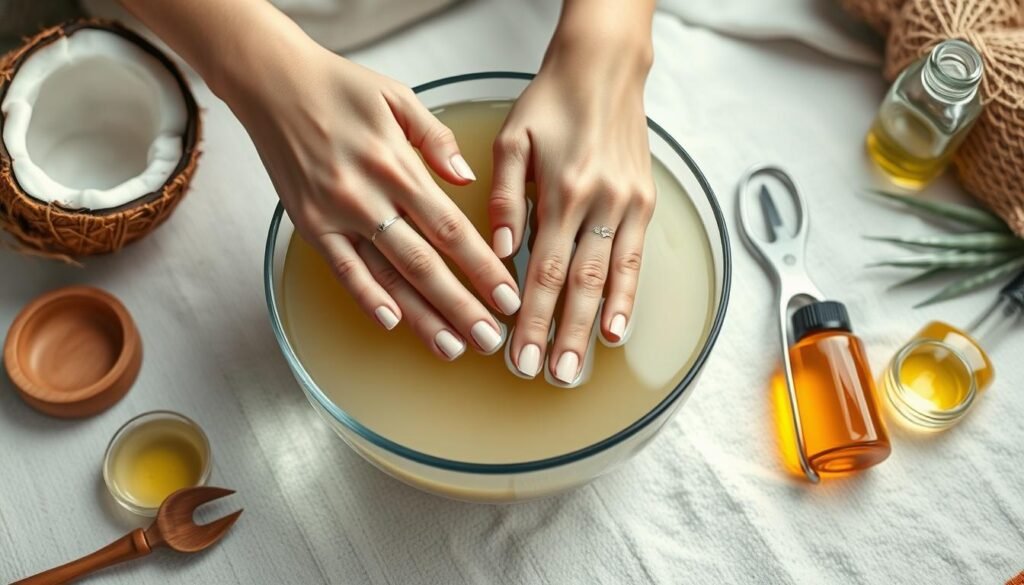
Eating the right foods keeps nails strong. A zinc-rich diet is important. Lack of zinc can cause nail problems. So, it’s good to eat whole grains, poultry, beans, and beef for enough zinc.
Knowing how much zinc to have is helpful in planning your meals. For strong nails, avoiding problems like onychorrhexis is important. This condition makes nails brittle and lined.
| Age Group | Recommended Zinc Intake (mg) |
|---|---|
| 0-6 months | 2 |
| 7-12 months | 3 |
| 1-3 years | 3 |
| 4-8 years | 5 |
| 9-13 years | 8 |
| 14-18 years | 11 |
| Breastfeeding teenagers | 13 |
Using strategies to strengthen nails is a smart move. It leads to healthy, strong nails. And it helps avoid the pain of brittle nails and onychorrhexis.
Treatment Options for Onychorrhexis and Brittle Nails
Many people find brittle nails frustrating. The first step is knowing the treatments available, which range from doctor-recommended options to simple home remedies. Whether you’re looking at medical treatments for nails or home remedies for brittle nails, taking action can lead to healthier and stronger nails.
Medical Treatments
For treatment options for onychorrhexis, seeing a doctor is often needed. Doctors might suggest supplements like iron, folic acid, or biotin to help strengthen your nails. They could also recommend special nail lacquers that protect and enhance your nails’ look. Regular check-ups with a healthcare provider let you manage the issue well and get prescription nail care that suits you.
Home Remedies
At home, keeping your nails moisturized is key. Use vitamin E oil, olive oil, or petroleum jelly to nourish your nails. Staying hydrated by drinking plenty of water helps keep them flexible. Also, avoid long water exposure and harsh cleaners by keeping nails short and well-cared for. Adding natural remedies to professional advice can make your nails stronger. For more tips, check out this site on nail care practices.

The Role of Nutritional Supplements
Nutritional supplements are key for good health, especially for nail health. They focus on essential vitamins and minerals. These nutrients are vital for keeping nails strong and healthy. Studies show up to 20% of people suffer from weak nails. This makes it crucial to understand the role of these supplements.
Biotin Supplements
Biotin, or vitamin B7, is a leading nutritional supplement for nails. Research connects biotin to thicker nails and less splitting. Those with brittle nails often turn to biotin supplements for help. It’s smart to talk to a professional about the right amount needed.
Vitamin and Mineral Importance
Vitamins A, C, E, and minerals like zinc and iron matter a lot for nail health. They help make keratin, which nails need to be strong. Not getting enough of these nutrients can cause nail problems. It’s very important to make sure you’re getting these vitamins for nail health.
If someone is not getting enough vitamins, nutritional supplements for nails can help. They can fill in the gaps in your nutrition.
| Nutrient | Role in Nail Health | Sources |
|---|---|---|
| Biotin | Improves nail thickness and reduces splitting | Nuts, eggs, fish, whole grains |
| Zinc | Supports keratin production | Meat, shellfish, legumes, seeds |
| Iron | Promotes blood circulation, delivering nutrients to nails | Red meat, poultry, lentils, spinach |
| Vitamins A, C, E | Protects nails and facilitates healthy growth | Fruits, vegetables, nuts, dairy products |
The importance of minerals in stopping weak nails is huge. People should consider adding these supplements to their daily routine. But don’t forget a balanced diet too. To learn more about dealing with brittle nails, click here: this informative resource.
Building a Nail Care Routine
Getting into a good nail care habit is key for healthy nails. It’s important to stay hydrated and use protective steps to keep nails tough. This makes a big difference in nail wellness.
Nail Hydration Techniques
Keeping nails moist is a big part of nail care. Using creams or oils is good for locking in moisture after washing hands. Applying these often helps avoid dry, brittle nails. Here are some tips:
- Apply nourishing oils like jojoba or almond oil to make nails stronger.
- Use hand creams with shea butter or vitamin E for deep hydration.
- Wear gloves for housework to protect nails from too much water and harsh cleaners.
Protective Practices
It’s crucial to protect your nails as well as hydrate them. Taking steps to avoid damage is key. Try these ideas for stronger nails:
- Wear gloves when cleaning or doing anything that might soak nails.
- Don’t bite your nails or pick at cuticles to avoid injury.
- Keep nails trimmed to avoid splits or breaks.
To boost nail strength through diet, learn how eating right affects nail health.
When to Seek Professional Help
Knowing when to ask for help with nail problems can really affect treatment results. If onychorrhexis symptoms get worse, it’s crucial to see a doctor. Don’t overlook ongoing pain, big changes in how nails look, or other alarming signs. Such signs might point to deeper health issues, making quick help important.
Getting checked by a dermatologist helps find out what’s wrong with your nails. Issues like psoriasis, lichen planus, or rheumatoid arthritis might show up as nail problems. Understanding when to get help leads to better care suited to your needs.
Look out for these warning signs that you need a doctor’s opinion:
- Visible structural changes in the nails
- Development of painful lesions or swelling
- Signs of infection, such as redness, warmth, or discharge
- Persistent brittleness or changes in coloration
Thyroid issues and other systemic diseases can also impact your nails. Knowing this can help you be more aware of your overall health. For more on nail disorders and treatments, visit this link.
| Symptom | Possible Condition |
|---|---|
| Longitudinal ridges | Rheumatoid arthritis |
| Thick nails | Diabetes or psoriasis |
| Nail brittleness | Nutritional imbalance or systemic disease |
| Discoloration | Possible fungal infection or systemic issue |
| Splinter hemorrhages | Psoriatic arthritis |
Being well-informed about nail health is key. It helps you watch for symptoms and decide when to get professional advice. Catching issues early can mean better treatment results.
Conclusion
Managing onychorrhexis and brittle nails is about more than just treatments and home remedies. It involves proper eating and practices to protect nails. Knowing what causes the issue and its signs is key. It helps in finding the right treatment early to keep nails healthy.
Many people, up to 20%, face brittle nail syndrome. Women are more likely to get it than men. Raising awareness is key. Adding nutrients like biotin to your diet helps. So does taking good care of your nails regularly. This way, you can fight the negative effects of onychorrhexis and get stronger nails.
Improving nail health means paying attention to what each person needs for their nails. With the right knowledge and care, managing onychorrhexis is possible. This leads to enjoying healthier and happier nails in everyday life.

