

Did you know over 70% of gardening experts choose leather gloves for outdoor tasks? This figure shows how critical gloves are for protecting your hands. They keep your skin safe from dirt, harmful chemicals, sharp objects, and infections that might come from soil and plants. Gloves not only make chores safer but also more comfortable and efficient.
In this article, we discuss the importance of gloves for cleaning and gardening. We’ll look at different gloves, their key features, and how they prevent injuries. This information will help you pick the right gloves for your needs. Whether you’re a full-time gardener or just like to tend to your garden on weekends, wearing gloves is key. They keep your hands healthy and make sure you’re working safely.
Key Takeaways
- Over 70% of gardening professionals opt for leather gloves, highlighting their importance.
- Gloves provide essential protection from chemicals, dirt, and potential injuries.
- Various types of gloves such as leather, nitrile, and cotton cater to different gardening needs.
- Proper hand protection enhances comfort and efficiency during outdoor activities.
- Selecting the right gloves can prevent infections and maintain hand health.
Understanding the Importance of Hand Protection
Hand protection is crucial for those into cleaning and gardening. When gardening, we touch soil that might have harmful bacteria and fungi. This can lead to severe infections. Gloves act as a shield, reducing the risk of getting cuts and scrapes. These injuries can let dangerous microbes into the skin.
Strong gloves protect from many harms, like thorn pricks, splinters, and blisters. This makes them essential for safety.
Wearing the right safety gear is a must when working with tools, soil, and plants. Leather gloves offer great protection against cuts and scratches. They guard against dangers like impacts, temperature changes, and contact with oils. Not just minor injuries, but also small bites, prickles, and harsh chemicals are kept at bay by these gloves.
In cleaning, hand protection is super important too. Gloves provide a shield against strong chemicals that could hurt or damage the skin. Using safety gear regularly helps reduce the chance of skin issues and infections. This is especially true when dealing with fertilizers, pesticides, or other risky substances.
Each year, over 400,000 accidents related to outdoor garden tools happen, needing emergency care. This high number shows how important it is to wear gloves to prevent injuries. Using the right tools instead of your hands when digging or pruning helps avoid harm from sharp things in the soil.
Why Gloves Are Essential for Cleaning and Gardening
Gardening is a rewarding hobby but it has its risks. Knowing the risks of going barehanded is key for garden lovers. Without gloves, you could get cuts, scrapes, and injuries from tools or plants.
The Risks of Going Barehanded in the Garden
Not wearing gloves can lead to wounds and irritations. Thorns and prickly plants can scratch, opening the door for infections. Soil bacteria, like Clostridium tetani, are serious threats. A cut can turn into an infection that needs a doctor’s help.
Going gloveless means more chances to touch allergens and irritants. Fertilizers and chemicals are examples. This increases your risk of problems.
Potential Infections from Soil and Plants
Touching soil and plants directly raises infection risks. The soil can have harmful bacteria and fungi. These can infect small cuts. Fungal infections, such as rose gardener’s disease, might happen. This can be uncomfortable and serious.
Gloves are a crucial barrier against these dangers. They protect against harmful things in the environment. Keeping clean also helps avoid bacteria from soil ending up on your skin. For hand care tips after gardening, check out this hand care guide.
Caring for your nails is important too. It makes them stronger against gardening damage. Learn about nail care in this nail care article.
Types of Gloves for Gardening
Types of Gardening Gloves are key for both protection and comfort in the garden. There are many kinds, each designed for certain tasks. This variety helps gardeners find the best gloves for their specific needs.
Leather Gloves: Durability and Protection
Leather gloves are known for being strong and protective. They are great for tough work, keeping hands safe from thorns and cuts. They fit well and last long but are not very breathable. Many brands offer these gloves in different sizes. This ensures a good fit while using Gardening Tools.
Nitrile Gloves: Flexibility and Chemical Resistance
Nitrile gloves are flexible and tough. They are perfect for delicate work and are also puncture and chemical resistant. These gloves are helpful for those who use garden chemicals often. With Gardening Accessories like these, gardeners can protect their hands during hard tasks.
Cotton Gloves: Lightweight Comfort for Casual Tasks
Cotton gloves are light and comfy for simple gardening tasks. They’re breathable, making them great for weeding or planting. They don’t offer strong protection like leather or nitrile gloves but are ideal for easy work. Their comfort makes everyday gardening more pleasant. Choosing the right Types of Gardening Gloves keeps gardening fun and safe.
| Type of Glove | Best For | Price (USD) | Rating |
|---|---|---|---|
| Leather Gloves | Heavy-duty tasks | $18.99 | 4.8/5 |
| Nitrile Gloves | Puncture and chemical resistance | $16.00 | 4.5/5 |
| Cotton Gloves | Light tasks | $6.49 | 4.8/5 |
Choosing the right gloves can make a big difference in gardening. Each type has its benefits. This helps gardeners pick the best gloves for their work, improving their gardening.
Learn more about choosing the right gloves for your gardening needs
Types of Gloves for Cleaning
Choosing the right cleaning gloves is important for safety and efficiency. Different gloves work best for various tasks. It’s key to pick the right ones based on the cleaning supplies and situation.
Disposable Latex and Nitrile Gloves: Hygiene in Cleaning Supplies
Disposable latex and nitrile gloves are key for clean and safe cleaning. Latex gloves offer great touch but can irritate some people. They’re good for tasks needing careful handling, like food or sensitive equipment. Nitrile gloves are safe for those allergic to latex. They offer excellent protection and are best for thorough cleaning where safety is crucial.
Reusable Rubber Gloves: Durable and Water-resistant
Reusable rubber gloves are perfect for tough cleaning jobs. They’re strong and keep water out, ideal for working with cleaning chemicals. They last through many uses without breaking down. This makes them a smart choice for the environment. Buying good quality cleaning gloves keeps you safe and maintains cleanliness over time.
| Type of Glove | Material | Use Cases | Hygiene Level | Durability |
|---|---|---|---|---|
| Disposable Latex Gloves | Latex | Food handling, Painting | High | Low |
| Disposable Nitrile Gloves | Nitrile | Medical, Cleaning | Very High | Low |
| Reusable Rubber Gloves | Rubber | Heavy-duty cleaning, Dishwashing | Moderate | High |
Essential Features of Gardening Gloves
Choosing the right Gardening Gloves is key for both protection and comfort while gardening. They should have a few key qualities to boost a gardener’s experience. Durability is crucial, allowing gloves to last through many gardening tasks. Flexibility is also key, helping gardeners handle tools and plants easily.
The grip on Gardening Accessories is vital. It ensures tools are handled safely and easily. Gloves also need good coverage to protect against cuts and bugs. When pruning, longer gloves protect your arms from thorns and brambles.
Many look for gloves that are both breathable and waterproof. This is important for comfort in any weather. Waterproof gloves also protect against chemicals. Nitrile gloves are a top choice for their durability and air flow.
Washing gloves varies based on the material. Leather gloves need special care to last longer. Cotton and nitrile gloves are easier to clean. Kids’ gardening gloves are becoming popular, getting children involved in gardening. Considering these features helps gardeners pick the best gloves for their needs.
Essential Features of Cleaning Gloves
Choosing the right cleaning gloves can make a big difference in how well chores are done. They provide safety and comfort. This makes household tasks easier to handle.
Grip and Dexterity in Household Chores
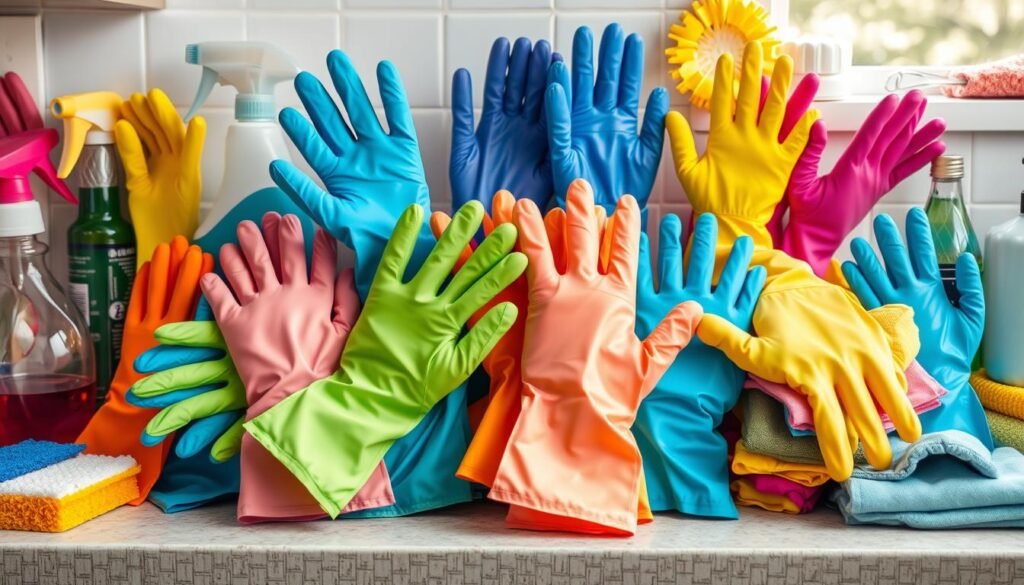
Having a good grip is important when using cleaning tools. Gloves with texture stop things from slipping during chores like scrubbing. Dexterity is key for tasks around delicate items or tight spots. The correct gloves improve how clean your home gets.
Seamless Waterproofing for Wet Cleaning Tasks
Waterproof gloves are a must-have feature. They keep hands safe from water and harsh chemicals. This is very helpful for washing dishes or mopping. Gloves with waterproofing make cleaning more efficient and comfy.
- Textured surfaces enhance grip, reducing the risk of accidents.
- Waterproof materials ensure protection against harmful substances.
- Fitted designs allow for enhanced dexterity in detailed tasks.
| Feature | Benefit |
|---|---|
| Grip | Prevents slipping; enhances handling of tools |
| Waterproofing | Protects skin from irritants and prolonged moisture exposure |
| Dexterity | Facilitates precise movements during cleaning tasks |
Injury Prevention in Gardening and Cleaning
Injury prevention is key in gardening and cleaning. Many face hazards without the right hand protection. Cuts, scrapes, and burns often come from using tools without care. Gloves protect against thorns, sharp items, and irritants, making cleaning safer.
Gloves help support and cushion hands during hard gardening tasks, like lifting or weeding. Using the right body mechanics and tools lowers injury risk.
- Remove rings when gardening to prevent serious injuries like ring avulsions.
- Use tools with easy-grip handles, which can decrease hand injuries by up to 50%.
- Stretch before and after tasks to prevent overuse injuries, such as tendonitis.
About 35% of garden injuries are from doing the same motion over and over. New gardeners are 30% more likely to get hurt due to inexperience. Keeping tools in good shape also helps prevent injuries from broken equipment.
| Injury Type | Preventive Measures | Statistics |
|---|---|---|
| Cuts and Scrapes | Wear gloves, use sharp tools correctly | Common in gardening activities |
| Overuse Injuries | Stretching, proper body mechanics | 40% linked to improper lifting |
| Ring Avulsions | Remove jewelry before gardening | Serious but less common |
| Lawn Mower Injuries | Use tools correctly and remain attentive | Partial or complete amputations occur yearly |
For those gardening or cleaning, taking these safety steps is vital. Focusing on injury prevention makes working safer and more enjoyable.
Benefits of Wearing Gloves During Outdoor Activities
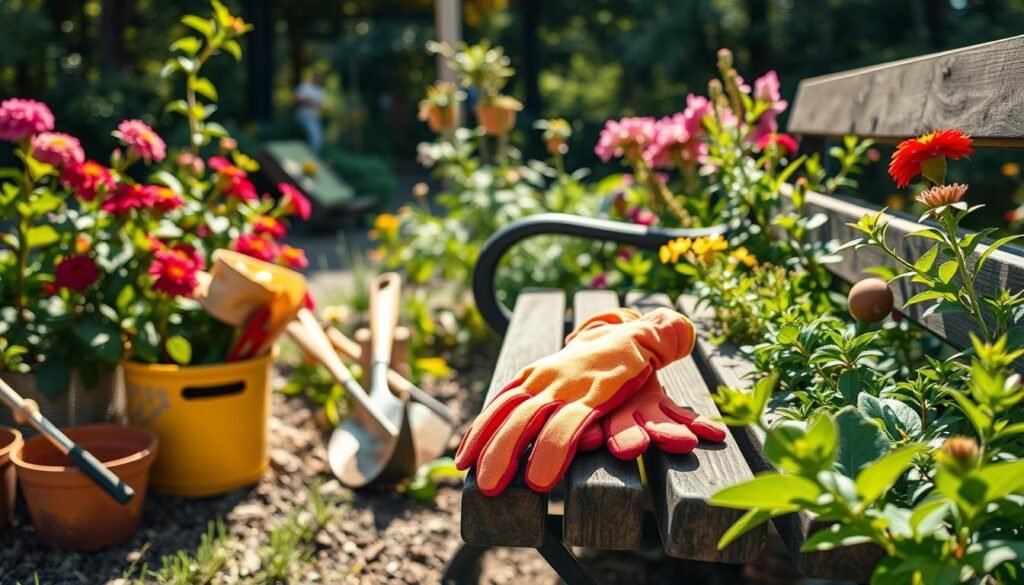
Gardening and other outdoor activities are more enjoyable and safer with gloves. They protect against injuries and make the experience more comfortable. Gloves improve the fun and safety of these activities.
Guarding Against Cuts, Scrapes, and Allergens
Gloves shield hands from sharp tools and thorns. They also protect against dirt-born infections. Plus, gloves help avoid allergies from plants and bugs. This means you can garden without fear of cuts or allergies.
Reducing Fatigue and Enhancing Comfort
Using gloves makes gardening easier on your hands. They help avoid sunburn and keep hands cool. Gloves reduce tiredness and protect your nails. This makes gardening a more enjoyable experience.
| Benefits of Wearing Gloves | Description |
|---|---|
| Protection from Cuts | Guards hands against sharp objects and thorny plants. |
| Allergen Shield | Minimizes exposure to harmful insects and plant allergens. |
| Enhanced Grip | Allows for greater control and dexterity while gardening. |
| Sun Protection | Offers a barrier against sunburn and skin damage. |
| Reduced Hand Fatigue | Prevents discomfort during prolonged outdoor activities. |
| Comfortable Fit | Ensures fit to prevent slipping and blisters. |
| Easy Maintenance | Many gloves are easy to clean and maintain for long-term use. |
Safe Handling of Chemicals and Harsh Cleaners
It’s crucial to handle chemicals and cleaners safely to keep our homes safe. Many products can irritate the skin, causing issues like dermatitis or chemical burns. Wearing proper gloves is key to avoiding these risks while using strong cleaners.
Bright yellow gloves from the store or specialized ones resist chemicals well. When washing dishes with hot water, gloves help. They prevent discomfort from hot water on bare hands. This is recommended by dermatologists since hot water can remove natural oils from the skin.
Kitchens and bathrooms are full of bacteria. Sponges spread germs, but gloves can protect us. Wearing gloves not only saves our skin but also fights off harmful germs.
Not wearing gloves can cause many injuries. About 70% of people with hand injuries weren’t wearing gloves. The other 30% used damaged or unsuitable gloves. Choosing the right, high-quality gloves for cleaning is very important.
| Common Chemical Products | Potential Hazards |
|---|---|
| Bleach | Skin irritation, respiratory issues |
| Oven sprays | Skin burns, eye damage |
| Liquid laundry capsules | Poisoning risk if ingested |
| Toilet cleaners | Chemical burns, irritation |
| Pesticides | Skin absorption, respiratory problems |
To handle chemicals safely, always read warning labels and follow instructions. Never mix different cleaners because it’s dangerous. Keep chemicals locked up and away from kids to make your home safer.
How to Choose the Right Gloves for Your Needs
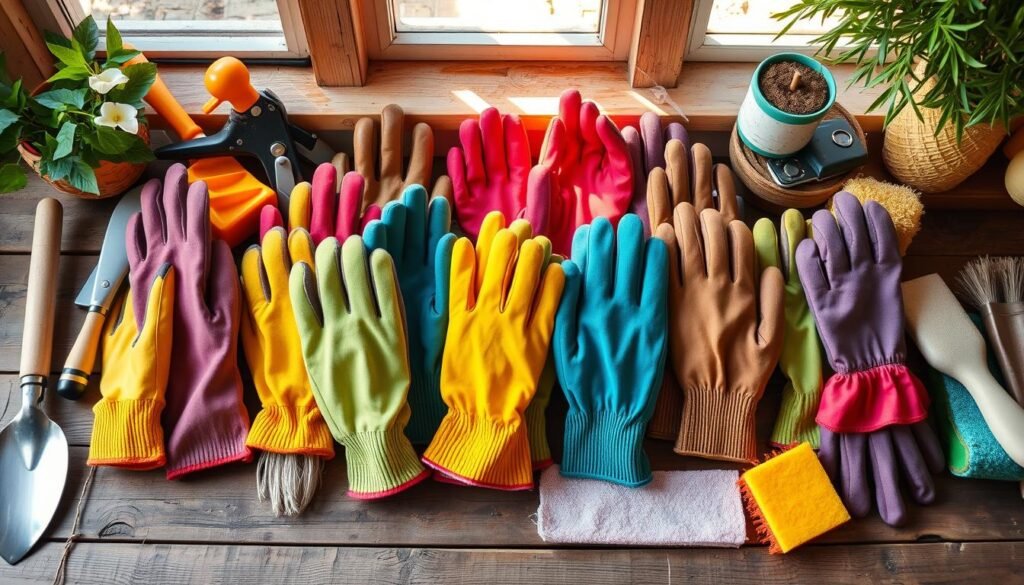
Choosing the right gloves is key to both comfort and how well you perform tasks. Think about the work you’ll be doing and what materials you’ll handle. Don’t forget about what feels good on your hands.
For gardening, there are several gardening accessories to consider:
- Leather gloves are tough and best for handling thorns during pruning.
- Cotton gloves are light and perfect for simple tasks like planting and weeding.
- Nitrile-coated gloves provide good grip and protection, suited for various gardening jobs.
- Bamboo gloves are eco-friendly and great for everyday garden chores.
When cleaning, you need gloves that can handle chemicals safely:
- Rubber-coated and neoprene gloves protect against harsh cleaning agents, including herbicides and pesticides.
- Disposable latex gloves are good for short, clean jobs and staying hygienic.
- Reusable rubber gloves last longer, making them great for longer cleaning tasks.
Spending time to pick the right gloves will pay off. The correct gloves can increase safety and how well you do an activity. This is true whether you are working in the garden or cleaning the house.
Conclusion
Gloves are key for keeping hands safe during gardening and cleaning. They protect against sharp objects, allergies, and harsh chemicals. Nitrile gloves are top choice for their strong build and substance resistance, ideal for dealing with fertilizers and pesticides. Their great grip and flexibility also make them comfortable and safe.
Cleaning gloves are equally important. They shield hands from harmful chemicals in cleaning products, promoting clean habits. By picking suitable gloves for each job, people can boost their safety and work more efficiently.
Wearing gloves during these tasks leads to safer working habits. Understanding and choosing the right gloves lets people enjoy gardening and cleaning without worry.

