
About 31% of people worldwide don’t get enough zinc. This lack of zinc is linked to Zinc Deficiency and Brittle Nails. Not having enough of this vital nutrient affects many things. This includes nail strength and general health. Zinc is important for everything from keeping skin healthy to fighting off illnesses.
When there’s not enough zinc, nails can get weak, change color, or develop lines known as Beau’s lines and onychorrhexis. We’ll talk about the link between zinc amounts and nail health. We will show how not getting certain nutrients makes nails suffer. We’ll share tips on eating better and using supplements to make nails stronger.
For more on how not having enough zinc affects nails, read this detailed guide.
Key Takeaways
- Zinc is crucial for maintaining healthy nails.
- 31% of the global population is affected by zinc deficiency.
- Nail issues can indicate broader nutrient deficiencies.
- A diet rich in zinc can help combat brittle nails.
- Understanding nail health can provide insights into overall wellness.
The Importance of Zinc for Nail Health
Zinc is crucial for keeping nails healthy because it helps make keratin. This mineral is key in creating proteins for strong nails. Without enough zinc, nails can become brittle and grow slowly.
Zinc boosts the growth and strength of nail tissue. It helps with essential enzyme reactions and gene regulation. For best nail health, men need about 11 mg of zinc daily, while women need 8 mg.
Zinc shortage can also harm your overall beauty and wellness. Eating foods rich in zinc helps not only nails but also hair and skin. Keeping zinc levels up is vital for strong nails and overall health.
Understanding Zinc Deficiency
Zinc deficiency can come from not eating enough dietary zinc sources. It can also happen if your body doesn’t absorb zinc well. This is common in vegetarians or those on strict diets. Children and teens need enough zinc for good bone growth. About 54% of people with acne have low zinc levels. This shows how important zinc is for skin health.
Zinc deficiency symptoms include brittle nails and hair loss. You may also see white spots on your nails or get mouth ulcers. Another issue is weak bones. Adults should get about 7mg of zinc daily. This is possible through a balanced diet. Eating 70g of cooked red meat, like beef or lamb, every day helps. Doing this five times a week ensures enough zinc.
Around 17% of people worldwide might not get enough zinc. This problem is bigger in South Asia, with deficiency rates up to 30%. In parts of Southeast Asia and sub-Saharan Africa, a third of people lack zinc. High phytate consumption in countries like Iran and Egypt makes this worse. It stops the body from using zinc well.
Zinc Deficiency and Brittle Nails
Brittle nails may suggest zinc deficiency. Identifying zinc deficiency signs can help understand nail health better. Factors such as nutrition and the environment affect nail condition.
Causes of Brittle Nails
Zinc deficiency is a major cause of brittle nails. Brittle nails can result from:
- Environmental factors like lots of handwashing or harsh chemical use.
- Lacking essential nutrients like iron, protein, B vitamins, and magnesium.
- Medical conditions including thyroid issues or nail dystrophy.
- Aging, which lowers keratin and weakens nails.
- Medications, notably chemotherapy drugs, that make nails more prone to breaking.
Signs of Zinc Deficiency
Early detection of zinc deficiency signs is crucial. Look out for:
- Nails that easily break or split.
- White spots or lines on the nails, called Beau’s lines.
- Slow healing wounds, hair loss, and changes in taste.
Knowing these symptoms is key to nail health. Consulting a doctor can help find solutions, like diet changes or supplements. Eating foods rich in zinc boosts nail strength and health.
How Zinc Affects Nail Growth
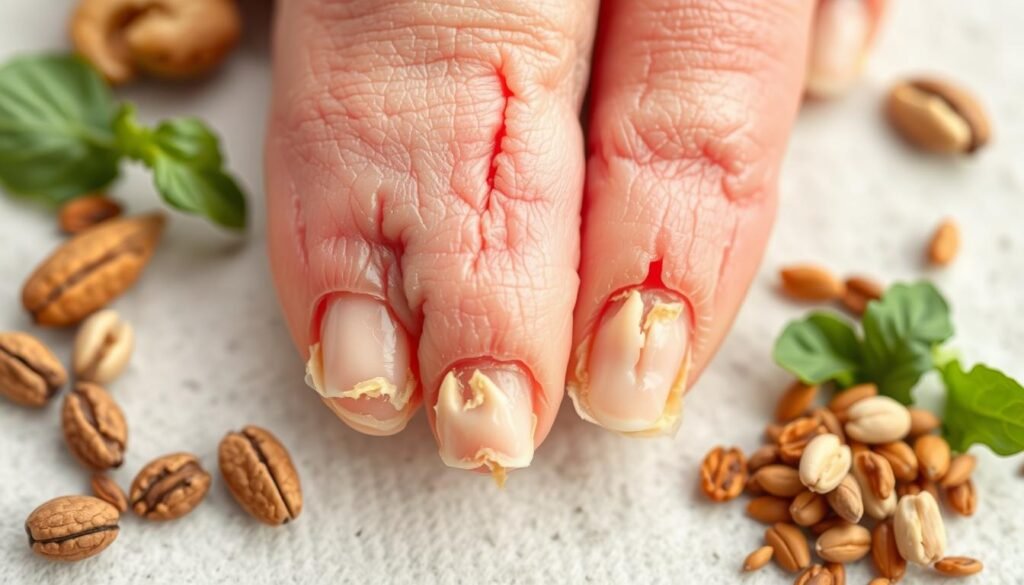
Zinc is key for nail growth and health. It’s needed for making keratin, the protein in nails. If you don’t get enough zinc, your nails might be brittle and grow slowly. Adding more zinc to your diet can make your nails grow faster and be stronger.
Zinc not only makes nails strong but helps avoid nail problems. If you see white spots on your nails, you might not have enough zinc. This shows how proper nutrition is important for looking and feeling good.
Nails can reveal if you’re not eating well. No half moons may mean you’re not getting enough nutrients. Ridges on nails could point to health issues. Knowing about zinc and nail growth can help you keep your nails healthy.
To better nail health, eat foods rich in zinc or take supplements. Research suggests balanced zinc levels result in strong, shiny nails. For more on nutrients and nail health, check out zinc’s role in nail health.
| Nail Condition | Possible Causes | Significance of Zinc |
|---|---|---|
| Brittle Nails | Frequent exposure to moisture and chemicals | Enhances nail strength and prevents brittleness |
| White Spots | Zinc deficiency, allergic reactions | Indicates need for increased zinc intake |
| Peeling Nails | External trauma, moisture exposure | Supports overall nail structure |
| Yellow Nails | Infections, potential underlying health issues | Improves nail condition with proper nutrients |
Understanding these aspects is crucial for enhancing nail growth and health. Zinc is essential for strong, healthy nails. It’s important to include it in your diet.
Common Nail Conditions Associated with Zinc Deficiency
Several nail issues can arise from not having enough zinc. It’s key to know these problems to fix symptoms and make nails healthier. Here are some nail conditions tied to low zinc levels.
Brittle Nails
Brittle nails break or split easily and are often thin. This is usually due to not enough zinc, which keeps nails strong. If your nails easily damage, you might not have enough zinc.
Beau’s Lines
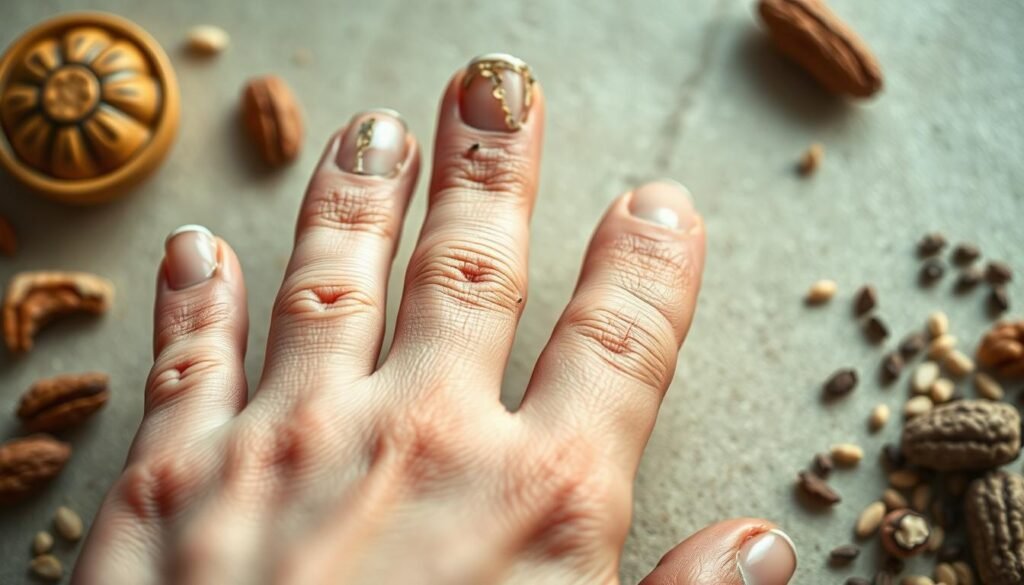
Beau’s lines are deep grooves across the nail. They show up when nail growth is interrupted and can mean a zinc shortage. People see these lines after being sick or stressed, showing the zinc-health link.
Onychorrhexis
Onychorrhexis comes with vertical ridges and brittle nails. It can point to not enough zinc or poor nutrition. Seeing ridges or splits? It might be time to check your diet.
| Nail Condition | Characteristics | Associated Deficiency |
|---|---|---|
| Brittle Nails | Thin, easily breakable, often splitting horizontally | Zinc Deficiency |
| Beau’s Lines | Deep grooves across the nail bed | Zinc Deficiency |
| Onychorrhexis | Vertical ridges and brittleness | Zinc Deficiency |
Dietary Zinc Sources to Improve Nail Health
To boost nail health with diet, add dietary zinc sources to your food each day. Zinc keeps nails strong, prevents them from getting brittle, and helps them grow. You can find lots of zinc in a range of nutrient-rich foods.
Some top zinc-rich foods are:
- Red meat
- Poultry
- Seafood, especially oysters
- Beans
- Nuts like cashews and almonds
- Whole grains
Foods like pumpkin seeds, sesame seeds, and lentils have a lot of zinc. Vegetarians should focus on these, as plants sometimes make absorbing zinc harder.
Adding these dietary zinc sources helps nails stay strong and boosts your overall health. It’s also vital to eat enough protein and key vitamins like biotin, vitamin B12, and folate for great nails.
| Food Source | Zinc Content (mg per 100g) | Other Nutritional Benefits |
|---|---|---|
| Oysters | 78.6 | Rich in protein, omega-3 fatty acids |
| Beef | 12.3 | High in iron, B vitamins |
| Pumpkin Seeds | 7.6 | High in magnesium, healthy fats |
| Lentils | 0.5 | Rich in fiber, protein, and folate |
| Cashews | 5.6 | High in healthy fats, magnesium |
The Role of Zinc Supplements
Zinc supplements are a key to fixing zinc deficiency, which affects our nails. They boost our body’s cell growth and repair. This is especially good for making our nails healthy.
There are different types of zinc supplements like zinc picolinate and zinc citrate. Everyone can find one that suits them. Taking zinc helps make our nails stronger and thicker. It does this by helping to produce keratin, a must-have protein for tough nails.
If you have white spots or lines on your nails, you might lack zinc. Other signs include losing hair and wounds healing slowly. Once you get enough zinc, your nails will get better. They’ll be stronger and less brittle.
It’s smart to talk to a doctor before starting zinc supplements. This is really important for pregnant or breastfeeding women. They need more zinc but must not exceed 40 mg a day. Knowing all about zinc can help you use it safely to boost your nail health without any problems.
| Zinc Supplement Type | Benefits | Recommended Daily Dosage |
|---|---|---|
| Zinc Picolinate | Improves absorption, supports cell repair | 25-40 mg |
| Zinc Citrate | Gentle on the stomach, enhances immune function | 25-40 mg |
| Zinc Gluconate | Aids in wound healing, promotes skin health | 25-40 mg |
Adding zinc supplements to your diet can make a big difference in nail health and well-being. This is especially true for those with dietary restrictions. Keeping the right level of zinc helps nails stay strong and supports many other body functions for a healthier life.
Nail Strengthening Tips for Healthier Nails
To have healthy nails, you need to combine good habits and the right diet. Drinking plenty of water keeps your nails strong. This prevents them from getting brittle.
Eating foods loaded with vitamins and minerals is key. Zinc, vitamin A, and biotin are especially good for your nails. They help keep your nails in top shape.
Avoid harsh chemicals to protect your nails. The FDA suggests using nail polish removers without acetone. Go for safer options instead. When doing housework, wear gloves to shield your nails from harmful products.
- Incorporate protein-rich foods into your diet, such as lean beef, poultry, and eggs.
- Allow nail polish breaks; regular use can weaken the nails.
- Use biotin supplements as they can strengthen nails and hair.
- Apply sunscreen on hands before exposing your nails to UV light from gel polish.
- Limit the use of hand sanitizers that may dry out the nails.
Keeping your nails moisturized is very important. Use products with collagen peptides for better nail and skin health. Leading a healthy lifestyle, with proper nutrition and plenty of water, keeps your nails strong and healthy.
| Nail Care Tips | Benefits |
|---|---|
| Stay Hydrated | Keeps nails from becoming brittle |
| Avoid Acetone Removers | Minimizes chemical exposure |
| Protein Intake | Strengthens nail structure |
| Utilize Biotin | Improves nail thickness |
| Moisturize Regularly | Prevents dryness and breakage |
Conclusion
Zinc helps our nails and our whole body function better. If we don’t get enough zinc, we might see brittle nails, skin problems, and a weak immune system. It’s important to know the signs of not having enough zinc, like white marks or lines on your nails.
To fix zinc levels, we can eat the right foods or take supplements. This helps us get strong, healthy nails and avoid nail problems. Eating foods high in zinc or taking good supplements keeps our nails in top shape. If nail issues don’t get better, it’s smart to talk to a doctor.
Learning about zinc’s role is key for staying healthy. Right zinc levels mean our nails can resist damage, our cells grow right, and our body works as it should. Thus, focusing on getting enough zinc can make a big difference in our nail health and overall well-being. Check out this summary on nail health to learn more.

